The Illusion of Simplicity: Underestimating expertise.

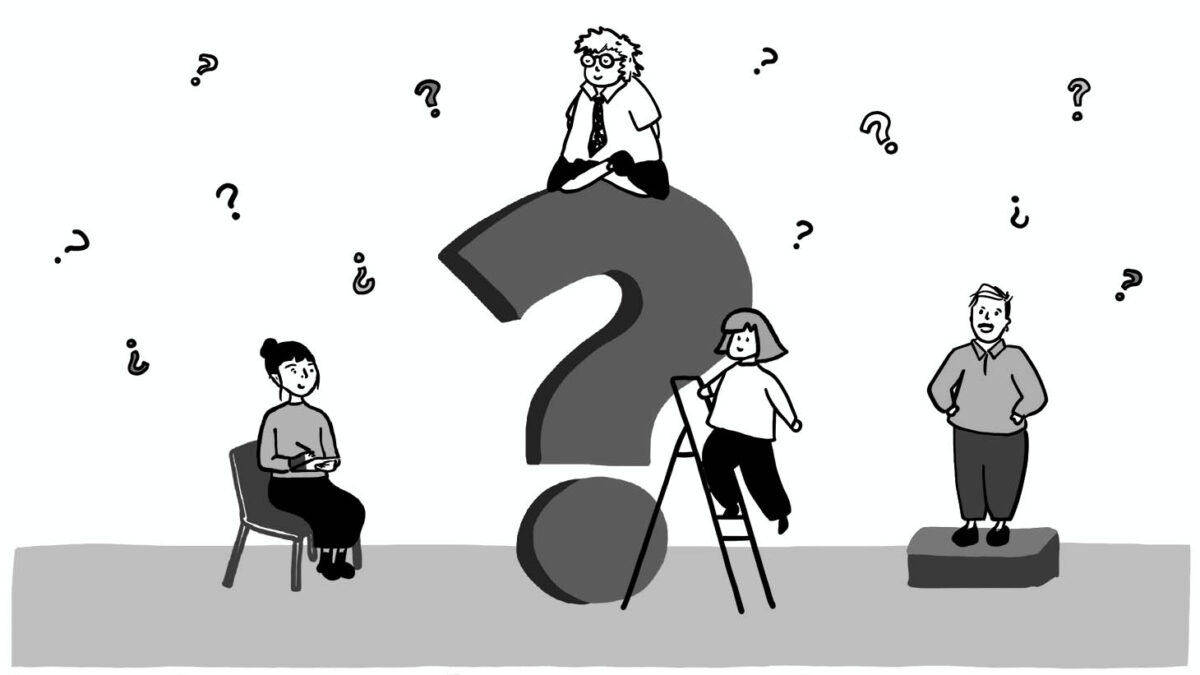
A confused character stands on a shape that is an optical illusion

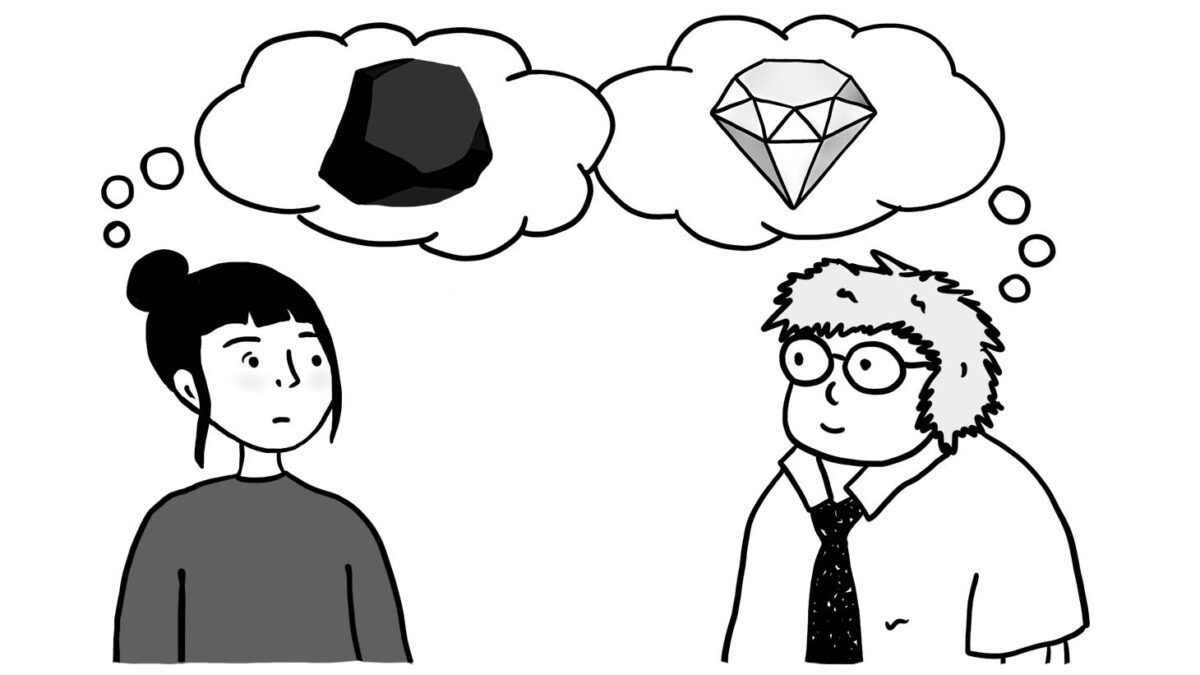
When someone is good at what they do, from the outside it appears as a smooth ride. They do it so well and all the rough edges have been worked out by experience. There is no friction to grab our attention.

A fellow expert sees this and appreciates that this is the refined result of much time devoted to honing their craft. But another person – one who has less experience in the observed realm – might look at the exact same process and mistake it as simple.

As such, mastery can sometimes quietly slip under the radar; the illustion of simplicity belying the careful hand presenting sushi, creating art, or managing people.


We explored the Dunning-Kruger effect in our last article, unpacking the idea that people with the least competence often have the highest confidence in their abilities. But the other side of overestimating your own inexperienced ability, is to underestimate other peoples’ skill.

Rolling sushi, for example, is easy…until we actually try it. When we fumble our first attempts, we typically are humbled pretty quickly and come to respect the skill of a sushi chef – care for ingredients and years of learning to present a simple roll, just so. Unfortunately however, as we get older we don’t throw ourselves into new things as often and so many times we never learn the hard way like this and undervalue other people’s talents more than they deserve.


The illusion of simplicity is a cognitive bias where people underestimate the complexity of a task or situation by focusing only on the most visible aspects – neglecting underlying complexity or nuance. This bias leads us to oversimplify complex problems, resulting in incorrect assumptions and flawed decisions.

“Sure,” you might agree, “I can totally think of examples of where other people have underestimated my talents like this. But I am the exception and don’t make that same mistake.

Not quite! We are all susceptible to this line of thinking because by its nature, it is a blind spot – which, by its definition, is blind. Assuming otherwise leads to a resistance to learning and dismissal of feedback – a place devoid of growth and fertile for conflict.

An illustrated guide on how to make sushi

Let’s consider a workplace example:

A marketing team is tasked with redesigning the company’s website. The project manager, Alex, has some basic knowledge of web design from watching tutorials and attending a weekend workshop. When the company’s experienced web designer, Maya, presents a comprehensive plan that includes user experience research, accessibility considerations, and technical requirements, Alex dismisses many of her recommendations as “unnecessarily complex.”

When Maya attempts to explain why certain technical considerations are critical for discoverability and user engagement, Alex interrupts with, “Let’s not overcomplicate things. We can just use a template and be done in half the time.”

In his rookie mindset, Alex is unable to recognize expertise and believes website design is relatively straightforward based on his limited exposure. He fails to appreciate Maya’s years of specialized knowledge and the complexity underlying the creation of an effective website. He sees only the visible end product without understanding the expertise required to make it function properly and serve business goals – simple in its form, sure, but not because it is simple.

The consequences become evident when the rushed website launches with poor mobile responsiveness, slow loading times, and accessibility issues that alienate customers and harm the company’s reputation.

Whoops – it turns out that when the invisible requisite steps to get to an end goal are missed, we end up somewhere both unexpected and undesired.


There is a risk that comes with not acknowledging the illusion of simplicity. We can try our best, but sometimes we inadvertently overlook the expertise of others which leads to…issues. Beyond websites, this underestimating of others can extend into any of our relationships and breed conflict. What if Alex had responded differently to Maya’s suggestions?

While confict is natural, it’s important to recognize our blind spots and engage with them curiously rather than with defensiveness. This is reason #107 that we recommend everyone enrols in our FREE Conflict 101 webinar. Deepen your education with our specific on-demand program for Dealing with Defensiveness.

We can demystify conflict with a psychological approach, and seeing through the illusion of simplicity is just one of the many opportunities to do so.

The Dunning-Kruger Effect: Living in a bubble of self-deception.

Graph charting confidence against expertise illustrates the Dunning-Kruger effect

Have you ever met someone who was absolutely convinced of their expertise in an area where they clearly lacked basic knowledge? Or perhaps you’ve caught yourself feeling overly confident about a skill, only to be humbled when faced with someone who knows more? You’re not alone. This common psychological phenomenon has a name: the Dunning-Kruger effect.

The Dunning-Kruger effect describes our tendency to overestimate our abilities. First identified by psychologists David Dunning and Justin Kruger in 1999, this cognitive bias reveals a troubling pattern: those with the least competence often have the highest confidence in their abilities.

This isn’t just about a few overconfident individuals. The research shows that this is a widespread human tendency:

  • 42% of engineers at a company rated themselves in the top 5% of performers (link to study).
  • 88% of American drivers consider their driving skills above average (link to study).
  • Similar patterns appear across health knowledge, leadership skills, ethics, and countless other domains.

Mathematically, these self-assessments are impossible. We can’t all be above average – that’s simply not how averages work.


What makes the Dunning-Kruger effect particularly insidious is what Dunning and Kruger called a “double curse”. First, we make mistakes and poor decisions. But second, those very same knowledge gaps prevent us from catching our errors.

This creates a perfect storm of unbeknownst incompetence paired with unwarranted confidence. Without the necessary expertise to evaluate performance in a domain, people simply can’t see where they’re falling short.

The consequence? Perspectives between oneself and others don’t match up, which can often lead to conflict in our relationships.

Consider this college debate tournament study, where the bottom 25% of teams lost nearly 80% of their matches – yet believed they were winning about 60% of the time. Without understanding debate principles, the students couldn’t recognize when their arguments failed.

A similar blindspot occurs when confronting conflict in our homes, workplaces, and communities. We believe we’re doing well most of the time, even though that might not be the case – especially from another person’s perspective. It’s worth noting that this is natural and we all do it. But, unchecked, it is problematic.

A car with a license plate of 'B3ST DRVR' stuck in a tree

Interestingly, the relationship between competence and confidence isn’t a straight line. It typically follows this pattern:

  • Beginners (Low Competence): Often have disproportionately high confidence because they don’t know enough to recognize their limitations.
  • Intermediate Learners: Experience a confidence drop as they learn enough to recognize how much they don’t know. These people often have less confidence than beginners despite having more skill.
  • Experts: Generally have accurate self-assessments of their abilities, but they make a different mistake – assuming others share their knowledge level.

The Dunning-Kruger effect creates a bubble of inaccurate self-perception that affects people at all skill levels. Without experience, we don’t know enough to be able to identify our own faults. And with expertise, we don’t realize how our abilities are exceptional and fail to empathize.

This bubble of self-deception distorts our decision-making. When we overestimate our financial knowledge, for example, we might make poor investment choices. When we think we’re better at reading emotions than we actually are, we misinterpret social situations. Are you starting to see the pattern here? These overconfident self-assumptions can lead to serious consequences in our personal and professional lives.

What makes this effect particularly challenging is its invisibility to those experiencing it. We don’t know what we don’t know, and that blindness feels exactly like expertise.


How can we overcome this psychological trap and gain a more accurate view of our abilities? First, ask for feedback from trusted people (a boss/colleague, a friend, etc), and consider it even if it’s hard to hear. Second, and perhaps more importantly, embrace a beginner’s mind and keep learning no matter our skill level.

A wise approach is to assume that we all have blind spots. With this baseline of humility, we approach our self-assessments with healthy skepticism, and not take corrections so personally.

Remember the old saying: “When arguing with a fool, first make sure the other person isn’t doing the same thing.”

Measuring Progress: Orienteering with a compass.

Footprints in snow walk a non-linear path

So, you’ve set some resolutions as targets and are in the trenches making your way towards them, one determined army crawl at a time. Two days in, you feel pretty good about your efforts. An unexpected reaction blows up and sends dust all over your face; you roll to the side and sidle the crater now in place of what appeared to be solid ground. Two months in…you’re a little uncertain that you’re heading in the right direction anymore.

Emotions get involved with things we care about – especially when uncertainty is involved. They have a funny way of swinging us from one extreme (motivated!) to the other (despair!), making willpower unreliable and skewing our perception of progress.

It begs the question: how can we orient on a long and probably non-linear path from point A to point B?


Consider both a yardstick and a compass; each is a tool that can be used to navigate somewhere. 
A yardstick focuses on measuring distance – how far we’ve come and how far we still need to go. A compass, in contrast, guides by direction rather than distance. When we veer off course, we simply realign and continue forward.

Metaphorically speaking, both of these approaches line up for how we can navigate our goals.

The yardstick, in this case, is rigid measurement which often breeds perfectionism and judging ourselves as failing if we fall even a millimeter short of our idealized destination.

The compass approach, on the other hand, transforms our goals in several effective ways:

A compass held in a hand to orient to north

Sometimes, the process of achieving a goal is slower than we might wish (it certainly does not happen overnight.). Moreover, uncertainty is inherent because not everything is within our control: a job termination, a financial misfortune, a breakup…moments like these are pivotal transitions that leave us scrambling for stable ground.*

When we think we have to figure out everything all at once, the path forward becomes occluded with anxiety and difficult to see. If we try to measure by distance, the numbers loom large and it’s easy to fall prey to catastrophic thoughts.

In such moments we need to reorient ourselves, for the path forward is found through a culmination of small, consistent actions and decisions made day after day. Remember how we can orient to our internal compass and stay steady in following it. We focus our energy on the next small step in that direction, even when we don’t know what the next one will be.


This directional approach naturally aligns with a growth mindset. Challenges become learning opportunities rather than failures, and setbacks are simply moments to reorient ourselves toward our chosen direction.

Wishful thinking can be healthy. It orients us into an uncertain future, allowing us to find hope and possibility in each step. But: it requires many little actions to get there.

Remember: A yardstick measures how far, but the compass in our pocket shows us which way to go.

Mythbusting: The overnight success.

Gather ‘round as we tell a story that’s as old as time: that of The Overnight Success.

After a full day of work, you flop down on the couch and turn on the television to see what you missed in the Olympics. Exuberant text flashes across the bottom of the screen as slow-motion replays show every angle of a moment of glory, and excited announcers exclaim that a child prodigy has broken a record in the 100-meter sprint.

“Wow!” you also exclaim, to no one but you and your cat. But a tinge of comparison prompts further musing: “That’s amazing but…I sure wasn’t doing that at that age (or any age for that matter).” Your cat looks back at you knowingly.

Ah, comparison – also known as the thief of joy.

From an outside perspective, it’s tempting to assume that the Olympic champion was born ready for competition or, at the very least, had their success come easy. And while there undoubtedly are factors of talent / genetics / opportunity at play, once upon a time every Olympian was a toddler wobbling across the floor just like the rest of us.

Even for a toddler’s first steps, it might seem like the little one just stood up one day and decided to walk – but this overlooks all of the efforts that led to that pivotal moment. While the path to gold medal glory is a few steps beyond this, it’s not so different in that there were many unseen steps taken before a goal was achieved.

The myth of overnight success leaves out all of the muscle development, failed attempts, bruised knees, and determination it took to reach the milestone.


Success doesn’t happen overnight. To assume so discredits the hours / years / lifetime of hard work that added up to it. Yet, often we compare our messy work-in-progress with others’ final results. Not only is this unreasonable, it also saps our personal willpower and motivation when it comes to learning new things – because how can we measure up?

We can see this when it comes to conflict – or rather, when we’re learning to deal with conflict better. The path to progress is nonlinear with many peaks and valleys. When it gets difficult or you make a mistake, it can be tempting to conclude that it’s simply not your strength. Better to leave it to the experts (gestures nebulously towards the Mediation Services team) and give up.

But let’s not jump to conclusions prematurely.

Drops of water into a cup adds up

Recognizing when we’re getting down on ourselves because of an unreasonable comparison is important because it leaves out the wholeness of someone else’s experience. When this happens, remember that what might appear as sudden mastery is actually the culmination of developmental building blocks stacked one upon another.

Just as a child doesn’t suddenly wake up knowing how to read, other skills don’t arrive fully formed. They are built through daily efforts, stumbles, and small victories – moments when no one is watching and progress can seem frustratingly slow. Developing mastery comes not because there weren’t any setbacks; it comes because we stick with it despite the setbacks.


It is indeed daunting to stay consistent in our efforts, but the good news is that you aren’t alone in the challenge of learning new things. It’s just a part of it – and empathizing with others in this helps us understand the broader arc of life and that they too have faced this frustration (gestures nebulously towards the Mediation Services team). Action beats waiting for motivation, and understanding this shared humanity serves as a healthy personal inspiration to show up.

There’s no escaping the time required to refine skills, which extends beyond our physical abilities to our role in relationships. With time, we can become a better athlete. With time, we can become a better partner, friend, and colleague. This iterative process is the key to growth, and it’s done quietly and often without public recognition.


We’ve used a lot of different examples to unpack the idea of overnight success. One our team obviously specialize in is conflict resolution, and in this we invite you to join us for a training (online or in-person) to kickstart your learning in that regard. It comes with homework: applying it to your life. But don’t worry, if you have questions or your efforts fall flat, we’re here to support in whatever way we can if you need it (contact us here).

The story of overnight success isn’t about a penultimate moment of triumph, but about the countless hours of development that made that moment possible. It’s about understanding that every great achievement is simply the visible peak of a mountain of effort, determination, and persistence.

So let’s get inspired to attend to difficult things! Career, finances, relationships – just like learning to walk or becoming an Olympian, individual moments in the various facets of our lives add up to the longer arc of success.

New Year’s Resolutions: A recipe for success.

Arrows shot at a target litter the space around it

New year, new you – at least, that’s how the marketing goes.

It’s tempting to make a noble wish for big change. And doing so is useful for orienting in the direction we want to go – sometimes continuing on with our personal mission statement, and other times deciding to pivot in a new direction.

But, it’s important to note, drastic changes rarely happen overnight. Who we were on December 31st doesn’t get left behind when we flip the calendar to January and so we need to work with the complexity that is the present, even when we step boldly into the future.


Research that looks closer at New Year’s resolutions paints a picture of how they tend to play out:

  • In the first week, about 77% of people maintain their resolutions. Yay!
  • By the end of the month (goodbye January), the number decreases to 55%. Hrm…
  • Six months in, only 40% of people can remember their resolutions. Uh oh.

Resolve drops off precipitously over time – so let’s sigh a collective breath of relief in realizing that we’re not alone in the struggle. But that doesn’t mean that resolutions are a bad thing, because those who made resolutions (resolvers) reported higher success at the six-month mark than non-resolvers interested in changing a similar problem (46% versus 4%).


We can develop helpful habits in the resolution process that improve our chances of reaching our goals.

One of the most striking findings is this: how we frame our resolutions dramatically impacts our success. People who set approach-oriented goals (“I will eat more vegetables”) achieved a higher success rate than those with avoidance-oriented goals (“I will stop eating junk food”).

Phrasing the goal as a positive statement, instead of a negative one, makes it easier for the brain to comprehend. It gives us an action to latch on to, which gets us closer to actually doing said positive action.

Another important element is accountability. Reporting on our progress greatly increases our chances at goal-oriented success. However, there is a fine balance when calling in external support: routine check-ins and shared guidance can feel better than going it alone, but excessive structure can result in the sense that someone is breathing down our neck. Too much pressure becomes counterproductive and feeling ashamed about setbacks can lead us to give up. In this regard, each of us needs to figure out the sweet spot that makes the most sense for who we are.

A person jumps over increasingly large hurdles

One common resolution we see at Mediation Services is to improve personal relationships that are stuck in some aspect of struggle. A family feud, a fading friendship, or neighbours literally divided by a fence and the disagreement around its existence….relationships take work and facing the conflict inherent to them benefits from bolstered commitment at any time of the year.

With this in mind, here are some practical strategies for your conflict resolution resolutions:

  1. Set Interim Goals: Rather than focusing solely on year-end targets, break your resolution into smaller, manageable chunks. Temporally closer goals (ie: next week, instead of next year) effectively mobilize our efforts and determine our immediate actions.
  2. Create Specific Measures: Transform vague intentions into concrete actions. Instead of “repair relationship with best friend,” specify “send best friend a text message every Monday and Wednesday.” This clarity helps track progress and maintain motivation.
  3. Build Support Systems: Social support significantly impacts success. Identify a specific person to support your journey and share your progress with them regularly. Make sure they are someone you can trust to support you even if you fumble. We don’t always get it right the first time; the important thing is to not stop trying. That’s easier to do when we have others cheering us on.

Success in maintaining resolutions goes beyond the specific goal that drives us. Being intentional about our approach helps to break out of procrastination tendencies. Having adequate structure in the process helps to break out of the willpower myth – where instead of waiting to be blessed with the right mood / muse / motivation, we simply begin.

Whatever the result, rather than viewing resolutions as pass/fail challenges, it’s healthy to consider them as opportunities for incremental improvement. When we look back at the turn of next year, chances are we’ll see growth on the far side of all the stepping stones it took to get there.

2024: Measuring the year at Mediation Services.

A tape measure rolling out with different measurements name around it like 'Year' and 'Moment'

There are many ways to measure a year. Four seasons, 365(ish) days, 13 moons…the calendar offers many metrics. Cups of coffee, number of steps taken, books read…the events of life offer many others.

Looking back at what happened at Mediation Services over 2024, we have our own set of numbers to reflect upon:

  • 200 restorative justice sessions were scheduled with community volunteers, providing people who have experienced harm and those who have done harm a step towards healing through more understanding and accountability.
  • More than 850 people received conflict-engagement supports, training, or resources.
  • Winnipeggers from Palestine and Israel came together in circle to listen, dialogue, and share.
  • Men exiting prison gained access to communication workshops to help build their skills and understanding.
  • 134 people connected for family mediation, ensuring healthier outcomes for all.

Whatever way you measure it, 2024 was a full year and much was accomplished thanks to the contributions of staff, volunteers, and participants – all supported by the generosity of our funders.

It is this financial support that makes it possible to create these safe spaces both in-person and online. Donations help eliminate wait lists, expand our vital programs, ensure folks have safe spaces to address conflict, and give people in despair an opportunity to reclaim their lives.

Engaging with conflict is essential for a happy, healthy community. It helps people become better listeners and communicators with more empathy – and to see the humanity in each other. The more people learn these skills, the safer our community will be – now, and for future generations to come.

Donate today to support what we do tomorrow.

Announcement: Holiday closure.

‘Be Right Back’ written on whiteboard behind empty office chairs

We’re in December! Time flies and sometimes it’s hard to believe, but the snow and short days outside serve as a stubborn reminder of when we are.

As another year draws to a close, Mediation Services will be taking a brief pause to allow our team time to rest and rejuvenate. The office and operations will be closed between December 23rd and January 3rd.

While we may be taking a break, conflict doesn’t always follow the same schedule. Holiday gatherings often come with unexpected challenges. It’s probably a good idea to revisit our guide to being a respectful/amicable/good guest at dinner parties. And perhaps it’s also the perfect time to try the FREE Conflict 101 webinar we put together this year?

The office and our inboxes will reopen on Monday, January 6th at 8:30 AM, from which we dive into 2025 together!

Catastrophizing: A self-fulfilling prophecy.

Chicken Little as a news announcer on TV with the byline ‘Cloudy with a chance of THE END OF THE WORLD’

“The sky is falling!” goes the famous exclamation from the European folk tale Chicken Little. When an acorn falls on Henny Penny’s head, the chick jumps to this most extreme conclusion and goes on a journey to tell the king. Along the way, he meets many animals who join in his quest…which probably should have included humans because we are prone to catastrophizing in the very same way.

This story remains relevant because it illustrates how quickly minor setbacks or misinterpretations can become perceived disasters, leading to panic and overreaction. Catastrophic thinking can spread and escalate when others join in the hysteria – whether in make-believe, in the office, or in the amplifying force of social media. As such, it highlights the importance of addressing such thinking early before it gets out of hand.


Catastrophizing is imagining the worst. It’s taking a difficult situation and interpreting it as being horrible, terrible, and unrecoverable. It often starts with a genuine setback, like an acorn falling on the head or a disagreement at work, but then the thinking mind spins it into the belief that something horrible is bound to happen – “The sky is falling!” or “My career is over!”

At its root, catastrophizing is about our habitual response to challenges or shortcomings – a cognitive distortion that is the result of some past hardships, painful rejections, and failures. From these difficult experiences we trick ourselves into thinking, “If I can expect the worst, I can prevent it.” In reality, usually the exact opposite happens.


With conflict, a minor disagreement can become a worst-case scenario when fanned by the flames of catastrophizing.

Consider this workplace example:

Your coworker disagrees with your approach during a team meeting. Instead of seeing this as a normal professional difference of opinion, your mind rapidly escalates the situation.

Initial Thought: My coworker challenged my idea in the meeting.

Catastrophic Progression:

  1. They must think I’m completely incompetent.
  2. Everyone else probably agrees with them.
  3. I’ll lose all credibility with the team.
  4. I’ll never get promoted.
  5. I might even get fired.
  6. My career is essentially over.

And just like that, a career is over with a single challenge. But is it actually?

Taking a step back, we can admit that we aren’t at step 6 quite yet. However, what do you think will happen if we react with the anticipation of this worst-case scenario?

If we enter a discussion expecting hostility, we typically approach it with defensive or aggressive behaviour, which then provokes the very negative response we feared. This is a major factor in conflict management and mediation in general, and is explored further in the strategies presented in our Dealing with Defensiveness and Building a Respectful Workplace webinars (among others).

When we unwittingly find ourselves at step 6, the problem seems so big that the question frantically becomes, “What can I do!?”

An acorn falls like a metorite across the sky

Let’s slow down.

First, understand how this pattern of catastrophic thinking affects how you might address conflict (which naturally arises because difference is a part of life):

  1. Emotional Escalation: When we catastrophize, we become trapped in a cycle of anxiety and fear, making it impossible to approach conflicts rationally. This heightened emotional state leads to defensive behaviour and poor communication choices.
  2. Relationship Damage: The tendency to assume the worst possible outcomes can create unnecessary tension in professional relationships. When we catastrophize, we often become overly controlling or defensive, which stifles the open dialogue needed for effective conflict resolution.
  3. Self-Fulfilling Prophecy: When we expect the worst in conflict situations, we often inadvertently create it. If we enter a discussion expecting hostility, we typically approach it with defensive or aggressive behaviour, which then provokes the very negative response we feared.

Instead of viewing catastrophic thoughts as predictions of the future, we need to remember that we’ve had these thoughts before and survived similar situations. Stay focused on the current conflict rather than the imagined negative outcomes. Instead of “This conflict will destroy our relationship” think “This is a disagreement we can work through.”

Next steps usually involve a direct conversation. To discourage defensiveness in others, stay focused on the core issue. If the conversation does stray into the catastrophizing “what ifs”, redirect the conversation back to the actual issue at hand – gently. Use acknowledgment statements first, then guide the discussion back to the current situation actually faced.

Anxiety happens when you think you have to figure out everything all at once. But by focusing energy on small actionables, we can find steps forward (stay tuned for more on this in a coming blog article).


Seeing the worst often invites the worst. Not only do we cut ourselves off from opportunities, we invite the exact problems we’re hoping to avoid. Fortunately, with a little bit of effort, our worst dreams are a fate that is far from sealed.

The Willpower Myth: Why action beats waiting for motivation.

Low battery icon at one percent

When faced with a big challenge, we might think: Gee, this is tough and I can’t deal with this right now. It’ll be much easier to tackle later when I feel stronger and inspired – like a superhero supercharged by willpower rather than a potato powered by a failing high-school science project.

Flash forward several months and the narrative remains the same. Waiting for our superhero moment, nothing has been done to address the looming issue at hand. Procrastination is a short-term solution and the mythical willpower we wait for remains elusive, leaving us feeling more like a phone battery at 1% than a superhero.


Ah, willpower…it’s a mysterious source from which one can draw strength to rise up to great adversity. At least, that’s how the myth goes. But is it true?

For years, willpower has been thought of like a muscle that gets tired and needs rest – a limited resource that runs dry after too much use. But fascinating research is challenging this belief. Michael Inzlict, a professor of psychology at the University of Toronto and principal investigator at the Toronto Laboratory for Social Neuroscience, is one of many researchers furthering our understanding of how willpower functions (read further on his expanding body of work here).

Instead of likening willpower to a muscle that gets depleted, it appears to be more accurate to think of it as an emotion that ebbs and flows. We don’t permanently drain our capacity for joy after a good laugh, nor do we use up all our anger in one burst of frustration. Instead, these feelings come and go like waves, responding to our experiences and levels of stress. Willpower, it turns out, follows a similar pattern.

So if our willpower gauge is low, the answer isn’t to wait with wishful thinking for it to fill up on its own. Just like exercise has been proven an excellent anti-depressant (even if we don’t want to), taking action (even when we don’t want to) inspires an emotional shift towards feeling willpower / inspiration / superhero-powers.


We arrive here at a healthy “fake it ’til you make it” strategy, where acting strong will in turn make us feel strong. The key to enacting this process is to simply begin. Eventually it becomes self-reinforcing, but it’s always worth breaking down a difficult task into smaller and more manageable tasks.

This shift in understanding transforms how we approach personal challenges, and doubly so when they involve others. Rather than relying on the ebbs and flows of willpower, we can plan and create structure that anticipates future obstacles to find growth.

Laptop text editor saying: Being strong doesn’t always feel strong

Self-regulators (ie: folks who get things done) actually use very little willpower. Instead, they establish structure that anticipates future obstacles; frameworks to be relied upon when waning or raging emotions threaten to derail them from their goals.

Applying this concept to the obstacle of conflict, the structure can look different depending on our goals (a long-lasting relationship, a workplace of respectful coexistence, sharing a fence with a neighbour, etc). For example:

  • With a couple, it might be about scheduling a “state of the union” chat every Sunday. This time is dedicated to checking in with each other to prevent issues from building up over time and gives space for appreciating each other and solving problems.
  • With a work team, it might look like having a weekly stand-up meeting where everyone is encouraged to discuss projects, identify challenges, and brainstorm solutions. Keeping it short – which it will be, because standing can be tiring – helps to keep things on track and makes it easier to fit into everyone’s busy schedules.

When structure is established like this, we needn’t rely upon willpower so much. Communication is key in addressing conflict and having frameworks for open conversations help deal with it as it arises. In confronting things early, issues needn’t escalate to the degree they otherwise do.

These sorts of conversations aren’t always easy, so after an uncomfortable confrontation has passed it’s worthwhile to take a moment to check in with yourself. Acknowledge the effort you just put in and offer yourself some encouragement. This reinforcement helps build new behavioural patterns and strengthens emotional resilience – and good habits will make these conversations feel more natural next time.


It’s worth noting that choosing the ideal moment to act can be threading a needle between too quickly and not at all.

In the heat of a conflict, there can be merit to the time-out approach where we step back to allow defensiveness a moment of cooldown and prevent a rash reaction. But unchecked, repeated avoidance can become a troublesome pattern that doesn’t address real issues.


While it would be great if it could be counted upon, emerging research is finding that willpower is more like a fickle emotion than a predictable resource. Instead of waiting to be blessed with the right mood / muse / motivation, we need to simply begin. Behaviour changes mood and it gets easier with practice.

This strategy of "fake it ’til you make it" isn’t about deception – it’s about embracing the fact that our actions can reshape our emotional landscape. Being strong doesn’t always feel strong. When we engage in deliberate behaviours, even when we don’t feel like it, we create opportunities for learning and breaking free from rigid patterns of thinking and feeling.

A superhero doesn’t always wear a cape.

Looking Back: A case of rose-tinted glasses.

A hand holds up a pair of tinted glasses

When one peers through lenses stained with rose,
The world’s sharp edges soften, and all woes
Dissolve like mist at morning – every scene
Becomes more beautiful than it has been.

   – A poem by A.I.

There’s something poetic about the phrase “looking through rose-tinted glasses”, and even artificial intelligence (emphasis on artificial) seems to know it. At the moment, AIs like ChatGPT are glorified autocomplete; algorithms pre-trained to generate responses based on pattern matching to the mass of content we humans have put out there. Terrible poetry aside, they can offer a playful litmus test to the broader zeitgeist.

As with most generalizations, the concept of the rose-tinted glasses effect has a root in something real: there is a positivity bias in the content of autobiographical memory (science!) where we tend to see the past as more positive than it actually was.

Take a moment to let that sink in. This rosy look backward flies in stark contrast to how we look forward where, when anticipating what will happen next, we tend to have a negativity bias that focuses on what might go wrong. Both are biological strategies that humans developed over millennia to keep ourselves safe.


Let’s explore this with an example: travel. We dream of it and work to embrace its possibility, but life away from home doesn’t always match the glossy marketing brochures. There’s the uncomfortable gauntlet of being crammed into a plane, lost luggage, food poisoning, long wait lines…and, oh yeah, the tourist attraction of, say, the Eiffel Tower. It’s a lot – and many times we return home more exhausted than when we left, muttering, “Never again,” to ourselves and our bank accounts.

Yet, when we look back on the trip, what stands out? The Eiffel Tower!

Travel is not entirely fun, but as the memories of it get revisited affectionately, the lived hardships accompanying it fade in intensity. Given some time, we find ourselves motivated to get back on a plane and do it again – ready to face the challenges that may happen along the way.

Rose-tinted glasses serve a purpose. Good memories give us hope, which drives us forward into the next thing. This is an important part of being human. But, understanding that our recollections skew positive when we’re the main character, it’s important to note that our memory might not paint the full picture of the experience (nor that of the other characters we interact with!).

Many printed photos scattered on a table with memories like ‘High School Prom’ written on them

The rose-tinted glasses effect means that when we reflect on the past, we can unwittingly misremember important details about what actually happened. This becomes problematic when dealing with interpersonal conflict (which inevitably happens to all of us).

Here are some common possibilities where a rosy memory can hinder conflict resolution:

  1. Downplaying real issues: When problems are minimized, they often go unaddressed until they become much worse. Little slights can add up to bigger challenges down the road.
  2. Misreading others’ feelings: Assuming everyone is "fine" can prevent acknowledging genuine hurt or grievances.
  3. Avoiding necessary confrontation: An overly optimistic outlook may lead to postponing difficult but important conversations.
  4. Missing warning signs: Red flags in relationships or situations may be dismissed as temporary or unimportant.
  5. Creating unrealistic expectations: When reality doesn’t match an idealized view, it becomes harder to move forward with finding practical solutions.

Learning to gain a more accurate perspective supports the health of our relationships and makes it easier to reach resolution. When metaphorically wearing rose-tinted glasses, it’s beneficial to be able to take them off from time to time. To help with that, start with our FREE Conflict 101 webinar – an excellent resource for unpacking the psychology behind our mental frameworks. For hands-on support, enlist the help of a third-party mediator who can create a mutually safe space to facilitate tough discussions.


Good times past can still be just that – positive remembrance gives us hope so we have fuel for moving forward. At the same, let’s make room for a wider perspective that honours both our experience and that of others.

If you have questions,
please don’t hesitate to call.

1-204-925-3410

Subscribe To Our Newsletter

For The Latest News & Updates