2022: A year in review.

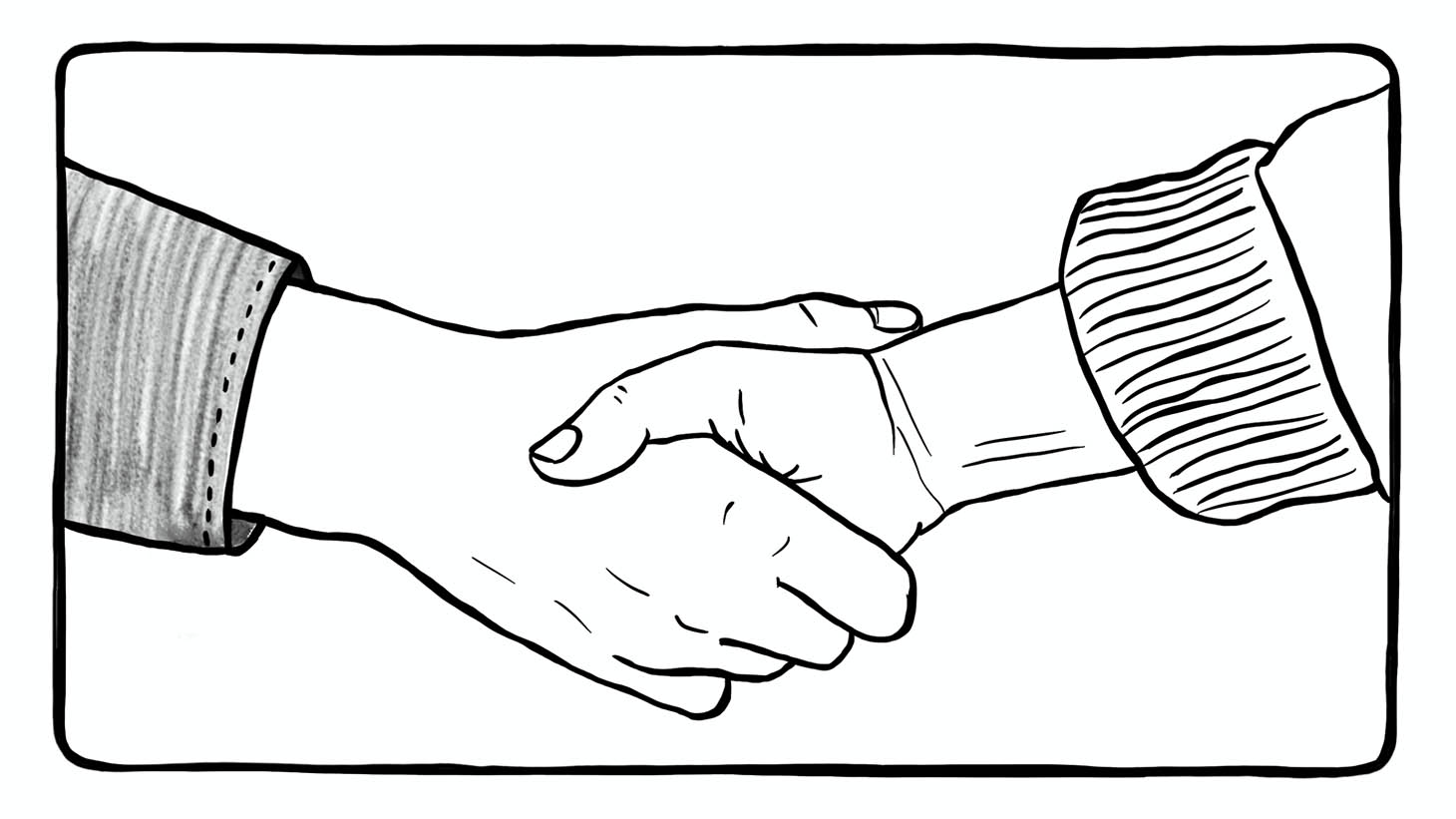
Two people shaking hands in agreement

The time has come once again to flip the calendar to the next year. It’s a special occasion; closing a chapter on whatever has happened and turning our gaze to a new page.

As arbitrary as the Gregorian calendar can feel at times, it’s also an excuse for a fresh start – which we all need from time to time. This sense of renewal keeps us motivated, as working with ourselves is an ongoing process. It is our sincere hope that the education we offer – freely, and in our courses and services – is both timeless and of this moment.


At Mediation Services, we’ve been busy developing a lot of new content this past year; continuing to embrace technology and how it can support us in our lives and livelihoods. Let’s take a moment to look back at all that has come to fruition.

Year 2022 in review:

  • 1 monthly newsletter: a way for us to keep in touch by sharing who we are, offering continuing education, and updating you on the work we’re doing in the local and online community.
  • 12 new blog articles: we’ve put a lot of effort here into developing unique, timely, and useful information that’s freely available to all.
  • 2 new on-demand webinars: available online when you need them, you can now enrol in Covid Conversations and Dealing with Defensiveness to explore these important topics at your own pace.
  • Resuming operations out of our office in Winnipeg after a Covid pause: providing third-party mediation, in-person training, and more. We’re here when you need us, as we have been for over 40 years!

And there’s more where that came from. On all of these fronts, we have big plans to continue forward – including the much anticipated online webinar for Building a Respectful Workplace. We’re excited to share these tools with you and hope you are too.

Thank you for joining us in whatever way you did in 2022. We are passionate about what we do, but we couldn’t do it without you. If you have a heart for it, we invite you to consider making a donation to Mediation Services Winnipeg. You can donate either once or monthly and, as we are a registered charity, tax receipts are available for all donations. Any amount helps and is greatly appreciated.

Wishing you all the best in the coming year and beyond.

Biology 101: Defensiveness in the brain.

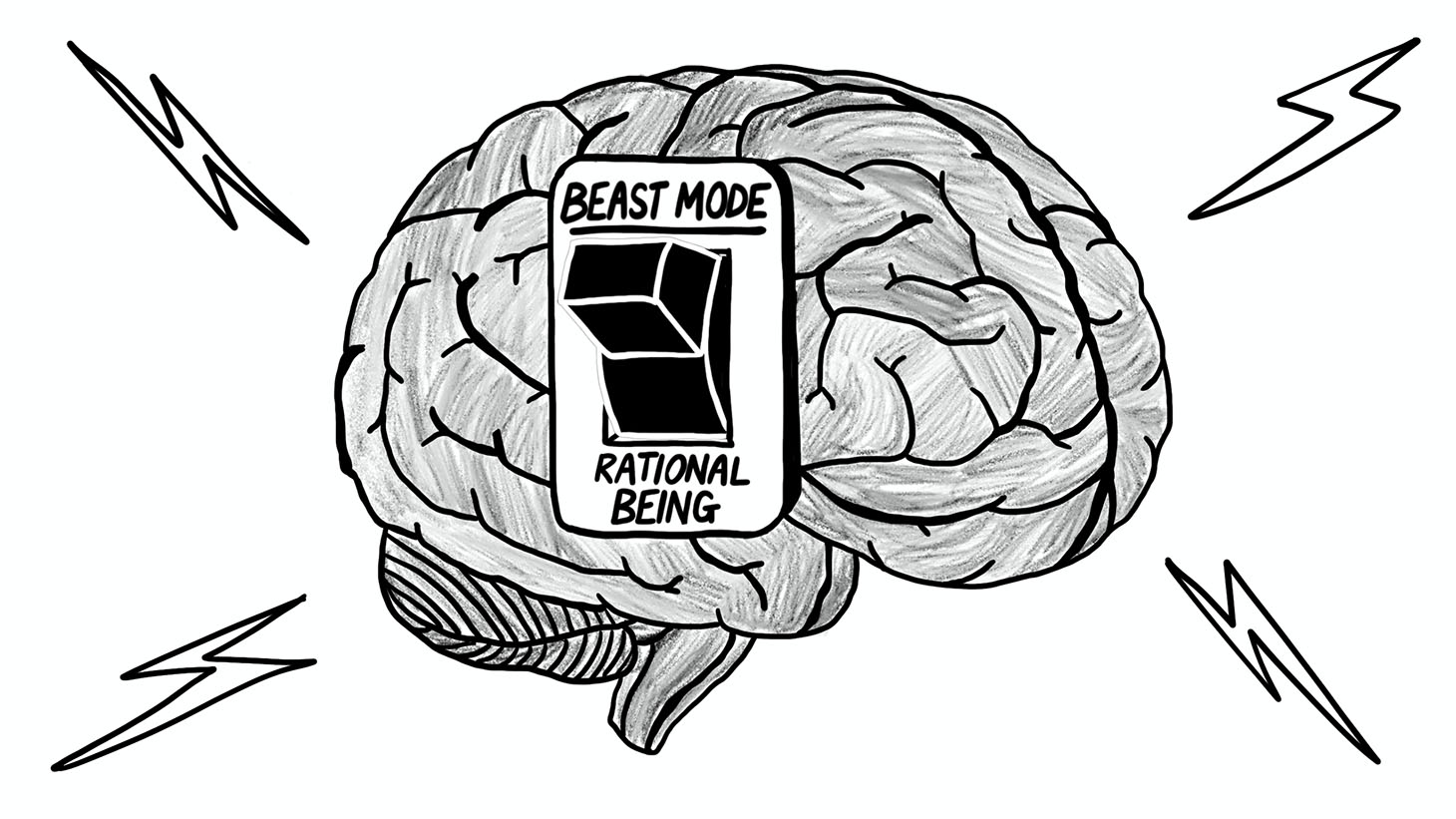
Brain with a switch between 'Rational human being' and 'Beast mode'

The brain is a complicated organ; a piece of organic wetware that stymies those who turn their gaze around to try and look closely at it. But over time, neuroscientists are beginning to uncover a better understanding of its inner workings.

An age old philosophical question goes, "Is the way I act a result of nature or nurture?" In other words, was I born the way I am or am I the result of the environment in which I grew up?

The latest research hints that it is actually more of a two-way and than a mutually-exclusive or. Our biology primes us for learning from our environment, and in turn our biology is programmed by these integrated experiences.

We’ve already explored the idea that conditioned responses are learned in childhood, but with regards to conflict it’s worth looking closer at how exactly our bodies try to keep us safe.


Let’s consider what happens in the brain when we experience a defensive response.

Our senses provide a window out to the wider world. Hearing, seeing, smelling, touching, tasting…our bodies are physically tuned to detect this information and send the raw signals to a part of the brain called the thalamus. Here, the stimulus is funnelled onwards to one of two neurological pathways:

  • Pathway 1 is thinking, which allows us to become aware, feel the emotion, comprehend the meaning, and ultimately choose an appropriate action.
  • Pathway 2 is instinctive defense, which takes immediate action to protect us from harm and engages without any conscious thought.

We don’t get to choose which of these paths the brain’s processing will take. As raw information flows into the thalamus, a little bit of it runs by the hippocampus (which stores all of our life’s knowledge, memories, and experiences). In essence, this part of the brain scans what is happening against what has happened before to try and answer the question, "Am I safe?"

If a threat is determined, the hippocampus alerts, "DANGER!": and Pathway 2 is decided upon by the thalamus. The amygdala takes over in a process known as the amygdala hijack, and a flood of hormones is urgently released into the body. Once this happens, our ability to access the slower thinking part of our brain becomes extremely limited (and in some cases shuts down completely so we can’t think logically).

Our potential for either a thoughtful or reflexive response is determined by our unconscious perception of safety, which depends upon our knowledge, memories, and experiences. In other words, our reactions are a result of both nature and nurture.

Side-by-side of two emojis - one a smiley face titled 'How it started' and two a brain exploding emoji titled 'How it's going'

When you get defensive, where do you feel it in your body? Maybe it’s a tight chest or flushed cheeks. Or perhaps the stomach flip flops or the head starts buzzing. Or, if you’re particularly fortunate, it could even be all of the above.

Pathway 2 is so quick that we are not even aware when we begin to feel defensive. First signs of such a response show up in the body, so it’s really important for us to know what particular feelings arise for each of us. Noticing these sensations is the key to recognizing what’s happening. The sooner we do, then the sooner we can change course and gain access to the thinking part of our brain once again.

If your life is at risk, by all means: run! But the reality in the modern world is that most of us get defensive when we’re not about to die. This reflexive response becomes a real problem in solving issues in relationships.


It is important to understand that the hormones associated with the amygdala hijack circulate in our bodies for anywhere from 20 minutes to a full hour – and if something or someone else escalates the situation, then even more flood our systems.

While we can’t stop this physiological reaction, we can recognize it for what it is and do our best to adjust. By quickly taking actions that will allow us to gain access to the thinking part of our brains, we can choose a much better response.

The first step is recognizing what’s happening – by noticing the rising feelings we’ve already mentioned. Then, we try to find a constructive way to respond. For example, sometimes the best thing we can do is to ask the person we’re interacting with if we can revisit this tomorrow. This will give your system time to reset so that you can think straight, and not think / say / do something you regret.


We don’t choose to be defensive, but we can work with it so we don’t stay in the state quite so long.

Understanding our biology can be a relief; we can recognize that sometimes our actions are less-than-rational because of the nature of the human mind. However, it does not absolve us of responsibility. In fact, this knowledge emboldens us with an opportunity to better see ourselves and the way we interact with the world.

Primed with both biology and lived history, it’s easy to see how conflict naturally arises and can be escalated by defensive reactions. But it’s also clear that it doesn’t need to be this way – we are empowered to resolve conflict.

A client shared with us this reflection after completing our online Dealing with Defensiveness course:

I thought I was going into this course to learn how to handle defensiveness in others, and I did! But I have learned so much more about myself and my own defensiveness. Here’s hoping that I can use it to develop, and in some cases, restore relationships that are so very important to me.

Let this work on your personal development spiral outward and into your home, workplace, community, and beyond. At Mediation Services Winnipeg we offer a myriad of educational resources online and in-person that focus on working with the potent space that is conflict.

We are more than our biology. With a little bit of effort we can work to accept responsibility and build deeper and more trusting relationships.

The Game of Life: Our strong defense.

Illustration of a sketched team play plan on a soccer pitch.

In sports, there is a saying that goes: "The best offence is a strong defense.“ For those of us who aren’t ardent fans of the local sportball team, the gist of it is that protecting yourself from the other team’s attack is the foundation of winning.

And don’t we all want to be winners?

So too do we get trained in the game of life because, let’s be honest, we’re also told that living is competitive. Born as fresh slates, we diligently run drills through childhood – be quick with the tongue to avoid punishment, make up a story to avert blame, twist the facts to avoid embarrassment…all the while learning how to "win" as individuals amidst our caregivers, schoolmates, and strangers.

And we trained well – learning to spot perceived attacks from a distance and reacting with honed instincts. But emerging from a childhood gauntlet of bullies and bystanders, we all eventually step out into the world as adults.


Our pasts aren’t ever really left behind. All of these developmental experiences come along with us into adulthood, forming a foundation for what comes next. So when a colleague does something that gets our hackles up, our defensive prowess can unwittingly kick in. Before we know it, we can find ourselves slipping into our well-practiced signature moves. It’s in our biology.

This is defensiveness: a reaction that is dispensed without any conscious thought in our brain’s valiant attempt to protect us from harm. The good news? This is a biological response rooted in a fierce commitment to our survival. The bad news? Sometimes our brains scream, "Danger!" when we’re not really at risk – and then things get complicated.

As we get older and (hopefully) more mature, we ought to consider asking ourselves, is this reaction actually appropriate? Like we’ve explored before, conflict doesn’t have to be a competition.

A defensive stance tends towards escalation. Is this truly the direction we want to steer things? What is more important to us: having the last word, or finding resolution amidst conflict?

A chalkboard banner proclaiming Feelings Are Not Facts.

If we perceive an attack where there actually isn’t one, our defensive stance kicks in. Be it from a conditioned response stemming from the game of life or a deep-set aversion to something like embarrassment, this unreasonable response actually creates bigger problems than whatever might have ignited it.

To quote Theodore Dreiser, the American novelist:

"Our civilization is still in the middle stage. Scarcely beast, in that it is no longer guided by instinct. And yet scarcely human, in that it is not yet wholly guided by reason."

In a modern world where we do not face risk of death as urgently as our ancestors did, we need to be mindful that our ancient biology might not be perfectly attuned to current ways of being. Sometimes our perception of safety is inaccurate, and this can provoke disproportionate responses to the actual situations we face.

Feelings are not facts.

For most of us, our home is no longer the open savannah; instead, it is within dense cities and towns. We learn to adjust to the changing environment. And we can help each other with that.

Developed from over 40 years of conflict resolution experience, mediation specialist Janet Schmidt is your guide in our core online course Dealing with Defensiveness. She shares practical teachings from her own life and work, from which you can explore how to better work with your biology in the modern world.

Whether you are continuing the lifelong work of managing your own triggers or wanting to learn how to deal better with someone else’s, this course provides a foundation for mutual understanding and being more skillful in relationships.

We all deal with defensiveness, so why not learn to do so with a little more ease?

Introducing: Dealing with Defensiveness online course!

An illustration of a theatre marquee declaring: New Online Course!

We are proud to announce the freshly available Dealing with Defensiveness online course.

We all deal with defensiveness, and it is often the catalyst for conversations going badly.

But that’s because they are being aggressive, and difficult, and wrong, you might be thinking. Whoa whoa whoa: we hear you, and maybe – but maybe not, too. While our flames of defensiveness can get fuelled by others at times, it is also an opportunity to discover something about ourselves – not just the other person.

Introducing our teacher

We are fortunate to have Janet Schmidt as our guide in this collective quest to better work with defensiveness. Janet is a mediator who got her start in 1986 and has since facilitated difficult conversations in roles ranging from victim-offender situations to the everyday workplace. Beyond her extensive work in the field, she teaches conflict resolution here at Mediation Services and at both the University of Manitoba and the University of Winnipeg. This online course is an exceptional opportunity to learn from Janet’s wealth of expertise as an experienced mediator.

Moreover, conflict will always be with us. One of the things that makes it so difficult to work with difference is the energy of defensiveness. We get our back up, we shut down, and we stop listening. We see others as the enemy. We feel personally attacked. We dig our heels in and get ready to fight. We are quick to lash out. It is often this fiery response that causes our own suffering as well as inflicts suffering on others.

What is defensiveness?

We all want people to see us in a particular way. While there may be a malevolent few who aspire to be evil villains, the vast majority of us want to be seen in a positive light. We want others to regard us as good and to think well of us – no matter what mistakes we might make along this messy process called living.

When something happens that causes us to perceive that this positive regard is being questioned or threatened, we become defensive.

But is this perception always right? What about all those times that we say something and it gets taken a completely different way than we intended?

What and how we communicate has a very real effect on…well, the effect of what is heard. When people criticize our work, for example, many of us naturally get defensive. We hear an attack on ourselves as a person, not a critique of the work itself. Then again, there are certain ways that feedback can be given that will make us much more defensive.

In this course, we look at both sides of defensiveness: when it bubbles forth from within us and how we can avoid sending messages that trigger it in other people.

An illustration of a laptop displaying an online course

We are excited to have Dealing with Defensiveness as part of the core of our online courses, now available on-demand. This means that you can enrol anytime (such as right now!). Upon enrolment, you get instant access to the online lectures, resources, and exercises. This timely and timeless content is literally at your fingertips for you to explore at your own pace.

The course will explore the following questions:

  • Why do we get defensive?
  • How does defensiveness work in our brains and bodies?
  • What are the internal triggers that provoke defensiveness in us?
  • Once we get defensive, how do we typically respond?
  • What are the external factors that increase our defensiveness?
  • What is the antidote to defensiveness?
  • How can we better respond to our own defensiveness?
  • How can we better respond to other people when we see that they’re getting defensive?

When we feel defensive there is an opportunity for us to learn something about ourselves and our relationships.

Let’s dive into this work together. Join us and register for Dealing with Defensiveness today!

Dinner Parties: Relearning social skills and how to be a good guest.

Tis the season to be social! Illustration of top-down table place settings

Holiday season is upon us. Thanksgiving already came and went (how’d that go by the way?), but Christmas, Hanukkah, Kwanzaa, Festivus…whichever ones you choose to celebrate, it’s fair to say there’s more on the horizon. One thing they all have in common: they each come with a sudden spike in socializing.

For most of us, these seasonal get-togethers come with a set of challenges to our social skills even in the best of times: So…what’s happened in the past 365 days since we last had this same conversation? And this year – emerging from Covid – they probably won’t be any easier: So…about that comment I saw you make on Facebook and happen to disagree with…

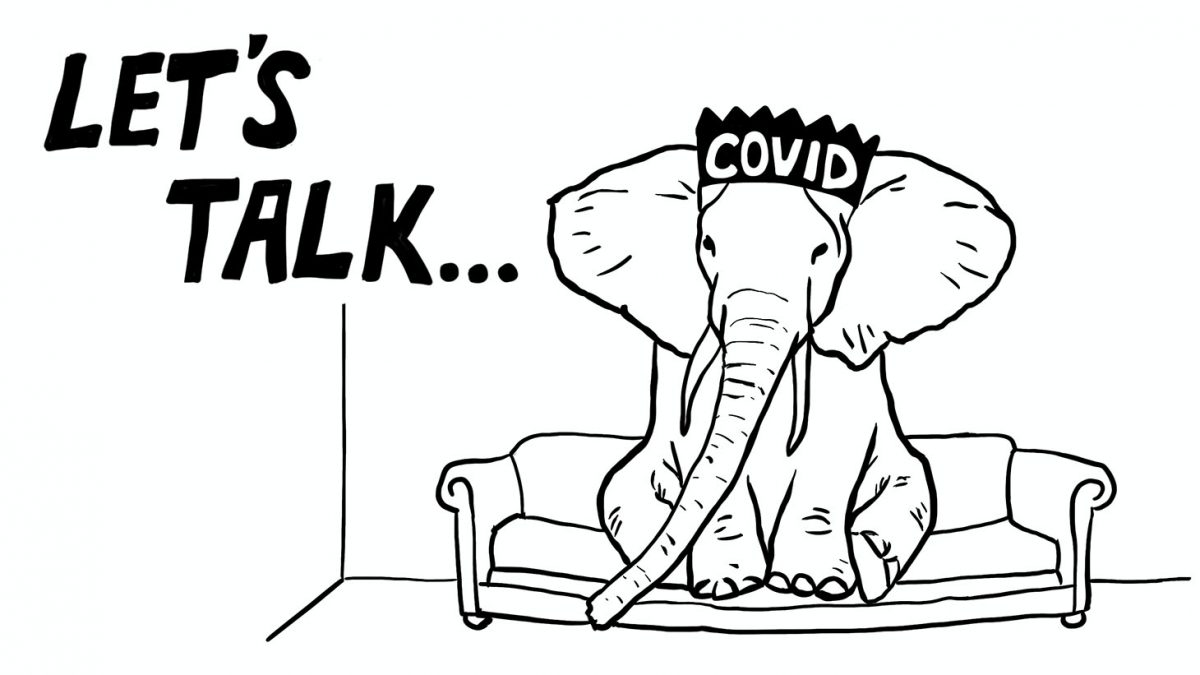
There’s a time and place to talk about the Covid elephant in the room, but there’s also lots of times and places where it’s probably not appropriate to get into it. Being mindful of when we choose to speak up is just as important as the words we use (a dinner party with a bunch of innocent bystanders might not be the best place to begin an impromptu public mediation session, for example).


Too often, disrespect and disparagement can infect the conversations we have with others. We’ve all been on the receiving end of it and, whether we like to admit it or not, we’ve all been on the giving end of it too (maybe consciously, or in a quick retort). The thing about speaking is that there isn’t a simple undo button, and so it is in our best interest to be careful with our words.

Have you ever written an email, saved the draft, sat on it to cool down, and then ended up not sending it? Ah, if only all conversations had that option of restraint. With a little practice and self-awareness, it is possible to improve on our tone and delivery. Here are some universal guidelines that can help us get a little closer to our better selves in our day-to-day and holiday socializing alike.

Consider these questions before opening your mouth to speak:

  1. Is it true?
  2. Is it kind?
  3. Is it beneficial?
  4. Is it necessary?
  5. Is it the right time?

These questions are a way of looking deeply into whether what we want to say is necessary at this time and whether it will really serve. Is this the moment when our words are needed to turn a situation around for the better? Or might our feedback be received as bullying, disrespectful, or disempowering?

It is to our benefit to look at situations from a wider point of view. From here, we can then take responsibility for our part in the difficulties.

Illustration of a checklist of questions to go through before speaking

As much as we’d like our words to always be skillful, the reality is that the need for these questions is perennial; versions of them span from the moral foundations of religions around the world to sandwich boards reminding customers to be polite at the coffee shop down the street.

When we care about something deeply our emotions can get our tongues flapping before we take a moment to think. These touchstone questions are worth coming back to time and time again, so that we don’t experience the lingering taste of regret after a dinner party. In a sense, they are another good way for helping us to create space for wise action when reacting to what’s in front of us.

Speaking up is important, and doing so skillfully is an art we ought to embrace.


Let’s remember to stay grounded. Don’t take things personally. Don’t make assumptions. Maintain good internal and external boundaries. Make and keep clear agreements. Renegotiate agreements, if necessary. Keep things in perspective. And work with the following qualities: vulnerability, accountability, self-responsibility, trust, connectedness, and fearlessness.

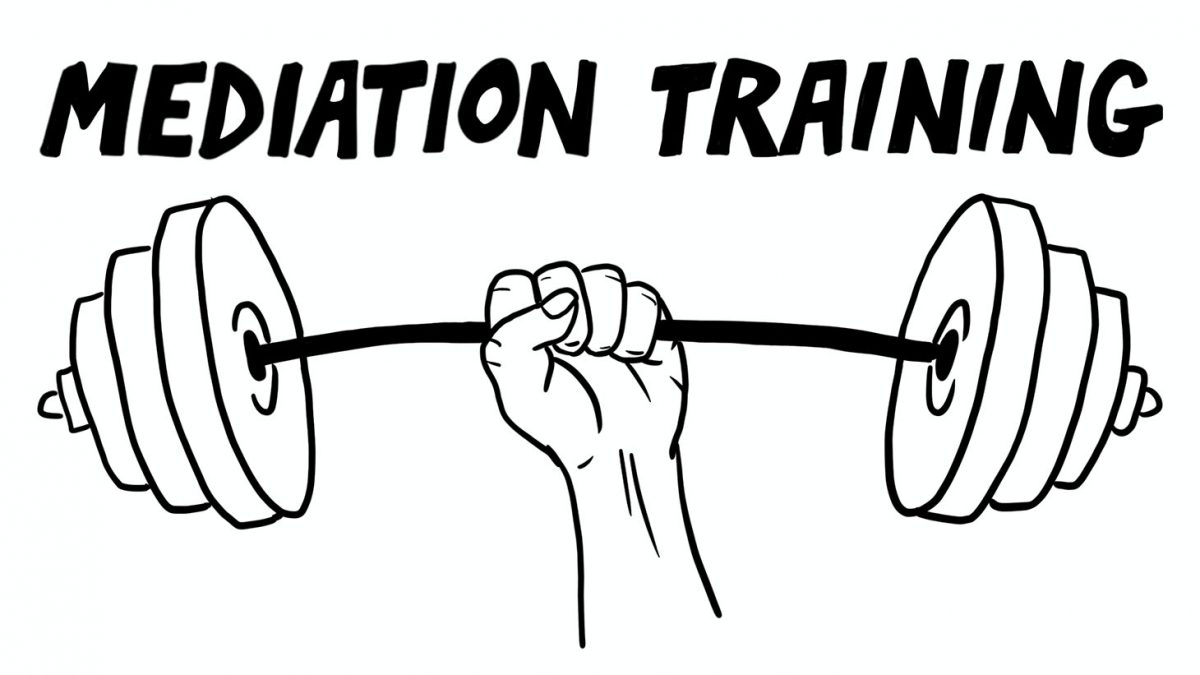
While this is a lot to keep in mind, it’s also doubly important in this collective moment. A lingering effect of the pandemic is that our social muscles have atrophied, so be patient with yourself as you rebuild yours one rep at a time.

And of course, try to be patient with others. If they do come across as more blunt than you think polite…try to remember the last time that you unintentionally put your own foot in your mouth and give them the benefit of the doubt. We’re all in this together, and unnecessary fanning of the flames is not what we need right now.

Save the tough conversations for the right time. At Mediation Services, we can help you create a safe space for exactly that: fill out an intake form to request help from a third-party mediator in your family, workplace, or community conflicts.

Or, take it into your own hands with one of our online or in-person training sessions on conflict resolution.

Because sometimes it’s better to put your fork in your mouth than your foot.

Strong Foundations: Becoming the mediator you were meant to be.

Illustrated hand lifting a dumb weight

Are you the type of person others come to when they need help? Maybe it’s your self-control or can-do attitude; whatever the reason, people tend to see you as an ally when things get tough. Whether it’s shovelling a driveway for your aging father-in-law or stepping in as a mediator in a tough family situation, how can you bolster yourself to show up for people in the best way you can?

Best intentions aren’t always quite enough. Wanting to help shovel the driveway is one thing, but if you’ve been spending the past six months on becoming one with the sofa, it’ll probably be a little tough to get the job done. The same goes when stepping into the middle of an emotionally charged conflict – without proper training, you’re heading into a volatile situation for which you might not be adequately prepared. There is a certain prerequisite of tending to things in your own life so that you are actually able to step up and help others.

Want to be able to help your aging father-in-law shovel his driveway? Then you’d better keep both your tools and yourself in tip-top physical shape.

Want to be a good mediator between people who are at odds? Then it’s time to get serious about how to become one, so that your actions offer help rather than make the situation worse.

Hats with different labels: friend, boss, child, parent, mediator

Through our relationships, we get the opportunity to try and play our part in the best way that we can. In this way, our actions can affect real and tangible change within our circle of influence. We can wear many hats in life: parent, child, neighbour, friend, boss, colleague, mediator…each one has a different context amidst those we’re intertwined with.

In an ideal world, we learn how to be better in each of our roles as time goes by – from both first-hand experience and shared wisdom from others that have learned a thing or two in walking a parallel path. It’s not always linear progress – we all make mistakes! – but with a bit of effort, we do get better with age.

Formalizing mediation

Wherever relationships exist, so does conflict (remember: accepting conflict as a natural part of life helps us work better with it) and thus the need for mediation. In fact, mediation is happening between us informally all of the time – diffusing tensions between family members, maintaining a safe work environment, or going through the checkout at the supermarket. Sometimes there is a need for formality: a safe space for everyone involved in order to work things out.

Over the past 40+ years, we’ve developed rigorous standards and processes here at Mediation Services that serve as a proven structure for mediating conflict. Our training program offers these proven tools and strategies to the community (including you!).

Our training initiative has grown into a vibrant program recognized for its high-quality peacemaking and conflict resolution teachings on local, national, and international scales.

Get certified with us

If you do decide to become a third-party mediator, you have our full support! Check our calendar for the next certification program. We are also proud to offer certificates for Conflict Management and Leadership Development Skills.

When others come to us for help, we all want to be there for them. The question becomes: how can we do so skillfully and with our best foot forward?

Tough Conversations: What about Covid?

Covid Elephant in the Room

There’s no denying the proverbial elephant in the room these days: the Covid-19 pandemic, which has added an extra layer of complexity to all of our relationships.

Many of the principles we talk about in these blog articles are purposefully generalized. After all, each of us is an individual facing unique challenges so an emphasis on a response framework allows techniques to be applied skillfully and creatively in our diverse lives. Yet sometimes it’s worth exploring a more specific application of principles, as some experiences are encountered alongside a wider trend.

Back to the Covid elephant in front of us: from a faint and distant beginning, this novel coronavirus arrived firmly on all of our doorsteps sowing seeds of disruption.

Looking out through our peepholes, we answered our unexpected guest’s knock with cautious questions: What are you? How do you get around? Are you going to cause trouble? …And what should we do now that you’re here?

But on the other side of the door, there were no clear answers. At its beginning, none of us knew what the repercussions of this global pandemic would be.

And so we began to uncover answers together; through study, experimentation, experience, and debate. Ideas were put forth, ideas were challenged, and ideas were refined. As our understanding evolved, so too did the virus under our microscopes as variants complicated the situation.

Amidst all of this uncertainty, each of us had to determine our own "best way forward." But we don’t always agree on what’s best, and polarizing ideas seeded discord. The global became personal and divides opened up.

US and THEM flags on opposite sides of a valley

Most of us have stumbled upon these divides firsthand: either online with avatars, at work amongst colleagues, or at home across the table from those closest to us. Even with family, it has become all too common to find ourselves walking away from an interaction muttering, "I absolutely disagree and don’t know how to even talk with you anymore." At least, this is a familiar refrain that we’ve been hearing here at Mediation Services.

What can we do in these stalemates?


There is a saying in conflict management: if you’re having the same conversation three times, then you’re not talking about the right thing. This is something that comes up time and again around heated pandemic topics. And so it begs the question: how can we talk about the right thing?

When it comes to conversations about Covid, generally we can group the quarrelsome topics into two different buckets:

  1. Thoughts about the disease itself – What we think about the disease, the role of government, the severity of the pandemic, opinions on vaccines, the helpfulness of masks, etc.
  2. How to best live in the situation we find ourselves in – How we navigate being with other people, what we’re comfortable or not comfortable with, etc.

If two people are having a conversation about ideas from differing buckets, it rarely is a discussion that moves forward and very quickly tends towards frustration.

We need to pay very close attention to what we’re talking about. Are we talking about the disease and our understanding of it? Or are we talking about how we are living our life and how we can be together?

Go deeper online at your own pace

One mediation session at a time, we’ve been taking notes on the paths we find forward. They have formed the foundation for an online course we’ve developed around these timely troubles: Covid Conversations: A Roadmap to Existing Together with Opposing Views.

This online course isn’t about changing your mind, or someone else’s for that matter (though there’s the potential for some movement in this regard in the process). Instead, it is geared towards talking and living alongside one another; speaking your truth, listening deeply to other people, and being able to stay in relationship (whether you agree or disagree).

Relationships matter. We are hardwired for connection; we have friends, we have family, and we have those we work with and live alongside in community. These elements will always be with us. As we emerge from Covid, our relationships will be largely impacted by how we have interacted and behaved during the pandemic period.


Just like a new virus lingers in society, so too do any relationship walls that have been erected alongside it. As time goes by, perhaps we can begin to dismantle those bricks – one conversation at a time.

In that spirit, Covid Conversations is both timely and timeless – ready for you to tackle any walls that might have built up in the last couple of years, at your own pace. Because we’re not at an end; this moment is just the one after the last, and we can work with it.

If you’re interested in opening up some conversations – or, if you’re trying to find a better way to show up to the tough ones – we invite you to check it out.

Sometimes a conversation is worth revisiting.

Bridging Divides: Learning to speak someone else’s language.

Confusion Corner likening to different conflict styles

“They” say that the key to healthy relationships is communication, but what happens when there is a communication breakdown? Misunderstanding, perceived aggression, misinterpreted lack of care…these feelings of distance aren’t hard to imagine in such a situation. And they can stoke a defensive fire within us, often unwittingly turning what was a natural conflict into a competitive and high stakes situation. Maybe “they” were on to something.

Fiery emotions can erupt when we clash with others. And if we succumb to these defensive feelings, a chasm begins to open up between us. If we do not carefully consider our next steps, this divide can quickly grow.

What if we could prevent unnecessary division by communicating in a way that the other person is more receptive to?

Previously we explored the idea that each of us has a preferred way of dealing with conflict. The important takeaway is this: in conflict, people like to be approached in the way that they would normally approach others.

Sounds simple, right? Perhaps, but simple doesn’t always mean easy. We all have a different way of approaching conflict. When our way of dealing with things doesn’t match up with someone else’s, this is when we can end up in situations where we’re metaphorically (or literally) shouting – but not being heard.


It’s like speaking another language.

Imagine travelling to another country – say, to a distant conference that’s being held in Geneva, Switzerland. You leave Canada and its familiar ‘eh’s behind, spend a disconnected day in international airspace, and find yourself touching down in a place you’ve never been before. Everything is shiny, and novel, and…not English. The cacophony of voices that echo off the hard airport walls are foreign and unknowable. Your grade school language studies help you to identify the noise to your left as French. But to your right…incomprehensible.

Let’s be clear: you are still a super-talented-and-funny individual, but just not an expert in every language. This is human, and no amount of raising your voice or repeating yourself is going to span a language gap.

In this situation, there are really only two options to make yourself understood: you can either learn to speak their language, or they can learn to speak yours. It’s worth noting that only one of these options is in your control.

Hello in different languages (in a speech bubble)

How does this translate to conflict styles? Remember: people have different preferences in how they approach communication and we’re aiming to meet them where they’re at.

Assuming you both read the same dictionary, the basic conflict styles can be simplified to:

  1. Avoid: Try to find a way to coexist without confronting the conflict – The neighbour’s dog is barking at the moon…eh, I’ll just sleep with my noise cancelling headphones tonight.
  2. Indirect: Try to find a way to bring up the issue at hand in a roundabout way – I heard your dog barking last night…is everything okay?
  3. Direct: Deal promptly with the conflict at hand – Knock knock knock…quiet your dog down NOW (please).

Each of these different approaches are like different languages. Having proficiency in more than one is definitely going to be helpful. If you can learn to be adept in various styles of addressing conflict, you will be able to communicate clearly with a more diverse group of people. Because if we spend all our time in one of these styles…well, we are going to get into trouble at some point.

When communication breaks down, the first thing we can try is to give the other person the benefit of the doubt. Assume that it’s not personal and they’re dealing with things as best they know how. But if you are going to approach somebody to confront them, it’s wise to consider how you go about it so that you are heard.

Here are some helpful questions you might ask yourself:

  • Who is this person I’m in conflict with?
  • What is their style of dealing with it?
  • How might they appreciate my approach?

The way we see ourselves and the way we see others really impacts our interactions with people. If we can understand our own style and its strengths (while acknowledging the weaknesses), we can also appreciate the different approaches of others.

Start considering other people’s perspective of your actions in conflict. They don’t necessarily face life in the same way that you do. How would they react to direct confrontation? How would they hear you if you took on a softer approach? How can you put your energy in the right place to be heard and find resolution?

The old adage, "Treat others as you would like to be treated" doesn’t always work in conflict. You have to consider the other person’s conflict style and approach them in a way that works for both of you, so as to not be mistaken as aggressive, aloof, or something else that you are not intending to be.


There are several ways to work with conflict styles and we dive deeper into them with our online course Introduction to Conflict Resolution: Dealing with Difficult People. In it are tools to help you establish healthy relationship skills that will pay off in dividends over a lifetime, both for yourself and those that surround you.

And yet, sometimes despite your best efforts, you need to bring in a third-party mediator as a translator. Fill out an intake form for Mediation Services Winnipeg and we can facilitate a mediation session to help generate a clear understanding of everyone’s issues and concerns, working together towards resolution.

Things can get fiery when emotions get riled up. While it’s always wise to use carefully considered language to prevent conflict from escalating into a communication divide, sometimes it inevitably still happens. But, there is hope! We are adaptable, and divides can be bridged with a little bit of focused effort, openness, and creativity.

Lost in Translation: Different styles of dealing with conflict.

Illustration of people and speech bubbles talking to each other

Have you ever been speaking to someone about something that’s important to you, yet they don’t seem to be hearing the heart of what you are saying?

It’s not that the words rolling off your tongue are from an unfamiliar dictionary; it just seems that your words don’t land. Something is lost in translation.

Take for example the situation of a noisy neighbour. It’s getting late – the clock just ticked past eleven and you have to be up early in the morning. You’re already in your pyjamas, but your plan for a restful night has been interrupted by music and off-key singalongs that have only increased in volume over the past hour.

As you toss and turn in bed, you think to yourself, This is not cool. And so you’re forced into a situation with a few different options:

  1. Sigh and shrug it off – put in some earplugs, roll over, catch whatever sleep that you can and do your best to forget about it the next day.
  2. Push through the night – but politely bring it up the next time you and your neighbour are talking over the fence.
  3. Deal with it directly – put on your housecoat, step out into the party zone, and have a forthright conversation about it.

Obviously, there are other variables that might influence what you choose to do. Is this a frequent issue? What is your relationship like with your neighbour? Are you a light sleeper? Is it a jaunt across a snow-covered lawn at -30 degrees Celsius, or a shuffle down the apartment hall?

But beyond these circumstantial details, is you. Are you initially drawn to response number 1, 2, or 3? Each of us has a natural tendency to deal with conflict in a certain way. Which is yours?

Image of three doors - numbered for different adventures

There is an impact behind our words that goes beyond vocabulary. What we say is informed by how we say it. And just like we learn how to walk by mimicking the gait of adults around us, we develop a personal way of dealing with conflict through a mysterious blend of nature and nurture; an individualized bit of character that influences how we interact with others.

Your neighbour is the same: they too have their own preferred way of communicating. The tricky thing is, it might be different than yours and that’s worth considering in the heat of things.

Research in conflict resolution shows that we tend to like being approached in a way that reflects how we would approach others. In order for our words to be received well enough at midnight (that’s right – another wide-eyed hour has already gone by as we’ve been contemplating this), we need to consider: what is the most effective way you can communicate your perspective and needs?

For instance: if your neighbour is typically direct, a casual mention of the noise last night might not communicate just how much it really bothered you. Or if your neighbour tends to be on the quieter side, blunt confrontation may be received as aggressive on your part.

If it really is resolution we’re after, it’s important to try to speak in a way that you are heard.


It takes a bit of work to get along with our neighbours – the same goes for family, colleagues, and…well, everyone. All we can control are our own actions, though even then it can be challenging because our initial reactions are often unconscious.

If we want to stay neighbourly, we need to gain a better grasp on understanding how we come across. Do our actions impact others? Absolutely. Can we learn to play our role in tricky situations better? Always. Will we make mistakes along the way? Almost certainly – but that’s okay too. The important thing is to take responsibility and try again. The goal isn’t perfection, but rather improvement.

The first step is to bring a bit more consciousness into our response to conflict, and in that space try to choose words and actions that won’t unnecessarily add fuel to the fire.

Next is to diffuse the tensions so that a conversation can actually happen, where both parties have an opportunity to speak and be heard.


In many of the conflicts that naturally arise in life you can find resolution on your own, but sometimes you get stuck at an impasse. It takes two to have a conversation, and there’s only so much you can do by yourself. In tricky situations, a third-party mediator can be especially helpful in creating a safe space for everyone involved.

Is this where you are at right now? If so, our qualified team is here as a resource. Head over to our mediation self referral page and fill out an intake form for neighbourhood/community conflict, family conflict, or workplace conflict. We can then facilitate a mediation session to help generate an understanding of everyone’s issues and concerns – and, importantly, to work towards an agreement.

There can be resolution on the far side of conflict, and we’re here to help you find it.

Good News: You can solve your own problems (and we can help).

Your Problems Wave - Illustration

You are unique. Your ideas, your viewpoint, and your humour are entirely your own. Who knows you better than you? The joke’s on us if we don’t always pick up on your intended whimsy.

You know what else is unique? Your problems. And…who knows your problems better than you? As much as anyone else can try to peel back the layers around them, ultimately they are limited to looking in from the outside and are bound to miss some of the subtler things at play (perhaps similar to when they miss the punchline to your clever joke).

But problems sure aren’t funny when we’re going through them. That’s the bad news; the good news is that this intimacy with the issues at hand means you are also the one who is in the best position to solve them.


It’s hard to talk about what we offer here at Mediation Services without talking about why we offer it, because the why is what drives us to show up day after day. One of the foundational beliefs that drive the programming we develop is: You can solve your own problems.

Problems can take on a looming nature if we aren’t well equipped to deal with them; they can cast a shadow on us and our outlook. Yet, you are always capable of more than you were yesterday and with the right resources you can stand tall to face conflict when it rises up to greet you.

We believe in you, and that’s why we’re here.

One of the greatest gifts you can give anyone is empowerment to solve their own problems. In fact, you are uniquely capable of this because you’re the one who is fully in your situation. In the midst of conflict, you know best what is important to you.

Hello Problem Solver - Illustration

Though, it’s not all about you. To accept that we have power to act also means to accept responsibility for our actions, which can be rather humbling.

We are simultaneously sovereign individuals and inextricably interconnected to those around us; two facts that can be tough to grapple with concurrently when we’re stuck firmly in our own perspective. Sooner or later, friction naturally arises with others and there is a personal responsibility to that. We do, after all, play an active role in our relationships.

In other words: if it is harmony that we are pursuing, we can’t force our will upon others without consideration of them too. It requires a bit more softness and a little less judgement, on both sides of the tough conversations that need to be had.


It’s also important to note that we need to be careful to not accept responsibility for others. While we have a certain liability with regards to our own actions, this is not the case with others whom we cannot control. And it follows that trying to control the uncontrollable is a futile task that does not end anywhere useful.

But relationships can be messy, and the lines delineating appropriate responsibility can be difficult to spot when we’re stuck in the midst of it. This is where a mediator can be especially helpful; to give clarity to the conversation, avoid further escalation, and pursue resolution.

This can take place on many levels, from learning mediation basics online in our Introduction to Conflict Resolution: Dealing with Difficult People to pursuing restorative justice outside of the court system. We strongly believe that you have the power to solve your own problems and are here to empower you to do so no matter where you may be experiencing conflict in your life.

Taking responsibility is hard, but when we can own what we’ve done it follows that we can figure out how to be better in the future. In looking closely at what we might have otherwise swept under the rug, we have the opportunity to clean things up and move onwards; with a special sort of gratification that comes with figuring things out for ourselves.

If you have questions,
please don’t hesitate to call.

1-204-925-3410

Subscribe To Our Newsletter

For The Latest News & Updates