Conflict is Natural: A core belief behind finding win-win resolutions.

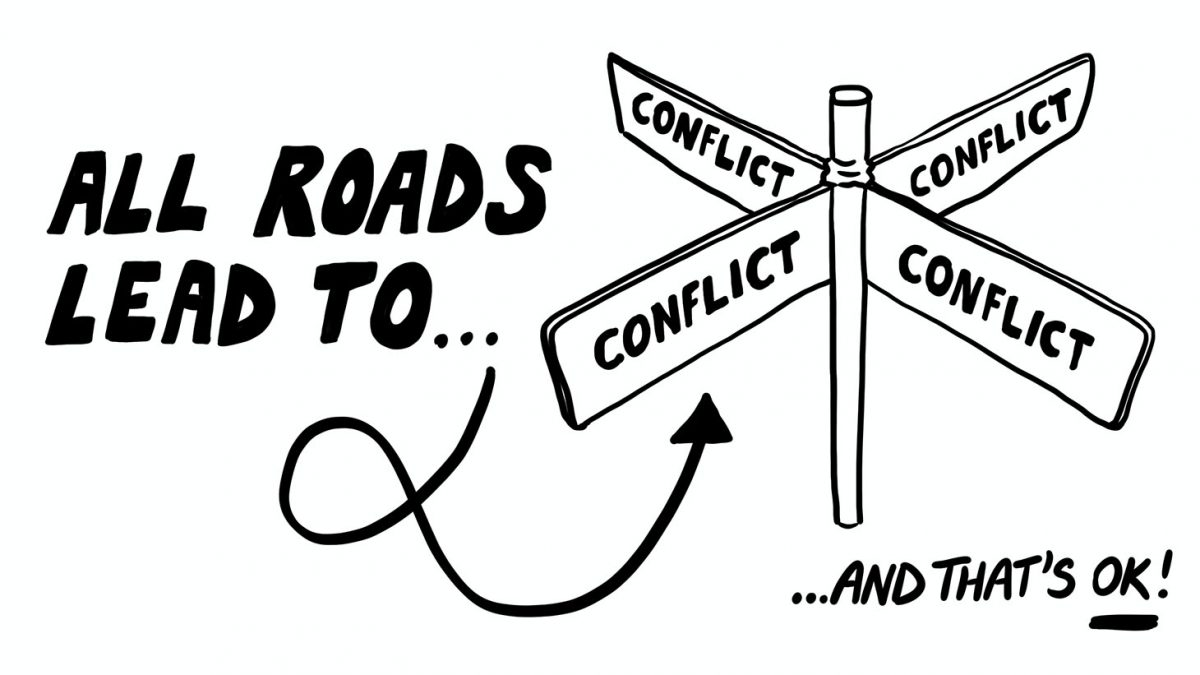
All roads lead to conflict - and that's ok

Here’s a strange thought: what if conflict is natural?

Wait wait wait – before you scoff at the idea and hastily close your browser, hear us out! This isn’t a nihilistic outlook that decries hope as futile and hardship as our inevitable reality. No no…rather, it is an invitation to accept that living in community inherently means that we will be interacting with people who are different than us – which is bound to be both a potent source for both joy and friction.

Conflict is undoubtedly uncomfortable, but what if we were to accept it as an unavoidable aspect of life? It seems to be an integral part of relationship; rearing its ugly head in even the most healthy ones. And so it begs the question: how can we better work within conflict rather than fight against it?


Let’s imagine for a moment that it’s an ordinary weekday in your life. You wake up in the morning feeling fresh and ready for the day. You hop in the shower and warm up the vocal cords with an off-key version of your favourite song – still fresh! You don a towel and brush your teeth – feeling minty and good! Retrieving your phone, you toggle it out of airplane mode and…bleep bleep bleep – notifications suddenly flood in, carrying forward the connections from yesterday. Some of the messages make you smile, while others force a reflexive cringe into your body and mind. You contemplate brushing your teeth again to re-find some freshness, but deep down you know that the only way forward is to face things.

Life doesn’t happen in a vacuum; in fact, it is as much defined by who we are as it is by our interactions with others. In this there’s a lot that is out of our control, which is a recipe for both beautiful serendipity and unexpected challenge – two sides of the same coin that cannot exist without the other.

Conflict is Natural - nature scene

Here at the Mediation Services offices in Winnipeg, we facilitate a safe space for conflict resolution from this foundational belief that conflict is natural.

This stance towards conflict can bring about positive changes in our relationships, despite the challenges that arise within them. But it requires us to work through the discomfort.

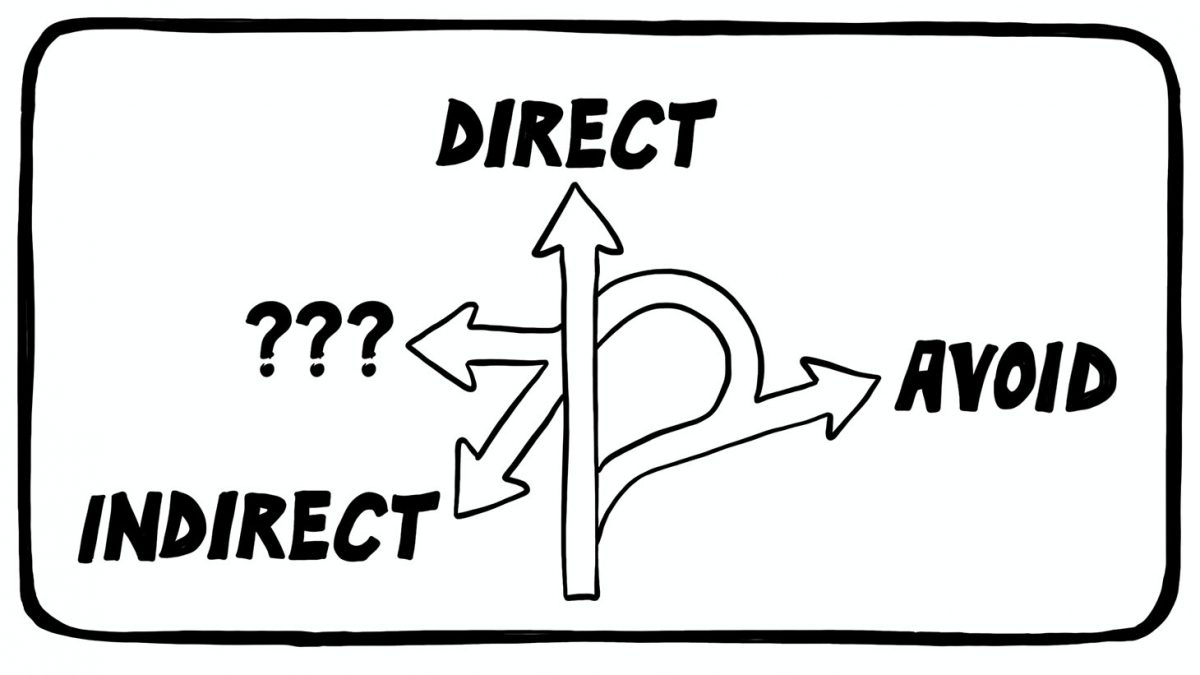
When face-to-face with a tough situation, try to remember: conflict is natural. Take a deep breath and slow down any reflexes that might kick in to fight or run away. Every situation is different, but it’s worth noting that conflict needn’t be considered a competition that has a single winner. With a little bit of work (and a little less judgement), the pursuit can be shifted to aim for a win-win resolution.

With practice, our response will take on a more relaxed shape. Leaning into difficult conversations, we can take an active role in pursuing beneficial outcomes.

Remember: there is hope in the fact that we can cultivate conscious choice in how we respond to things that happen to us.


There’s no getting around the fact that working with the conflict in your life takes daily effort though. The good news is, if we accept it as natural then we will see lots of opportunity to hone our skills with practice. When you show up and begin exploring what this looks like for you, we’re here with some tools to help you cultivate curiosity and connection that will help get you there.

Introduction to Conflict Resolution: Dealing with Difficult People is an online course we’ve developed for exploring the fundamentals of mediation in daily life. It is conveniently accessible from anywhere at anytime – there for you exactly when you might need it. You can sit down to learn at your own pace, and then integrate it with what you face when you step out into your life.

Or, browse the scheduled programming coming up and join us in-person or online (live via Zoom). We continue to fill the calendar with options that seek to address the current needs of the community, so do keep an eye on this blog and our newsletter for the latest and greatest.

Every relationship has the potential for highs and lows, and the only way to avoid the lows is to avoid relationship altogether – which, in so doing, also robs us of the highs. And even then, it’s impossible to live in a vacuum and so conflict is inevitable. It is our belief that it is better to embrace life with all of its peaks and valleys, while at the same time learning to better navigate them both.

Working with Conflict: The critical moment before we respond.

Press Pause

Have you ever felt like life happens to you rather than by you? Or rather, before you know it you find yourself in a conflict situation and wonder how you got there?

Things have an uncanny way of gaining momentum and us humans are optimized to deal with them quickly and efficiently, so much so that sometimes it can feel like we’re on autopilot. This is kind of amazing, that is until we realize we should have made a course correction a few steps back.

Changing our ingrained habits can be difficult – but it’s not impossible.


Think about the first time that you tried something new – like, say, the first time you swung your leg over a bicycle. You probably stepped on the pedals like you saw the older kids do, promptly falling over and scraping your knee on the pavement like the older kids did not. Okay, lesson learned – this isn’t as simple as others might have made it first look. After a bit of trial and error, you manage a wobbly but triumphant roll to the neighbour’s driveway. Flash forward a month, and you are flying down the street to the chagrin of cautious parents and drivers blurring by – wearing a helmet for safety, of course.

We learn from watching those around us and experimenting in our own way, but it doesn’t take long before this necessary effort falls into the background and our biology takes over. Our brains optimize as we go; smoothing out repetitive actions like balancing, peddling, and following traffic rules until riding a bike around the neighbourhood requires very little conscious thought. When we need to (such as riding home with a broken brake) we can consciously grab the handlebars, albeit with a bit more effort and a side of white-knuckled unsteadiness on the hills.

Automations are great for efficiency, but they also are prone to be applied bluntly and get us into troublesome situations. If we point ourselves down a hill and automatically reach for a brake that’s not working, we probably won’t end up in the best place possible.

No one wants to put themselves in the hospital, yet sometimes it happens.


Learning how to slow down

No, you are not reading a bike blog. This is just an example of how our brains work. The basic concept of learned behaviour provoking automatic reactions extends far beyond riding a bike and into how we treat ourselves, our relationships, and the world itself.

Conflict is no exception. We are prone to react quickly, in an automatic way that we learned over a whole life of trial and error. Without thinking we rush forward into the consequences of our response, sometimes good and other times…regrettable. Amidst all the variables at play, a generalized response is bound to occasionally put us in a messy place before we even realize it.

When facing conflict, it is helpful to slow down and take some time to think so that we can act more effectively. Sounds simple, right? Unfortunately, this is one of those things that is easier said than done – at least at first. Don’t despair: the neuroplasticity of our brains is never rigid and we can work with it to foster these elusive moments of pause and find conscious choice in tough situations.

Phone Chat Bubbles

The space between conflict’s occurrence and our response to it is pregnant with possibility. It is an opportune moment where we can insert a wedge in the self-perpetuating cycle of reaction to conflict, unlocking potential for a more positive outcome.

So let’s try it. Someone says something that rubs you the wrong way and you respond in kind with a snarky retort. And pause – wait…whoops, we missed it.

Attempting to hit pause when we’re primed to react with lightning-quick reflexes often results in us scrambling for the rewind button to try again. Unfortunately there’s no going back (pending the invention of time travel, of course), but at least we can always try again next time. The good news is that each time we do find a bit of space, that new neural response gets a little bit stronger and more within reach.

When triggered by conflict, try holding off on your snarky retort and instead first ask a question in an attempt to understand the other person’s perspective. If we take a moment to bring in a bit of open-minded curiosity to try and understand where our antagonist is coming from, we can actually end up having a better chance in communicating our own perspective.

There’s no point in sugarcoating it; changing ingrained habits is not easy, but the good news is that it gets easier. Each time you manage to find a moment of pause you begin building it as a positive new habit, which in turn begins to feel like a natural response. Eventually, it will be, but it takes effort to build the neural pathways to get there.


What next

At Mediation Services, we are here to help you better your relationship with conflict which in turn will benefit your relationships with others. A large part of where we focus our efforts is in the response, because this is where we can find lasting change in working with anger, hurt, and other tricky feelings. Ultimately, our goal is to help you find the tools that work for you; skills that can be taken home and applied towards conflict resolution in the ongoing challenges that life presents.

We have an online course that is immediately accessible and a great place to start with managing conflict in your life: Introduction to Conflict Resolution: Dealing with Difficult People

Beyond that, we have a myriad of in-person and online live Zoom programming for a more personalized experience. We offer training to deal with conflict in your life, as well as taking care of others who come to you with conflicts in theirs.

Take a look at the scheduled programming coming up, and perhaps you will see an opportunity that fits your needs.

Where we come from and what we face varies a lot. Here at Mediation Services we aim to help you find pause when you need it so that you can consciously participate in choosing your best path forward.

Read All About It: Newsletter, articles, and more!

It is the year 2022 and the ways in which we communicate are evolving at a rapid pace. Once upon a time there was the fax machine…wait, we still have one of those bleeping and blooping in the corner of our office. And then there was the telephone…oh, there’s clearly a landline ringing next to the fax machine over there. And…email? Yep, that too – our digital inboxes have been open since 2001.

You can contact us in any and all of these ways, but an important question remains: how can those of us at Mediation Services keep in touch with you? The writings on this blog and via our newsletter are our ongoing attempt to answer this, because we are evolving too.

Relationships are better when the communications flow in both directions, and this is no exception.


Since our establishment in 1979, we have expanded our goals to meet the shifting needs of our community. Our focus remains on facilitating a safe space for bridging gaps across opposing views, however no longer are we doing so exclusively in-person. In addition, we are proud to now offer the tools we’ve developed over the years as online courses for you to engage with at your own pace.

So what exactly are our training goals these days? They’re loose yet ambitious, and we are proud to see people achieving them every day. We aim to help others:

  • Resolve conflicts
  • Manage anger
  • Build a respectful workplace
  • Deal with difficult relationships

These skills have always been important within our homes, workplaces, and communities, but they have become even more vital as we all navigate the heightened challenges of the COVID-19 pandemic together.

In case you haven’t explored them yet, we highly recommend you check out our popular Covid Conversations and Introduction to Conflict Resolution online courses.


Here at Mediation Services, we can’t talk about us without including you. Every day, our path intersects with yours; we meet, discuss where we’re at and potential routes forward, and then carefully choose the next steps onwards.

Beyond each session our individual lives separate and go on. Monday’s first light brings us into another week and we rise with the sun to face the day, ready to do our best.

Amidst the busyness of life in a modern world, it is important to remember the simple communication and listening skills that help us manage stress, prevent conflict, and create respect. There is always another challenge on the horizon and, in the depths of difficulty, it is important to reach for the tools and support near us. In this spirit, we write here. In this spirit, we slide into your inbox. And in this spirit, we keep our fax machine and phones plugged in – so that we can be here when you need us however you may choose to reach out.

We have relationship goals. Over the last few months our newsletter subscriber list has grown significantly, a very real reflection on the number of people we’ve connected with. A lot of new faces have found us through our new online courses – our recent expansion in digital accessibility that has allowed us to meet so many more of you. Trust is built slowly over time, and we are grateful for everyone who has given us a chance to earn theirs over the years.

With this in mind, we write our newsletter and blog as an additional resource for our community. Discover conflict resolution tips and tricks to pepper into daily life, be the first to receive invitations to be a part of the emerging resources we’re developing, and get a behind-the-scenes spotlight on the question of why we are passionate about the work we do.

Anyone with a seed of curiosity – whether you’ve attended a workshop or are just peeking in from afar – can read these completely free offerings and be both informed and bolstered. Our hope is that they offer value and that, when you need it, you remember that you have us as a communication resource to tap into.

So if you are already a subscriber: thanks for sticking around and keep an eye on your inbox for more good things to come! And if you’re new around here, we invite you to consider exploring mediation in your life alongside us.

Subscribe to the newsletter here
Follow along on the blog here

Mediation Services’ goal is to be at the forefront of the restorative justice and conflict resolution movement. As always, you can get in contact with us at any of the numbers / addresses listed at the bottom of this page. We continue to show up each and every day, ready to serve you.

If you have questions,
please don’t hesitate to call.

1-204-925-3410

Subscribe To Our Newsletter

For The Latest News & Updates