The Attribution Problem: Judgment gets us into trouble.

Two text message bubbles with typing ellipses

In conflict situations, judgment gets us into trouble. Yet there is an unspoken default of "understanding for me and judgment for thee" that often overrides reason.

Consider this scenario:

It’s late. Your phone buzzes and flashes awake out of the corner of your eye, but your hands are full with post-dinner clean-up and lunch preparations for the next day so you can’t reach for it immediately. "I’ll get to it in a moment," you promise to no one but yourself as you slide another dish into the mounting pile in the kitchen sink.

The next week at coffee, a long-time friend angrily blows up at you: "How come you didn’t text me back the other night?! What the heck?!? If you don’t want to be my friend, just say so!!" she punctuates her outburst with a clatter of her fork on the plate.

"Whoops!" you manage to spittle out – taken aback by your friend’s reaction to the accident. You explain yourself and they seem to believe you. You nod sagely at her and give her arm a squeeze, content in the knowing that the friendship’s capacity for understanding is a deep gift to humanity (cue doves flying, rose petals gently falling, rainbows, etc).

Misunderstanding settled.

Jump to next week and the very same friend goes non-responsive to your text message outreach. In the space of a tightened breath, you forget about recognizing circumstance. As your phone screen stays black for another moment, you let out a silent scream. She is a cruel, vengeful, and hateful person! How can she make me wait like this?! UGHHHHH!!!

And scene!

What in the world is happening in this imagined (but probably not hard to imagine) story that causes such a sudden shift in your outlook on an unsent text? The circumstances are uncannily similar, the same people are involved, and even the history of the previous misunderstanding is just a short scroll up on the conversation thread. So why does a flipped role yield such a vastly different perspective?

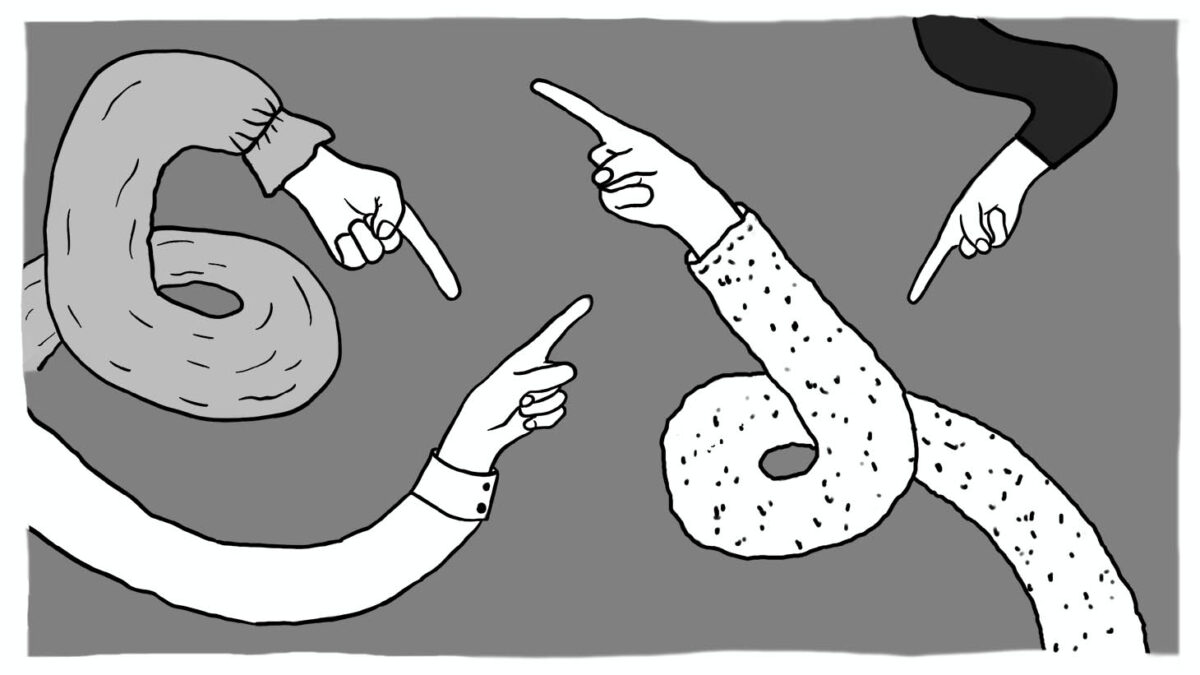
Three different hands pointing their fingers

We’ve all had things slip through the cracks when we’re busy. We’re human, and that means that we don’t get it right all the time.

Towards ourselves, we tend to view these oversights through a lens of understanding (it was perfectly reasonable for me to miss replying to you). Yet when others wrong us, our tendency is to understand what happened through a lens of judgment (you are a malevolent monster for not replying to me).

This is something known as the attribution problem, where we ascribe our frustrations to someone’s personality rather than considering the external factors that led them to act the way they did. It’s a fascinating psychological concept that plays a crucial role in our understanding of conflicts and how we perceive others’ actions and intentions.


As with any double standard, the prevalence of the attribution problem can hinder effective conflict resolution and perpetuate misunderstandings.

Our personal perspectives, biases, and emotions significantly influence how we perceive and interpret others’ actions in conflict situations. We tend to attribute our own actions to external circumstances, such as stress or time constraints, while attributing others’ actions to internal qualities or flaws.

With this example of an unsent text, we tend to understand the reasonable circumstances behind the communication breakdown when we’re the ones who didn’t respond. What if we could extend this grace to others as well?

Conflict 101

At this point, you can probably think of an example (or thirty) in your own life where the attribution problem has reared its frustrating head. But remember that perspectives go both ways. When we’re in conflict, it’s entirely likely that the person we are in conflict with is experiencing the attribution problem as well – justifying their own actions and slipping into a negative judgment of our role in the interaction.

Because of the ubiquity of the attribution problem, we’ve devoted an entire module in our FREE Conflict 101 on-demand webinar to it. We dive into its complexities through case studies and practical understanding.

Recognizing the impact of perspectives and biases is crucial in developing a more balanced and fair understanding of conflicts. When we know what to look for, we can spot the attribution problem playing out in real-time. And, with practice, work with it to find better outcomes.

Please join us in doing this (and more!) with our free online course Conflict 101: Demystifying Conflict Through a Psychological Approach. Get started today.

Announcement: FREE Conflict 101 on-demand webinar!

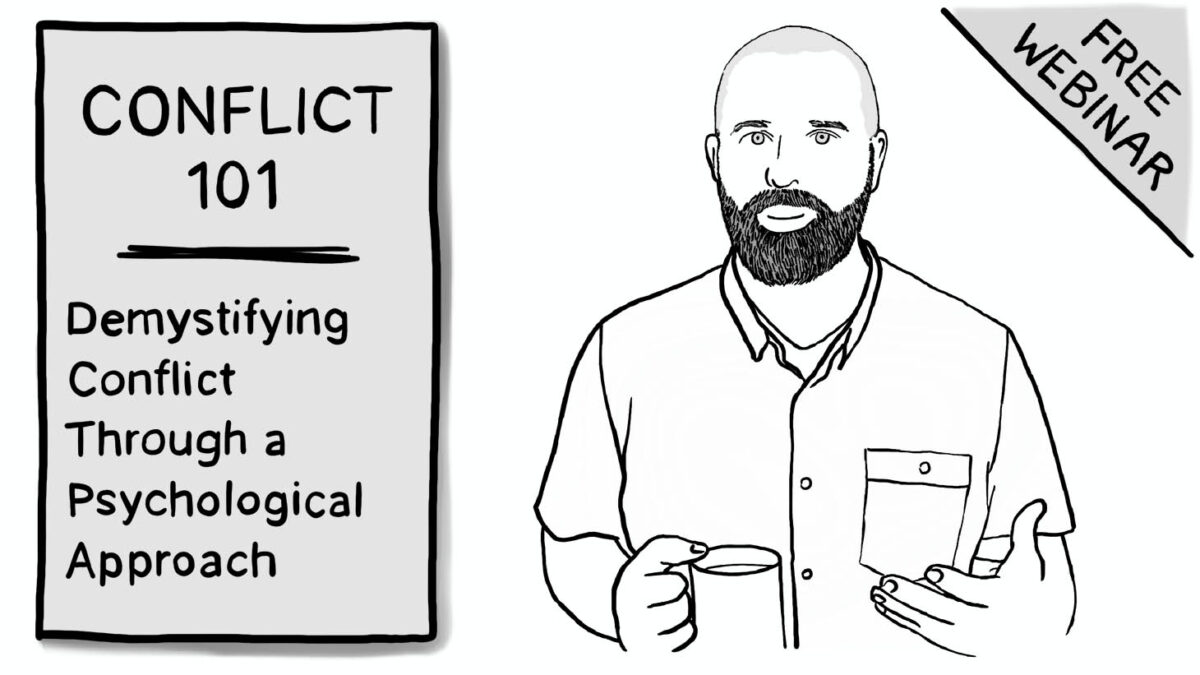
Conflict 101 Course Banner - Tony Friesen presenting free course

Big news: we just launched a new Conflict 101 on-demand webinar and it is 100% FREE. That’s right – it’s complimentary, gratis, on the house!

Conflict 101 is an empowering introductory course designed to equip you with essential knowledge and skills on the subject of conflict resolution. Conflict is an inevitable part of our personal and professional lives, but it doesn’t necessarily have to be the daunting, toxic, or overwhelmingly intense situation that it can often become.

‌Participants attending this workshop will have the opportunity to:

  • Understand the psychology behind our natural tendencies when someone does (or believes) something that frustrates us
  • Learn to identify which of our mental frameworks could be working against us and how to replace them with something more fruitful
  • Cultivate self-awareness to better understand our own intuition and impulses in conflict – and further develop strategies for improvement
  • Gather knowledge and practical techniques to both identify and manage the two primary types of conflict
  • Explore personal case studies and gain the tools necessary to dissect and learn from conflict situations (both historic and ongoing)
Hands holding printed training manual for free Conflict 101 course

Just as conflict is natural, so is having questions. Here are some answers to some frequently asked questions to clarify things.

Who is behind this free course?

The instructor for this free on-demand webinar is Tony Friesen – a staff member of our team at Mediation Services who has been steeped in the world of conflict resolution since 2008.

Why would you release this type of webinar?

We wholeheartedly believe that the basics of conflict resolution are for everybody and a better foundational understanding is useful for you and the community in which you live.

Hm, that sounds interesting. Can you give me more details about what is in the webinar?:

It’s a short-ish webinar that will give you the opportunity to explore mental frameworks that influence both perception and responses to conflict situations. You will have the chance to identify which frameworks might be working against you and replace them with something that will better serve both you and your relationships.

This sounds pretty useful, but I’m a busy person with a full calendar. When exactly is this webinar available?

This on-demand webinar is available now and at any time going forward.

This is great! How do I sign up?

That’s simple – all you need to do is enrol by entering your email here and you can get started right away!


And did we mention that all of this is free? Get now and pay never, it’s 100% off, absolutely pro bono! The only investment required on your part is the time it takes to participate.

We are so excited for you to begin delving into the fundamentals of conflict resolution with us. If you have any more questions, our contact information is detailed here and we encourage you to get in touch.

Investing time in ourselves pays off in dividends over all of the life that comes afterwards. Let today be the day to do just that with this free opportunity.

Enrol in Conflict 101 today at:
https://shop.mediationserviceswpg.ca/conflict-101-demystifying-conflict-through-a-psychological-approach

Connections: The cascading spread of an action.

A person tosses a stone into water

Actions cascade outward like ripples from a stone tossed into still water. And like the proverbial rock, once it is loosed an action is out of our hands and the resultant ripples out of our control.

The value of an action lies completely within itself. Its ripples emanate outward into the world; cascading into the waves and currents of others, disappearing into crests and troughs that are always moving, shifting, and transforming. It can be difficult to spot the effect of a single drop into such a churn, yet simultaneously it never truly disappears; still there in the sea of being, though less visible in its compounding intermingling.

And the waters are never still. The effects of an action intertwine with factors beyond ourselves – perspectives, conditioning, and subjectivity…from a single perspective, it is impossible to know wholly the resultant impacts of something we do.


This is not an excuse to absolve ourselves of liability when our ripple causes a splash. If someone feels disrespected even though we didn’t mean it for example, we still have a responsibility for our action in the situation.

When we recognize the inevitable cause-and-effect relationship of an action, we can begin to see the myriad of things it touches outside of us. Nothing is done in a vacuum and acknowledging our interconnectivity is important in dealing with unexpected results like conflict. Sure, you might not have meant to cause such a reaction in someone else, but your ripple did play a part in it. And it helps to answer the question of now what!? – where understanding of one’s role in the wider scope of things allows for more creativity in remedying them.

Perhaps the next time we perform a similar rock toss, we can do so with a little more mindfulness of the potential waves it may cause.

All this is to say that we can’t know the full effect of our actions, but we can know that there is an effect in each and every one.


A woman dances amidst moving streams of water

Recognizing this reality of interbeing, it becomes evident that little actions can have outsized impacts.

Forgiving your partner after a turbulent conflict establishes a positive archetype to the watchful eyes of a child, a similarly struggling friend, or a stranger’s happenstance gaze. The unexpected gift of someone paying for your coffee sows seeds of generosity that you might pay forward to someone else. A boss who takes time to listen to you as a human inspires likewise efforts to see their humanity when later at odds in tough work situations.

And the ripples don’t stop there as others toss their stones into the sea of collective being as well. The child grows up and chooses forgiveness at a tough crossroads. The generosity train continues. Colleagues form the foundation of a healthy company culture.

On and on, things have a certain momentum to them.

But these outsized effects also apply to less-than-nice actions. Abuse, disrespect, trauma…the ripples cascade outwards for generations and it can take an inordinate amount of effort to shift the hidden momentum behind them. These massive events never come out of nowhere, though it may be difficult to clearly see the currents beneath the surface that they arise from.

A lot of the mediation concepts we elucidate on this blog might be seen as "focusing on the negative." But rest assured that we only shine a light on the negative in order to help us see it more clearly. The hope is that from there we can then transform it into a more positive direction.

Emphasis is put on dancing with the waters in tough situations: watching the ripples happen in slow motion, softening and receiving their momentum carefully, and doing our best to redirect it somewhere better than a tidal wave.

We focus on conflict so that we can find resolution. We focus on disrespect so that we can cultivate respect. It’s not about one or the other, but the dual existence of both.


There is simultaneously hope and responsibility in the cascading potential of each action, which extends far beyond our vision. By this same measure, we accept unanticipated results – remembering that our reaction to what comes our way is as important as that which we’re reacting to, the important not-knowing nature of beginner’s mind, and that each action is a practice rather than perfection.

All of us could stand to be better with our rock tossing and water dancing.

Learn more about training yourself with the important skill of conflict resolution by participating in one of our readily available online webinars or ongoing in-person training programs.

We looking forward to navigating these waters with you.

Friend or Foe: How to manage perfectionism.

A smart emoji next to the mispelt title 'How to be Perfec'

Have you ever been told that you’re a perfectionist? If so, chances are the title was thrown out there with a negative spin to it. "You’re a perfectionist," translating to, "You’re uptight, demanding, controlling, and fussy."

Yikes. Sure there are some downsides to perfectionism, but is it really all that?

The colloquial definition of a perfectionist is this:

A perfectionist is someone who wants everything to be perfect all the time and who gets upset when they aren’t.

Basically, being told you’re a perfectionist is a way to shut down the conversation. It’s a way to try to win at a disagreement, without necessarily addressing the root cause of conflict. And to add insult to injury, we might believe the accusation and agree with the negativity associated with being a perfectionist.

But this definition is incomplete. Perfectionists aren’t toddlers that want their juice box at the exact moment they want it with the straw inserted just so and it better be apple juice or else. Perfectionists are intelligent, ambitious, interested, interesting people who are thirsty for more (juice, or otherwise).

So before we run off to try to quash our perfectionism and be okay with being mediocre, consider this: what if your perfectionism exists to help you and those around you?


Being a perfectionist means that you have an innate desire to test the limits, to push the boundaries, to ascend. It is a trait that can be a gift – giving us the determination to see tough things through, from brushing our teeth every day to not giving up in the face of uncomfortable conflicts.

Further, this can-do spirit cascades out beyond an individual. Perfectionists are the members of our communities who remind us not to underestimate ourselves and that we owe it to ourselves to strive for more.

Perfectionism isn’t perfect, but it’s also not all bad.

'Practice makes perfect' sign with 'adaptively' slipped in before 'perfect'

In Katherine Morgan Schafler’s book, The Perfectionist’s Guide to Losing Control: A Path to Peace and Power, she discusses how research splits perfectionism into two branches:

  • Adaptive perfectionism: The use of perfectionism to your benefit in a healthy, learning-oriented, and constructive way.
  • Maladaptive perfectionism: An unhealthy, destructive form of perfectionism.

Adaptive perfectionism has many benefits, including better self-esteem, higher levels of work engagement and psychological well-being, and lower levels of perceived failure. While maladaptive perfectionism manifests as procrastination, rumination, defensiveness or avoiding conflict, adaptive perfectionists focus on taking action to find solutions, all the while doing it with more optimism and less anxiety.

Can we start to see that the prevailing dialogue about perfectionism is solely focused on the maladaptive kind?

It makes sense that our collective lens tends to narrow when discussing complex topics. As humans, we like things to be simple so that we can make sense of them. But an incomplete view of perfectionism robs us of the opportunity to embrace who we are and to use our strengths to their fullest. Perfectionism, when managed with care and tact, is a powerful energy that can bring us all closer to peace, fulfillment, and resolution.


Picture this: your in-laws’ 30th anniversary is coming up and the occasion deserves a celebration, but party plans are a multi-headed beast in such a large extended family. As a perfectionist, planning is your forté (and not being the planner is a stress worse than the work itself). You have a clear vision of how to string up the balloons, lay out the cheese board, and organize the living room seating – but Niece, Sister-in-law, and Husband have strong opinions that they’ve brought to the table too. Niece thinks the balloons ought to be helium; Sister-in-law staunchly believes that both Brie and Camembert are needed. And Husband doesn’t care about seats because he’s going to be DJ Dad and get the party grooving.

As a maladaptive perfectionist you might roll your eyes at these ideas and, if your fellow party planners don’t get the message that your way is obviously the best, then perhaps you’ll kick over a chair, pop some balloons, and stomp off indignantly – withdrawing your help altogether and crossing your arms in the corner. In effect you’ve avoided dealing with the conflict head-on and stubbornly stuck to your stance, without offering options for a path forward.

But as an adaptive perfectionist, you would discuss the logistics of helium with Niece, put aside the issue of your sister-in-law’s unhealthy obsession with soft-ripened cheeses (you can deal with that later), and remove a couple of foldout chairs in the negotiation of the evening’s schedule with your spouse-turned-DJ to make sure the speeches are made before the beat drops. You understand that there are many ways to achieve the shared goal of celebrating people dear to everyone involved, and you have the agility and optimism to know that it’ll all work out well enough.


Practice makes perfectadaptively perfect in this case, rather than absolutely perfect.

Here at Mediation Services, we believe that you can solve your own problems. Our work is to support you in your personal and professional journey of understanding how your role in relationships can bring beneficial outcomes – whether in your family, community, or workplace.

Hop into one of our online on-demand courses or sign up for an in-person training session so that you can unpack your strengths for the betterment of yourself and those around you.

Perfectionism is just one of the superpowers that we have to tap into!

Owning Our Part: The antidote to complicated conflict.

A person drags a huge sled of emotional baggage as they walk

Have you ever been frustrated with how a conflict can mentally hitch a ride with you thereafter? Riled up by the uncomfortable situation we are embroiled in, we turn the details over and over in our heads as we try to make sense of what happened. With an outward gaze, as we tend to default towards in a basic version of The Blame Game, this can become an unwanted extracurricular activity that follows us around.

When bad things happen, it’s usually the result of a series of many things and often involves many people – including ourselves. But accepting that we’ve made a mistake is difficult, and so the blame is cast outward. When we avoid looking at ourselves, we are not being honest – and as a result, we can’t find peace.


Consider this quote by Carol Tavris and Elliot Aronson, from their book, Mistakes Were Made (but not by me):

The mind wants to protect itself from the pain of dissonance with the balm of self-justification, but the soul wants to confess.

By way of self-protection, our mind wants to convince us that we did nothing wrong – that it’s always the "other" that is being unreasonable. This play battle of good (you, obviously) versus evil (them, obviously!!!) can only go on for so long – because underneath the hand-wringing and finger-pointing, there is a part of us that wants to own up. A clean conscience, after all, helps us to sleep soundly at night.


If it’s beneficial to concede to our mistakes, why is it so difficult to admit them? There are a couple of common reasons:

  1. We aren’t aware that we have made a mistake.
  2. Many of our cultures are mistake-phobic, linking mistakes with incompetence or stupidity that will be punished.

When our cultures and societies have a narrow tolerance for mistakes, we inevitably develop coping strategies to avoid making them in the first place – or having responsibility land on us in the second, third, or eleventh place.

Does this make us humans sound conniving? Well, it’s not that simple. The way this usually plays out is unconscious. Unbeknownst to our conscious selves, we often have an unconscious internal conversation that describes ourselves more positively and others more negatively. Inwardly, we think of ourselves as good innocent people who couldn’t possibly make a mistake, sheesh! Then we reaffirm our haloed self-image by spending time ruminating on the specificities of how others got it wrong.

Naturally, these spinning thoughts spill out of our minds and off our tongues to any ear that will listen – creating a containment problem that arises to which our colleagues, friends, and family can probably testify. Worse, none of this solves the original conflict and unnecessarily escalates the issue.

A note to self that we all make mistakes

Whether a hesitancy to admit to our mistakes is due to cultural conditioning or honest unawareness, we can help ourselves and each other by shifting our perspective to a more nuanced stance. In recognizing that conflict is natural, we can address our spiralling thoughts. We can remove the shackles of having to be perfect and mistake-free. And when we hold a more realistic view of our role in a situation, we can cultivate a culture of growth.

There are three things we need to understand and accept about our role in all conflicts:

  1. We will make mistakes: No one is perfect! Besides, mistakes give us a chance to learn. Becoming better is all about experimenting, trying new things, and opening up to new possibilities. And when we inevitably mess up, we try again better next time.
  2. Our intentions are complex: While we might insist that we’re keeping our motives pure, we all have blind spots. Could there be some unconscious, secondary gains we aren’t acknowledging?
  3. We have contributed to the problem: This can be tough to own up to, but it’s necessary for moving forward. We are embedded in a relationship’s dynamics, where our actions have not always been constructive. Even if our behaviour was not immoral, illegal, or unethical, it might just not work for the other person.

So let’s agree to stop blaming out, okay? But before we swing too far the other way into thinking that it’s all up to us, let’s remember that it’s both. The antidote to defensiveness in the face of conflict is for each of us to own our part.


When we claim personal responsibility in life’s sticky situations, we can take steps towards clarity, understanding, and perhaps even resolution. This translates to a sense of lightness – so that when we are wrapping up the day, we can be free of mental and emotional baggage that otherwise might follow us around.

Through many years of third-party mediation, we’ve witnessed the stark difference that this shift in mindset can bring to conflict that otherwise feels stuck. Rehearsing and regurgitating stories about how others are wrong does not have to be your hobby.

Our ongoing work here at Mediation Services is to help you find resolution and clarity in the conflict of your own life. There are plenty of resources on our blog to get you started, and we continually offer accessible trainings in mediation (both online and offline) with tools for you to help disentangle tricky situations.

While we all need to take 100% responsibility for our role in the conflict, we also need to allow other people to safely take responsibility for theirs too. If you need assistance bridging a divide that has formed, request a third-party mediator here or contact us to explore your options.

We are here to empower you amidst the complexity of interconnectivity.

Interconnected: Conflict is rarely one person’s fault.

Fingers pointing at each other

Are you familiar with The Blame Game? You can play it anywhere, anytime! And many of us do. Imagine this:

You’re making your morning cup of coffee and shuffle to the fridge to grab some milk. Barely awake because you had stayed up late watching one more episode of your favourite show, you are looking forward to some caffeine. Just as you’re pulling it out, you accidentally knock over a tower of Tupperware, which sends the orange juice flying. With the milk in one hand and your coffee mug in the other, you watch as the bottle of orange juice slow-motion bounces once, twice, and smashes to the floor; the lid popping off and its sweet golden liquid surging out, underneath the fridge, and soaking the fresh socks you had just pulled out of the pile of unfolded clean laundry.

You would throw your hands up in the air if you still weren’t holding the milk and coffee.

And it’s not even 9 am.

No longer thirsty and now fully awake (no thanks to caffeine), you grab a dishcloth to stem the sticky deluge. Sopping up the mess, your mind begins to spin: If only Spouse hadn’t stacked the Tupperware like that, this wouldn’t have happened. I saw how badly things were crammed in there last night, but I was distracted by Mother calling. Why did she have to call at that time?! And then I got busy with work emails. Ugh, Colleague needs to stop messaging me after hours! How can Company make such a faulty cap on that juice bottle anyway?! I am going to write them an email. And where is Spouse?!! They should be cleaning this up! I don’t even like orange juice!! IT WAS THEIR TUPPERWARE TOWER!!!

As you use your socks to absorb the juice seeping into the corner of the baseboards (because why not, they’re soaked already), you continue to mentally list the litany of scapegoats, lining them up one after another. You’re still muttering to yourself when Spouse comes in, sees the mess, and drops on their knees to help. Worked up into a frenzy, you sputter at them angrily about how they need to stack the Tupperware better.

Yes, maybe they do. But you were rushing this morning as well…so maybe, just maybe, you bear some responsibility too?

It’s a radical thought.

Cow exclaiming don't cry over spilt orange juice

The nature of relationship is that we are all deeply interconnected. This also means that any given situation tends to not be as simple as we might wish it to be.

When things inevitably get messy like in our spilt orange juice example, pointing out these reasons to the mess-that-is might have some merit. Yes, Spouse haphazardly stacked the Tupperware last night as they were cleaning up and hurrying to bed. And sure, Mother called you to say hello. And okay, Colleague emailed you after hours as they were trying to figure out the vexing work problem. But pointing only at these things amounts to excuses – and shirks any responsibility that you also bear.

When bad things happen, it’s usually the result of a series of many things and often involves many people. While context might help explain how a series of steps added up to a moment of regrettable action, it does not exonerate one’s role. Rarely does the fault solely lie with one person. Yet often our focus lingers on the wrongs of other people to the exclusion of ourselves – when in reality, everyone involved bears some level of responsibility.

At this point, you might be realizing you’re better at The Blame Game than you originally thought. But what if we choose to include ourselves in making sense of what happened?

Imagine you are back in your kitchen, having just mopped up all the spilt orange juice. You apologize to your partner for your outburst (after which they concede to their poor Tupperware architecture), change your socks, and head to work ready to tackle the tricky problem that your colleague emailed you about late last night.

We believe this is a worthy amendment to the rules of the game. By recognizing our role in life’s messes, we embrace reality – and act as fairly and honestly as we can, doing our best in complicated circumstances.


The proverbial orange juice will inevitably spill again. And when it does, the question becomes: how can we both accept responsibility and ask others to accept theirs?

This is a good question to keep in mind when dealing with all types of conflict – for in accepting our role we can hopefully contribute towards resolution rather than escalation.

Are you curious about how you can change your mindset around conflict, for the better? A great place to begin is one of our on-demand webinars, such as Introduction to Conflict Resolution and Dealing with Defensiveness. Through these accessible online courses, our team of experts share proven tools of the trade on how to transform conflict into something constructive. Experience the positive benefits of conflict resolution techniques by getting started today.

Uh-oh: What happens when we react to conflict poorly?

Hiker gazing at trail crossroads: double down or take responsibility

Initiating change is hard – it’s much easier to go along with the momentum of what’s familiar. And yet, there are times when we need to embrace something different.

On this blog, often we take the theoretical carrot approach to conflict: spotlighting the positive aspects of behaviour that we want to cultivate so as to inspire us to put in hard work to shift our habits. But sometimes it’s useful to take the theoretical stick approach to conflict: focusing on what we don’t want to happen in order to avoid the associated outcomes.

So today, let’s explore a darker timeline.


The year is 2031. Robert Blithe (colloquially known as Boisterous Bob) has been promoted to middle management in Future Company Co. Known for his notorious bluntness, he brings a new flavour to the leadership team – one that is strong and unyielding.

Bob’s door frequently swings open as he begins his tenure. One might assume that this equates to an "open door" policy – but in reality, it is a management style that more resembles a "revolving door."

Though arguably his strength, Bob’s bluntness has also been stirring up conflict and ruffling feathers amongst his staff. One by one, people have funnelled into his office to broach uncomfortable discussions. And one after another, they have stumbled out feeling frustrated and unheard.

Inevitably the same issues come up again and again, in an ongoing cycle without resolution. Bob staunchly believes his brash my way or the highway approach is what earned him the position and that standing his ground, on even the little things, will keep him there.

After a year, the stream of complaints wanes and eventually stops coming. Bob’s meeting calendar grows quiet. He feels justified and doubles down on his approach, reinforcing this take it or leave it character trait deeper. But the viewpoint of the staff around him does not match his perceived success. By not working together to reach resolutions, distrust has established itself. People have stopped frequenting Boisterous Bob’s door because of a new reputation he has developed: that of being defensive, closed-minded, and unapproachable.

The issues have not disappeared – instead, they have shifted underground because people don’t feel safe opening up to Bob. So, where do things go from here?

In one timeline, Future Company Co loses a bunch of good employees that, after trying to make things work, quietly move on to workplaces where they feel empowered. Indeed, they are embracing the leave it option of Bob’s philosophy. Turning our gaze to another timeline, Bob is sent to a Mediation Services training on Building a Respectful Workplace. Through study, workshopping, and reflection, he uncovers layers about the role he has played in the drama of conflict – over time, accepting responsibility for what might come to be realized as poor actions.

A lone person in a fortified castle, wondering why no one approaches them to talk

What happens if we act poorly in the face of conflict? Evidently from Boisterous Bob, quite a bit. For example:

  1. We create a barrier in communication
  2. We add another issue to the agenda
  3. The issue takes precedence over other concerns
  4. An obstacle is added to existing conflict and performance issues
  5. As a result, we damage relationships and breed mistrust

And yet: when we make mistakes, we often double down on our position.

Our intentions are complex, including conscious and unconscious motivations. We experience cognitive dissonance when we’ve invested time / money / reputation / effort in some activity that turns out to be wrong or foolish. From here, we can either choose a path of self-justification or one where we take responsibility. It is a crossroads that has deep ramifications; choosing to double down will reinforce an old behaviour that, down the road, makes it even harder to take responsibility.


The good news is we are not alone in this because we all make mistakes! And yes, it is good news, because along with this fact comes the permission to accidentally make a mess and then try again. Practice doesn’t make perfect, but it does tend to make better.

If you’d like to follow Boisterous Bob into a timeline informed by training that Mediation Services offers, we invite you to enrol in our Introduction to Conflict Resolution and Dealing with Defensiveness online courses. They provide solid foundations for dealing with conflict in both the present and future. And as to the inevitable tangles of the past, we can work with those as well.

Timing: Conflict and the art of procrastination.

A graph of emotional intensity over time

It’s summer, and the revolving door of people coming and going on vacation is constantly spinning. Dynamics shift, paths cross, and other paths…miss each other. In this irregular season, lingering conflict has a tendency to get pushed off until there’s a better time to deal with it.

Yet there will never be a perfect moment, and waiting for one only prolongs the process of resolution. Worse, procrastination gives underlying issues, even if they’re little, time to build up into bigger ones. Before we know it, we can find ourselves living with a baseline of emotional tension that is much more difficult to untangle than it once would have been.


Does this mean that when your colleague returns from two weeks at the lake with his family you should jump on him with your flood of frustrations as soon as they enter the office? Probably not. On this other end of the timing spectrum, we can react too quickly as well.

To quote Dr. Frumi Rachel Barr, an executive coach:

"The truth is that many confrontations fail not because others are bad and wrong, but because we handle them poorly."

Put another way: with a little more thoughtfulness, we could have delivered our message a little less poorly – and so our timing of difficult conversations is oft as important as what we say.

When we challenge people, we need to understand that how we say something affects its reception. In so doing, we develop our capacity to learn how to tell people things in a way that is simultaneously honest and kind. Not only does this allow us to try being the best version of ourselves, but it also gives the same opportunity to the other person as well. Because, like it or not, the wrong words trigger a biological defensive response that can get in the way of us thinking clearly.

A teddy bear looks into a mirror and sees a grizzly bear

In the heat of the moment, it can be tempting to react by instinct. We think: If I deal with something directly, then it won’t be hanging over me as long, right?

Sometimes – but many times not. A defensive response that’s biological can feel like instinct, but it also is a state where we are not thinking clearly. And if our reaction triggers a defensive response in the other person, they will act before thinking as well. Back-and-forth, back-and-forth…it’s easy to see how a small issue can quickly escalate into a much bigger one.

The defensive surge from our heightened sense of readiness takes 20 minutes to an hour to dissipate. During that time we are unable to think clearly, and the length of such a state of mind becomes even longer if somebody does something more to keep it going…which unfortunately is too often what happens (remember that back-and-forth vibe?). Such situations can be very difficult to walk away from.

It often takes a night’s sleep to reset the hormones released in a defensive state. So whether we recognize defensiveness arising in ourselves or others, it’s worth remembering that we might not be at our best.

When feeling the clouded perspective of defensiveness, it’s okay to say: "I’m willing to talk about this. Can we pick this up tomorrow?" Ask for what you need. Or, offer what you need.


Evidently, there is a line to be walked between reacting too quickly and procrastinating.

Process trumps content. What is most problematic about conflict is often how it is dealt with, rather than the original situation itself. An ill-delivered message can make an awkward conversation absolutely impossible and untenable for the other person – which serves no one.

None of us will ever arrive at perfection. But with practice and perseverance we can all get a little better at dealing with it, mitigating escalations and pursuing conflict resolution.


We can’t tell you whether now is the right moment to deal with any persistent conflict in your life, but we can (and do) ask you to consider: when would the right time be?

If you’d like to dive deeper into understanding your relationship with conflict, our Introduction to Conflict Resolution and Dealing with Defensiveness online courses offer foundations that are recommended for all.

We are here to support you. Contact us with any questions and let’s get the conversation going.

Practice, Perseverance, and Hope: Consistent effort yields results.

Perseverence: The hill is not always this steep

We share a lot of tips and tricks for dealing with conflict on this blog. Based on decades of experience working in the field, we know they are tried and true – but it might be a little daunting for the uninitiated. When these concepts are new, a typical response might be: "Easier said than done."

And that wouldn’t be wrong! It is undoubtedly difficult to learn new habits – yet let the mere fact that you found your way to reading this be an encouragement that you’re ready to start. Because when we are struggling, we are more likely to open up to trying something new. In this case, starting work around conflict that will pay off in relational dividends throughout the rest of our lives.

Neuroscience tells us that you teach an old dog new tricks (no we’re not calling you a dog, but yes we’re talking about you). And as with most things, it gets easier with practice.


What comes to mind when you hear the word practice?

Often our thoughts drift back to memories of formative years of play – chasing whatever ball, puck, or cute teenager caught our eye at the community centre. Were any of us born natural prodigies at any one of these? Not likely.

With the hindsight and perspective of an adult looking on from the stands watching a group of kids haphazardly chase the sports ball or lover that catches their eye…well, it is obvious there is some room for improvement.

And we do improve! That is, with practice. And practice can only happen if we go through the awkward beginning phase. At first, it takes a lot of conscious thought to muddle through even the basics – left-foot then right-foot, or perhaps mustering up a squeaky hello. But after some consistent and persistent trying, what once took a lot of effort sinks into our bones and becomes natural. The burgeoning sports player rises out of the little leagues, and the budding romantic moves on to deeper relationships.

What if we could bring this concept of practice to learning how to deal with life’s unavoidable conflicts? Sure we may not be great at it to start, but we can certainly get better over time. And with some humility, we can mitigate any of the inevitable fumbles we make along the way.

Store clerk saying to customer: Sorry, we're out of undo buttons. Can I interest you in a try again button instead?

What might get us started in learning how to better deal with conflict? Usually, it’s when we are mired in struggle. A divisive situation rears its ugly head in our personal lives – troubles with a neighbour, partner, or coworker, for example – and we find ourselves in a position where we’ve tried everything and are still stuck. Seeking a path forward, we cast our gaze outwards – and that’s where organizations like Mediation Services exist to resource you with learning and mediation.

Still, there are no hard and fast rules when it comes to relationships. As much as we might wish for clarity, each situation is unique and our relationships are doubly so. But guidelines, such as the ones we post about here, can serve as a process for dealing with uncomfortable situations openly and with agility.

With careful action, we can find freedom in the complexity – that is, if we can let go of expectation. But that’s an especially hard thing to do when it is our longing for change that prompted action in the first place.

Hope is a driving force, but it’s important to remember that the desired outcome behind it is never guaranteed. While we can point ourselves in a certain direction, the complexities involved go beyond our individuality and much cannot be controlled (like, for instance, the person we’re in conflict with). Holding on to a hopeful expectation too tightly can lead to disappointment – even if the middle ground we land on is undoubtedly a step in the right direction.


The reality is that when conflict arises, the only path forward is through it. There is no undo button – instead a claiming of responsibility for our actions and subsequently the actions that come next.

While holding on to hope, we also need to loosen our grip on what its final goal might look like. Even when we’re not a beginner anymore, it’s important to remember we are never an expert that is perfect / unwavering / all-knowing either.

Hope is a way of moving through the world with agility. Held softly, it allows us to meet both the highs and lows with a little more grace, forgiveness, and resilience.


Mediation Services is here to support you in your relationship (or relationships) with conflict. Online and in-person learning opportunities are continuously available, and with them our hope is to resource you for that which you face.

If you find yourself in need of deeper support for your relational divides, please get in touch to embrace the assistance of a third-party mediator: fill out an intake form or simply start a conversation about options by sending us a message via our contact form.

Whatever your next steps, remember to frame your best efforts within the iterative structure of practice. Be soft with yourself in the process of figuring it out – and don’t give up.

Respect: Teaching you to teach your team.

Two people jumping in the air and giving each other a high five

It’s one thing to accept responsibility for the conflict in your own life, but it’s a whole different can-of-worms to take on responsibility for managing conflict for a team of individuals.

When we find ourselves in a position of leadership, the ideas we put forth have an outsized effect. Case and (kind of) point: changing coffee brands stocked in the office kitchen is not quite the same as switching up your beans at home. It impacts all the caffeine lovers you work with – and even those who aren’t into coffee, because the altered vibes of the undercaffeinated will surely affect them secondhand.

And while coffee makes the world go round, so too does the training an employee receives: the skills and knowledge garnered cascade outwards, creating a company culture bigger than any one person.

This means that our choices around employee training have a lot of potential. This can be bad news: one misguided decision can be amplified in its not-so-great results. This can also be good news, because by the same measure the beneficial impact of a well-considered choice is also magnified.

Like it or not, decisions have more weight when matched with a larger circle of influence.

Are you a leader in a group that is struggling with disrespect amongst the ranks? You’re not alone, and we can help shift from the bad news situation to the good news one – while simultaneously establishing a respectful foundation for everyone to stand upon thereafter.


Conflict is as unique as each of us – different contexts and circumstances require different ways to address the needs around each of them. It begs the question: if we all play different roles and everything is so situational, what do I do?

Are you an individual? Great! There are many things that each of us can do to arm ourselves with tools to tackle conflict that naturally arises on a personal level. You can solve your own problems, which is empowering in the face of challenge.

Are you part of an organization? Also good. Wherever we may be in the pecking order, we can play our part in the drama of disrespect as best we can (as the target, source, observer, or authority) – a bottom-up or lateral approach.

Are you a leader or part of their support team? This is an area of amplified impact with potential to be embraced. It’s important to ensure a healthy top-down culture within a company / team / organization, thereby avoiding unnecessary costs of disrespect in the workplace.

A group sits in a circle of the Mediation Services office doing a workshop together

A collective effort is required to shift company culture. When developing our online course, Building a Respectful Workplace, we designed it to be accessible to all – regardless of one’s role in the hierarchy (read about it’s fit here). In fact, the course makes a very convenient component of an employee onboarding process.

However, sometimes we need a little more specificity. In addition to the standalone course, there is the option to add on a training bundle that is specifically designed for companies and consultants to offer this training live and in-person. In reaping the rewards of this training, why not go all the way? There is added value and depth in going through the exercises as a team, while offering an opportunity to embody mutual support in dealing with uncomfortable situations.


The upgraded training package that we have available for trainers includes access to the aforementioned online webinar, plus all the digital manuals and training notes (timeline, activities, etc) for you to implement this course as part of what is already offered internally.

To make this add-on option truly effective, we insist on getting to know you and your organization a little bit first. This allows us to custom tailor the training to your needs. As such, the upgrade isn’t listed in our online store, but the path to completing the package is simple:

  1. Open a conversation by sending us a message (through our contact form (or email us directly) and tell us a bit about yourself and your needs.
  2. We collaborate on tailoring the training to you and your workplace.
  3. You lead your own in-person Building a Respectful Workplace training with resounding success!

The most important step is to begin the conversation. From there we can work out the next actions to establish a training regimen for you – integrating with existing policies and extending new ones. In the process, we’ll figure out the details together so that you can lead your own in-person program, brimming with knowledge and confidence.


Disrespect in the workplace isn’t new, nor are trainings offering ideas to cultivate respectful environments. What makes our course stand apart?

Since 1979, we have accumulated a wealth of experience in mediation and conflict resolution, with an approach grounded in listening and appropriate action. Our tried-and-true methodologies allow issues of disrespect to be dealt with head on before unnecessarily escalation. By placing the emphasis on human relations, we create desirable and productive workplaces – and wise and effective leaders.

Don’t let the little things pile up to become big things. We empower you to empower yourselves. Take hold of the reins. Part of leadership is establishing the healthy foundational practices within the context of the organization so that it can operate smoothly; this training wholeheartedly supports you in doing just that.

We hope to hear from you soon.

If you have questions,
please don’t hesitate to call.

1-204-925-3410

Subscribe To Our Newsletter

For The Latest News & Updates