Cynicism: A logical defensive response?

A person looks to a light at the end of a tunnel

Cynicism is an attitude characterized by a general distrust of the motives of others. Its roots typically stem from a past hurt; frustration and disillusionment sprouting from something as close as a friend’s betrayal or as far as unfulfilled expectations of a government / church / organization.

It feels like a natural response: ”If we default to not giving trust, then we won’t get hurt again!” In actuality, it’s a trauma response; a defensive adjustment born from a tough experience. Its essence is logical, but it also gets in the way of other aspects of living – establishing connections with people, collaboration, and even self-actualization.


The Hidden Costs of Cynicism

While cynicism may feel protective, it operates like a security system that locks us inside our own homes. When we assume the worst about others’ intentions, we create a barrier that prevents authentic connection. Over time, this defensive posture becomes exhausting. We’re constantly vigilant, interpreting neutral or even kind gestures through a lens of suspicion. A colleague’s compliment becomes manipulation. A partner’s apology becomes a tactic. A community initiative becomes a hidden agenda.

This hypervigilance doesn’t just affect how we see others – it changes how others experience us. People sense when they’re not trusted, and they often respond by pulling away or becoming more guarded themselves. Cynicism, then, becomes self-fulfilling. We expect people to be untrustworthy, we treat them accordingly, and they respond in ways that confirm our suspicions. The very connection we’re trying to protect ourselves from losing becomes impossible to build in the first place.


Distinguishing Cynicism from Healthy Boundaries

It’s important to note that cynicism is not the same as discernment or healthy boundaries. Discernment allows us to evaluate situations thoughtfully and protect ourselves when necessary (with both our humanity and our toolkit), while still remaining open to positive possibilities. Healthy boundaries are about knowing our limits and communicating them clearly. Cynicism, by contrast, is a blanket assumption that operates before we’ve gathered any real information about a person or situation.

The difference lies in flexibility. Discernment asks, "What is this particular person showing me through their actions?" Cynicism declares, "Everyone will eventually let me down." One is responsive; the other is reactive.

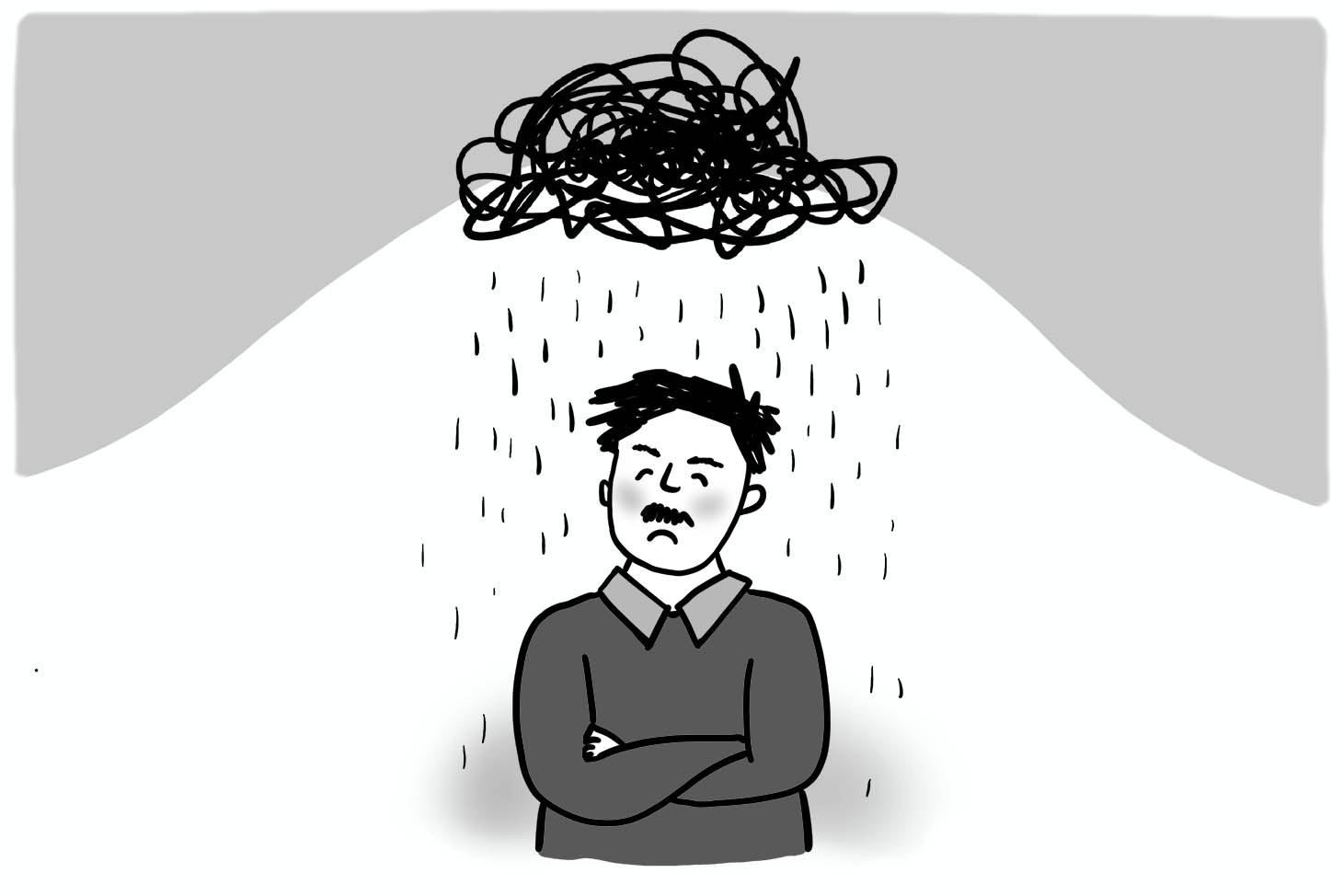
An unhappy person stands with their arms crossed underneath a raincloud

Moving Forward: Small Steps Toward Openness

The tricky thing about cynicism is that it is a defensive response that makes a lot of sense. After all, the world is full of potential for hurt and all it takes is one such experience to shift our mindset.

As such, cynicism is very common.

If you recognize cynicism in yourself, the good news is that awareness is the first step toward change. Start by noticing when cynical thoughts arise. What triggered them? Is there evidence supporting this interpretation, or are you making assumptions based on past experiences with different people?

Then try this practice:

When you notice a cynical thought about someone’s motives, pause and ask yourself, "What’s another possible explanation for their behaviour?" This doesn’t mean naively trusting everyone or ignoring red flags. It means creating space for multiple interpretations rather than defaulting to the most negative one.

Consider, too, sharing your struggles with someone you trust. In our work facilitating mediation and conflict resolution, we’ve seen how powerful it can be when people voice their fears and vulnerabilities. Often, cynicism thrives in isolation. When we bring it into the light of honest conversation, its power diminishes.


Building Trust, One Interaction at a Time

Healing from cynicism doesn’t happen overnight, and it doesn’t require blind trust. It’s about taking small, calculated risks with your openness. Maybe we give someone the benefit of the doubt on something minor. Maybe we accept help without immediately questioning the helper’s agenda. Each positive interaction becomes evidence that not everyone will hurt us the way we’ve been hurt before.

Ultimately, moving beyond cynicism is an act of courage. It means choosing vulnerability over protection, possibility over certainty. It’s hard work, but the reward – genuine connection with others – is worth it. After all, we’re wired for relationship, and cynicism cuts us off from one of life’s greatest sources of meaning and joy.

Showing Up: Consistency builds community.

Two people tend a garden together

Consistency isn’t just important when holding boundaries, it’s a key to building communities with one individual action at a time. A moment is just a piece within the wider mesh of interconnectivity; a single thread, one thing – many threads woven together over a lifetime, another.

Esther Perel writes:

Relationships thrive through repeated presence, not sporadic gestures. Rituals, routines, and shared rhythms build a shared reality

She penned this with romantic partnerships in mind, but this wisdom extends to every relationship we nurture – with neighbours, colleagues, family members, and the broader community we call home. When we show up consistently, we’re doing more than fulfilling an obligation. We’re signaling to others that they matter, that they can count on us, and that we’re invested in something larger than ourselves.


The Power of Small, Repeated Actions

Think about the neighbour who waves hello every morning, the friend who checks in regularly, or the volunteer who arrives at the community centre every Tuesday without fail. These aren’t grand gestures that make headlines. They’re quiet acts of reliability that, over time, become the foundation of trust.

And what happens in the absence of this “showing up”? In conflict resolution work, we clearly see how a shortage of this consistency can erode relationships. When people feel they can’t rely on one another, misunderstandings fester and small disagreements escalate.

Consistency creates predictability, and predictability creates safety. When we know what to expect from each other, we can relax into authentic connection. We don’t have to second-guess intentions or wonder if someone will be there when we need them. This emotional safety is the bedrock upon which healthy communities are built.

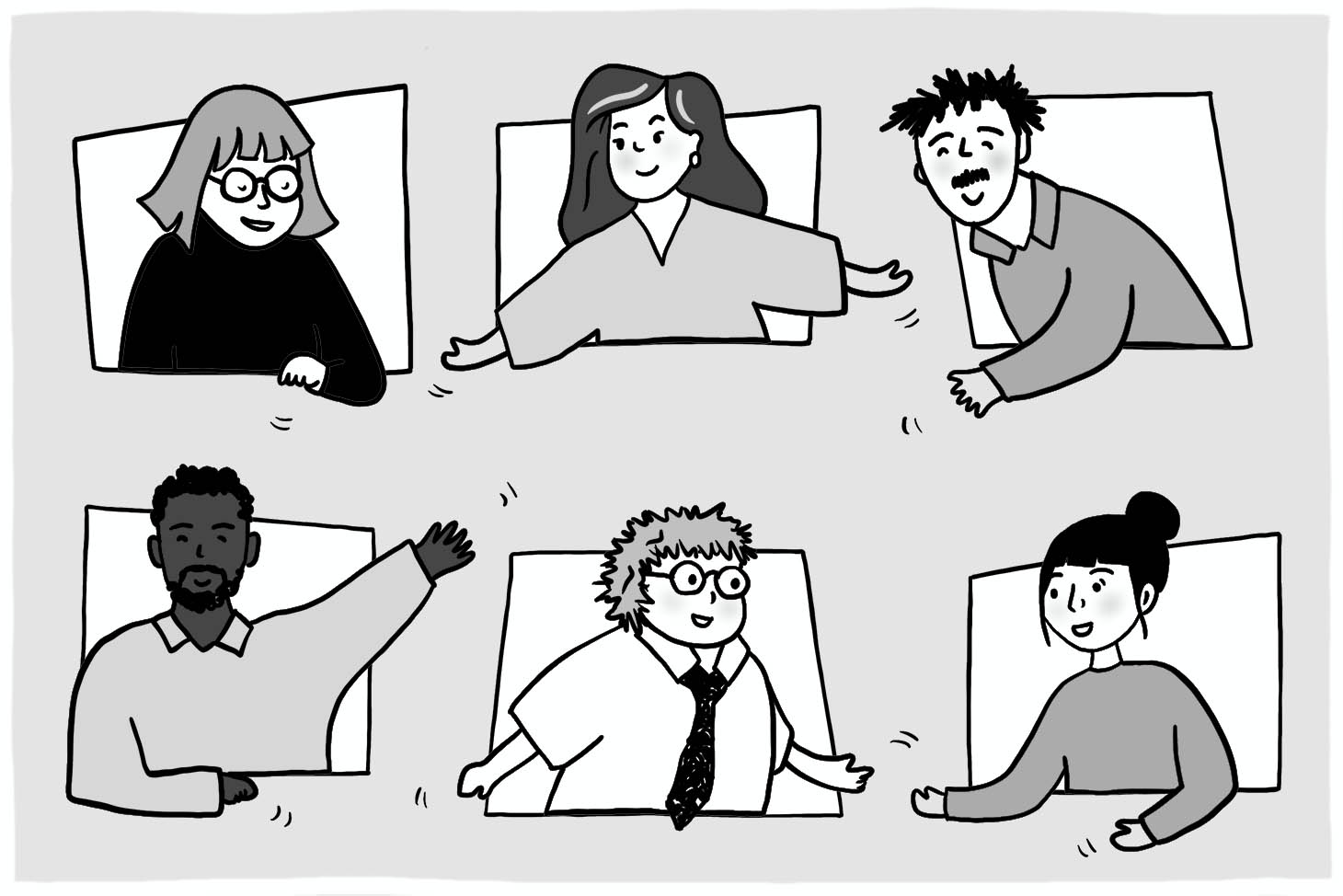
Six neighbours lean out their windows in friendly gestures

Showing Up, Even When It’s Hard

Of course, consistency doesn’t mean perfection. Life happens – we get sick, face unexpected challenges, or simply have days when we’re running on empty. The key is communication. When we can’t show up in the way we’d like, letting others know builds trust rather than breaking it. It demonstrates that our commitment remains even when our circumstances change.

What matters is the pattern we establish over time. Do people experience us as generally reliable? Do we follow through on our commitments more often than not? Do we repair the relationship when we fall short? These are the questions that determine whether we’re contributing to or withdrawing from our community’s trust bank.


Building consistency into your relationships doesn’t require dramatic lifestyle changes. Start small. Perhaps it’s a weekly phone call with a parent, attending the same community event each month, or simply being the person who remembers to ask how someone’s important appointment went. However modest, these rituals of connection weave those individual threads into something stronger.

For communities to thrive, they need members who show up not just when it’s convenient or exciting, but steadily, over time. Every conversation you have with a neighbour, every meeting you attend, every small act of kindness you extend contributes to the fabric of community life. And when conflicts arise (as they inevitably do), that established foundation of trust and consistency makes resolution possible.


An Invitation

Community isn’t built in a day, and it isn’t maintained through occasional grand efforts. It’s cultivated through the accumulation of small, consistent choices to show up, be present, and honour our connections with others (even when there’s friction). Each time we do, we strengthen not only our individual relationships but the entire web that holds us all together.

What is one small way you can show up more consistently in your community? Perhaps your answer might just be a thread that strengthens the whole fabric.

Holding Boundaries: How to handle pushback

Two people having a conversation with boundary circles around them

Have you read our last blog article on how to set healthy boundaries? Start there if you haven’t, because this is a continution of that.

If you’re still here, we’re going to assume you went through the “boundary conversation.” Congratulations on setting a boundary in your life! But there is one important thing beyond drawing a clear line, and that is handling inevitable pushback and what to do when someone ignores the boundary altogether.

Here’s the hard truth: people will test your boundaries. Not necessarily because they’re bad people, but because you’ve changed the rules of engagement. If you’ve historically been available 24/7, suddenly establishing “no work calls after 6 PM” will feel jarring to others. They’re used to the old pattern and change is uncomfortable.

Let’s address the elephant in the room: holding boundaries often feels mean. We might think, “But they really need my help” or “What if this damages our relationship?”

Consider this reframe: Unclear boundaries and hidden resentment damage relationships far more than clear, kind boundaries ever will. When you say yes while feeling no, that resentment seeps out in passive-aggressive comments, withdrawal, or eventual explosions.

Holding a boundary isn’t about being rigid or uncaring. It’s about sustainable relationships where both people’s needs matter.


Handling Pushback

Pushback typically shows up in three forms:

  • Guilt trips: “I can’t believe you won’t help me. I thought we were on the same team.” This plays on your emotions, making you feel selfish for having needs.
  • Anger or frustration: “This is ridiculous. You’re being unreasonable.” This attempts to intimidate you into backing down.
  • Persistence: Ignoring your stated boundary and continuing the behaviour as if you never said anything. This tests whether you actually meant what you said.

Recognizing these patterns helps you respond calmly rather than reactively, defusing the emotions at play. The act of holding your boundary makes it real.

The question isn’t whether your boundaries will be challenged. It’s how you’ll respond when they are.

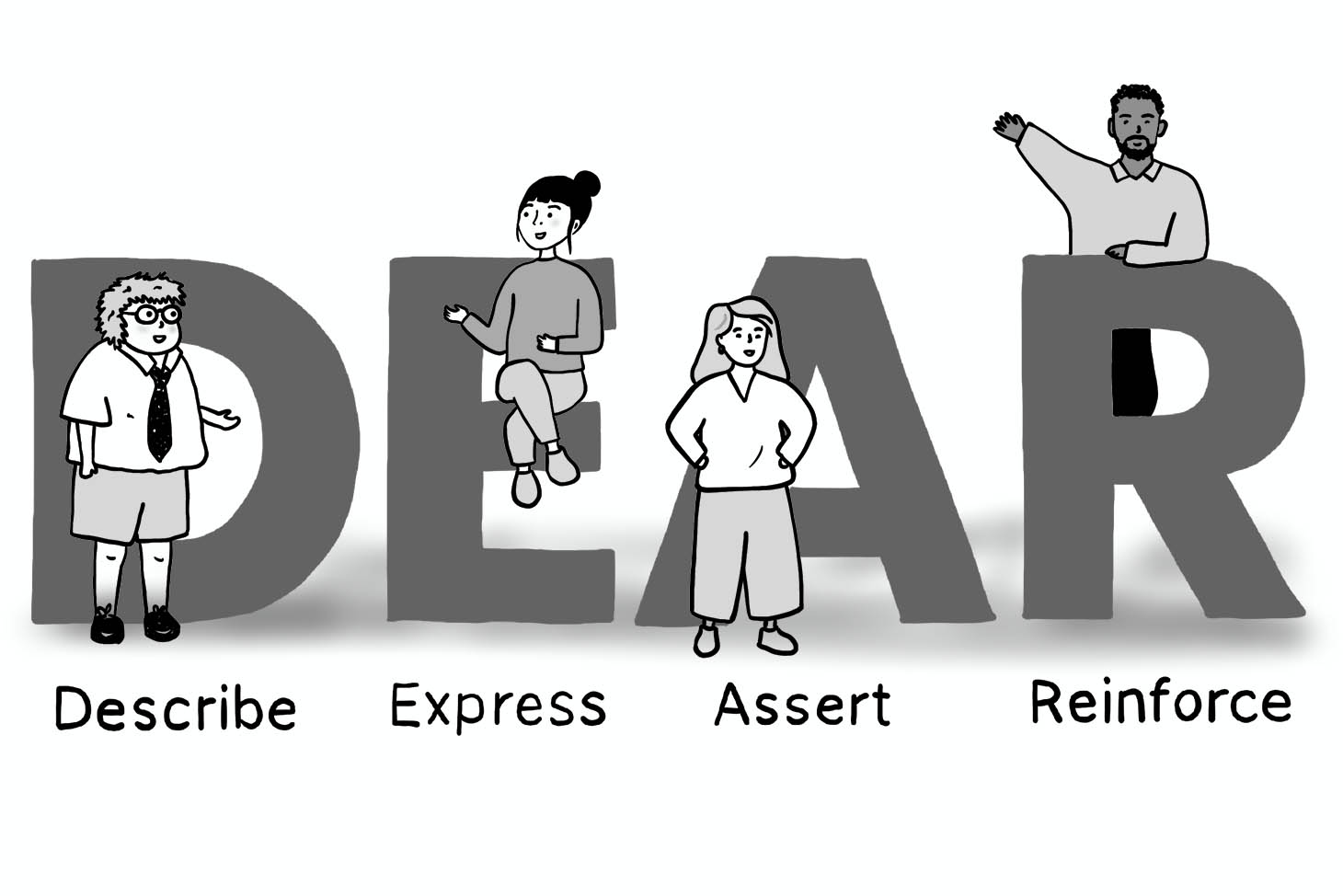
DEAR framework with characters expressing themselves

Holding Firm Without Escalating

When someone pushes back, use the DEAR framework:

  • Describe the situation factually: “You’ve called three times tonight after I said I wasn’t available after 6 PM.”
  • Express how you feel: “I’m frustrated because I need this evening time with my family.”
  • Assert your boundary again: “I’m not available for work calls after 6 PM.”
  • Reinforce the positive: “I’m happy to discuss this first thing tomorrow morning at 9 AM.”

The key is staying calm and consistent. Don’t JADE: Justify, Argue, Defend, or Explain endlessly. State your boundary once, maybe twice if truly needed, then stop engaging with the pushback itself.


When Boundaries Get Crossed

Despite your best efforts, someone will eventually cross your boundary. This is the moment that defines whether your boundary is real or merely a suggestion.

Address it immediately and directly. The longer you wait, the harder it becomes and the more resentment builds. Use simple language: “I noticed you called my home phone at 8 PM last night. As I mentioned last week, I am not available for work calls after 6 PM.”

Follow through with consequences. This doesn’t mean punishment – it means natural consequences that protect your boundary. If a colleague emails you after hours expecting immediate responses, you wait until the next business day to reply.

Consistency is everything. If we hold your boundary on Tuesday but cave on Thursday, we’ve taught people that persistence pays off. They’ll keep pushing because sometimes it works.

But, we all slip up (everyone does!). When we cave on a boundary we meant to hold, that’s okay. What matters is what happens next. Acknowledge it: “I realized I didn’t hold my boundary yesterday when I answered your work call at 8 PM. Going forward, I’m sticking to what I said about after-hours availability.” Then simply return to holding your boundary. One slip doesn’t erase all your progress.


Holding boundaries is a practice, not perfection. Some days will be easier than others. Some people will respect your boundaries immediately; others may take time to adjust.

The uncomfortable truth is that holding boundaries might mean some relationships change or end. But if a relationship only works when you have no limits, it wasn’t a healthy relationship to begin with.

But here’s the beautiful part: as you hold your boundaries consistently, you’ll notice something shift. The people who truly care about you will adjust. They’ll learn your limits and respect them. And you’ll have more energy for these meaningful relationships because you’re not depleting yourself maintaining unhealthy ones.

Your boundaries deserve to be held. You deserve to be respected.


Need support navigating boundary challenges in your relationships? Mediation Services specializes in helping people communicate effectively even in difficult situations. Contact us to learn about our conflict resolution workshops and services.

Setting Boundaries: What, why, and how!?

A person draws a circle around themselves with a giant marker

Conflict happens everywhere – at home, in the grocery store, even in church. How we handle these tense moments can make all the difference, and one lesson that comes up time and again is the importance of being clear about both our needs and our boundaries.

In stressful situations, our emotions take the wheel.


Think back to elementary school. Do you remember the What to Do When My Clothes Are on Fire lesson? Pre-lesson, the natural reaction to “Ack, I’m on fire!” would probably be running around in panicked circles screaming for help. Post-lesson, hopefully the immediate reaction would shift to a more useful stop, drop, and roll. The difference? Preparation.

It’s not so different with fiery emotions.

Preparation can help us be ready for the heat of conflict – especially when a practiced response is simple and easy to remember. It can be for specific situations, such as what we all went through during the Covid pandemic uncertainty, when having clear and kind phrases at the ready was helpful in navigating the tough situation together. Or it could be more general, where we prepare by learning to notice our body’s tightening alongside a defensive response and recognizing that a line has been crossed.

The thing about preparation though, is that it’s always easier in hindsight. In the moment, we often don’t know there is a line to be crossed until it actually happens. But when a line is crossed, we know.

How often do we rehearse what we should have said after a frustrating conversation? These retorts in our head can default towards defensive, but what if we reflected on what boundary we could have established and how it might have changed the situation? This sort of reflection and preparation helps us to respond better next time.

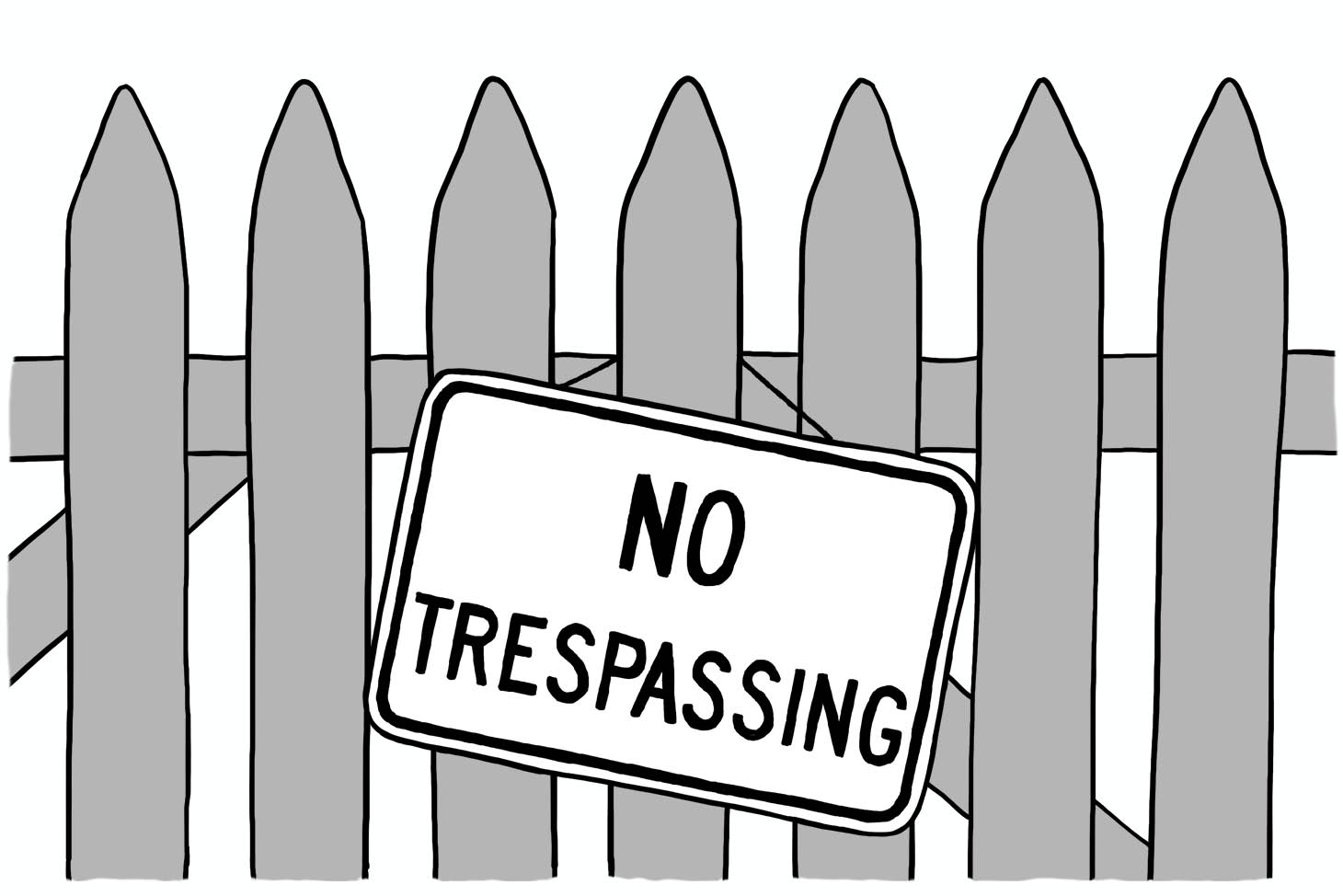
Picket fence with ‘No Trespassing’ sign

What Are Boundaries, Really?

Let’s clear up a common misconception first. Healthy boundaries aren’t walls – they’re more like property lines. They don’t shut people out; they simply clarify what’s yours and what’s theirs (physical space, emotional energy, time, responsibilities, etc.).


Why Boundaries Matter for Everyone

Boundaries prevent conflict before it starts. When you’re clear about your limits upfront, you eliminate the guesswork that leads to misunderstandings.

For example, at Mediation Services we’ve seen countless workplace disputes that could have been avoided with one conversation: “I handle urgent requests until 6 PM, but after that, it waits until tomorrow unless it’s a true emergency.”

Contrary to popular belief, boundaries like this don’t push people away – they enable healthier connections. When you’re clear about your limits, others know exactly how to respect you. This builds trust and reduces resentment on both sides. Remember: clear is kind.

And on the personal level, boundaries protect your well being. Without them, you become everyone’s emotional dumping ground, unpaid therapist, and 24/7 problem solver. This isn’t sustainable. Boundaries ensure you have enough energy left for what truly matters to you.


How to Set Boundaries That Stick

First, identify a relationship you’re within that leaves you feeling drained or resentful. Name the specific behaviour (or behaviours!) that’s crossing your line.

Then, use this framework to have a boundary conversation:

  1. State the boundary clearly: “I don’t discuss work issues during family dinner.”
  2. Explain briefly if needed: “This time is important for connecting with my kids.”
  3. Offer an alternative: “Let’s schedule 15 minutes tomorrow morning to talk through it.”

Congratulations! You’ve set a boundary.

Does this sound daunting and scary? No worries, you don’t overhaul your entire life overnight. Pick one area where you need stronger boundaries and practice there first. It can be as simple as not checking work emails after 6 PM or limiting phone calls during family time.

If this still feels like a lot, pick something that is about holding a boundary with yourself, like keeping your phone outside of the bedroom once it’s bedtime. And yes, a lot of these examples have to do with phone usage; it’s a common area of challenge! This private contract with yourself can help build confidence for holding boundaries in other areas of your life.


Holding Boundaries

Establishing boundaries is good, but it’s equally important to hold them. Read part two of this boundary conversation, where we talk about holding boundaries and how to handle pushback.

Clear is Kind: Lessons for living in community.

Hand wiping a foggy mirror

When it comes to resolving conflict, the phrase clear is kind holds powerful truth. At first, we might bristle at the statement – worrying, “Being direct or blunt could hurt others’ feelings!” But what of the alternative? Conflicts often arise or worsen because people fail to communicate their needs, feelings, or boundaries clearly. Vague messages or beating around the bush can leave others guessing, which leads to frustration or even resentment.

So let’s try that again: clear is kind. Maybe, just maybe…avoiding ambiguity and speaking with kindness can help prevent misunderstandings, reduce frustration, and build stronger connections?

Clear and honest communication shows respect and care, even if it means a bit of discomfort in speaking up.


For example, imagine the following situation bubbling up around the office water cooler:

After a long morning meeting, you are in the lunch room taking a break to clear the mind and caffeinate the soul. The coffee machine beeps and you scuttle over to help yourself. Your colleague, Gary, is at the microwave making a snack.

YOU: “Would you like a cup of coffee”? (turning to colleague)
GARY: “Oh please. You never listen to me!” (stalks off back to their cubicle)
YOU: “Looks like someone has a case of the Mondays…” (muttering to yourself)

Annnnnnd…scene!

Clearly, Gary is upset about something. But not so clearly, is what it is about.

How would you feel in this situation? Attacked, confused, defensive…lots of emotions without any ground to properly respond.

What if Gary had instead clarified, saying, “I feel unheard when I’m interrupted during meetings.”

Oh! Now, this points directly to the problem and invites a constructive response that could change the outcome drastically.

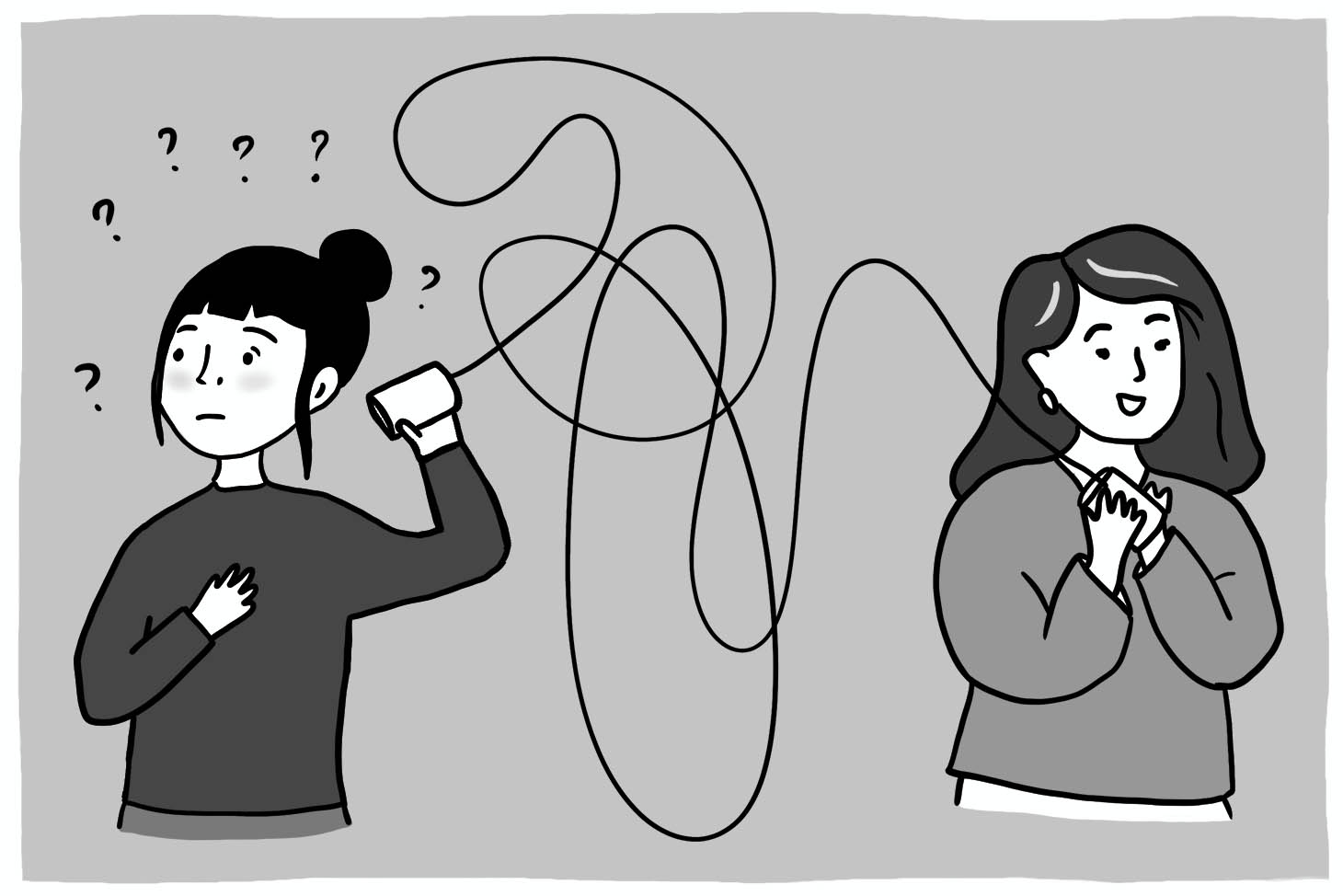
Talking into stringed together cans with question marks around listener

How to Be Clear and Kind

Being clear doesn’t mean being harsh. It means choosing words thoughtfully and expressing yourself honestly while caring about the other person’s feelings. Here are some techniques to get you started:

  • Use “I” statements: Speak from your own experience to avoid blame. For instance, “I feel overwhelmed when plans change without notice,” rather than, “You always mess up our plans.”
  • Be specific: Avoid vague complaints. Instead of saying, “You’re inconsiderate,” try, “When you cancel last minute, it disrupts my schedule.”
  • Express needs clearly: It’s okay to tell others what you need. Saying, “I need some quiet time to focus,” sets a clear boundary.
  • Listen actively: Clarity isn’t just about speaking; it’s also about hearing. Reflect back what you hear to ensure understanding, like, “So you’re feeling frustrated because _____?”

Being clear means having the courage to say what you really mean, which also means you have to do the work to clarify for yourself what the root of the problem is.

This effort pays off in dividends. By addressing issues directly, it prevents repeated arguments and misunderstandings. When people know you speak honestly and kindly, they feel safer opening up. It removes guesswork and anxiety around interpreting unclear messages. All of this fosters respect and deeper connection.

In conflict resolution, avoiding tough conversations may feel like kindness, but often just prolongs pain and confusion. Choosing to be clear, even when it’s uncomfortable, is a genuine act of kindness. It respects others enough to trust them with your honest feelings and empowers everyone involved to find understanding and healing.

Stop tiptoeing around conflict and remember: clear is kind.

Origins of Anger: From the wilds to the water cooler.

Emotional escape plan #37 with multiple routes out of a maze to the safety of a tree

Anger is a fiery emotion; taking us from minding-our-own-business to ready-to-fight in a literal heartbeat. It can be fuel for both transformation and destruction, and so it’s worth considering carefully so that we don’t get burned.

Anger’s origins are from an ancient place: the amygdala, which is the fear and anger center of the brain. Here, we have an effective alarm system that reacts to perceived threats: the heart rate rises, blood flow increases to the muscles, and attention narrows…all healthy responses to an immediate sense of danger.

In human evolution, anger increased our odds to survive in the wilds. But survival in the modern world looks different than it once did, and here there is a maladaptive side to its force.


Quick reactions, like those fuelled by anger, often lead to outcomes full of regret. Getting stuck in the emotion leads to hypervigilance – which affects our relationships, our trust mechanisms, and our ability to conjure up a sense of context. Anger leads to personal attacks instead of problem-solving.

In other words, it’s true that anger can get us in a lot of trouble if its fire is not managed. But that doesn’t mean we should ignore it or push it away too quickly.

Anger is a functional signal that a boundary has been crossed. The seed of anger is good, healthy, and important – but if it’s held onto and/or funneled into reactive behavior, then it’s problematic for both ourselves and those we’re in relationship with.

These days we’re trying to get along around the water cooler, not competing for resources around the savannah’s competitive watering hole. But sometimes our biology doesn’t know the difference.
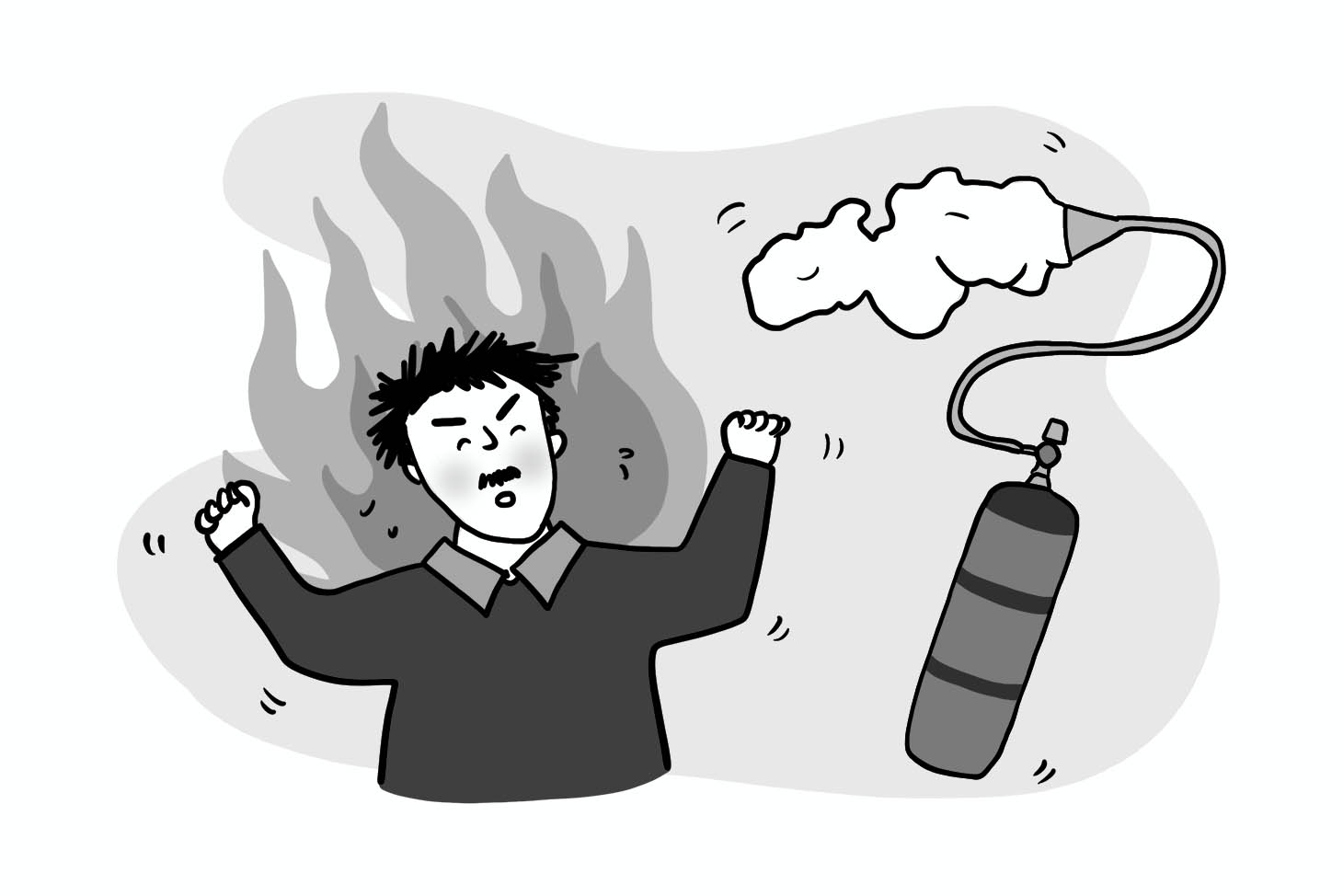
An angry character with flames radiating off them and a fire extinguisher trying to put it out

We’ve all been there:

We’re in the middle of a disagreement, and suddenly our heart races, our voice rises, and anger takes the driver’s seat. In that moment, calm logic often takes the back seat – and what could have been a productive conversation turns into a heated battle.

In conflict, anger narrows focus and fuels the defensive urge of “I need to prove I’m right!”. This leads to fight-or-flight reactions, making communication less than effective.

For example, if you feel angry when a coworker interrupts you, it’s a signal that a line has been crossed and you feel disrespected.

How does this feel in the body? A tight jaw, clenched fists, racing heartbeat, shallow or fast breathing…

How does this take shape in our thinking? An urge to interrupt, all-or-nothing thinking (“They always…”), a focus on winning…

Even in just the imagination, our heartbeat rises. That’s the amygdala at work.


Here are some common triggers:

  • Feeling unheard or dismissed
  • Broken promises or unmet expectations
  • Disrespectful tone or body language
  • Perceived injustice or unfair treatment

Notice anything surprising about this list? Each trigger is perfectly reasonable for us to be angry about! The paradox of anger is that it’s not necessarily a bad thing. Anger is like an alert system; telling you when something feels unfair, when boundaries have been crossed, or when values are threatened.

It’s what we do after a line is crossed that can either point us towards transformation or destruction.


A good starting point for working with anger is to notice the internal clues that it’s bubbling up (like the body and thinking suggestions in the previous example). Then, rather than plow forward with a reactive response, we can heed the warning and try to introduce a bit of space with a cooling off strategy:

  • Pause and excuse yourself (the time-out strategy).
  • Consciously slow your breathing (inhale 4 seconds, exhale 6 seconds).
  • Name the feeling to yourself (“I feel frustrated”, etc).
  • Embrace curiosity and reframe “They’re wrong” to “How can we fix this?”

Then, we do the other thing that is one of humanity’s evolutionary strengths: we communicate. In situations with a lot of emotionality fuelling anger, try to address actions directly rather than associate them with the other person’s character (this can prevent a reciprocal wildfire of defensiveness).


Think of anger like fuel – a little heat can spark honest conversation, but too much can blow the situation up. It can help us stand up for ourselves, or it can have us saying things we soon regret.

When channelled well, anger energizes us to take action. Many personal changes and social movements start with someone getting mad enough to do something about a problem.

That said, there is a point where it is time to walk away (…another one of our evolutionary marvels??). When voices are raised and no one is listening, or you feel like saying something you regret, emotions are too high for problem solving.

Walking away is not quitting – it’s resetting for better results.


That’s just the tip of the iceberg on this subject. We have a training course “Dealing with Anger” coming up in Winnipeg, and we’d love for you to join us as we unpack it further. Current program options will be on November 4 & 5 (2025) or May 5 & 6 (2026) – please visit our full training page for more details and registration. And, if you’ve missed out or can’t make it, keep an eye on future programming where it’s sure to be offered again.

It’s also worth highlighting our companion course that is presented as an online on-demand webinar: Dealing with Defensiveness. It is available right now and any time that you may need it.

Conflict Resolution: Self-identity and defensiveness.

Hand holding a mug of coffee that says 'ready for anything' on it

What gets you out of bed in the morning?

Honestly, most of us would probably say coffee. But, caffeine dependency aside, what else gets you out of bed in the morning?

Duties, responsibilities, breakfast…there are certain things we need to address to prevent our universe from sliding off its axis. We go to work to make money to afford life, drive a family member to a medical appointment, check in with our roommates (kids, cats, whomever) to make sure the fridge is stocked, squeeze in some physical exercise to keep the body functioning properly, etc. The schedule has a funny way of always filling up.

Knowing that others depend on us, knowing that the churn of our lives requires us to be active participants…when we get out of bed it is this to which we stride. Sometimes the pull beyond the sheets is with a bounce in the step, and other times a sluggish sense of duty.


In an ideal world, we’d all bound out of bed, throw the blinds open, ready to seize the day, bright-eyed and bushy-tailed. But while most of us can remember this feeling at some point in our lives, this isn’t always the case (also something most of us can likely remember feeling!).

While it’s normal to have rote days, there is also something we are truly passionate about that pulls us forward. It is human to pursue meaning, and it comes in innumerable forms that are unique to each of us. It might be a passion for being helpful, to contribute to society in some regard, to give back. Perhaps it’s living by the vow of leaving the world a better place than we found it. Or maybe it’s grounded in the more concrete goal of putting food on the table.

We all want to think of ourselves as good, and we do – in the myriads of different ways that goodness can be defined.

However: it is inevitable that, despite our best intentions, sometimes we will fall short of the mark. We will make mistakes, our perspective will not align with someone else’s, and our emotions will get the better of us and we’ll spit out something we regret. These uncomfortable experiences are also parts of being human.

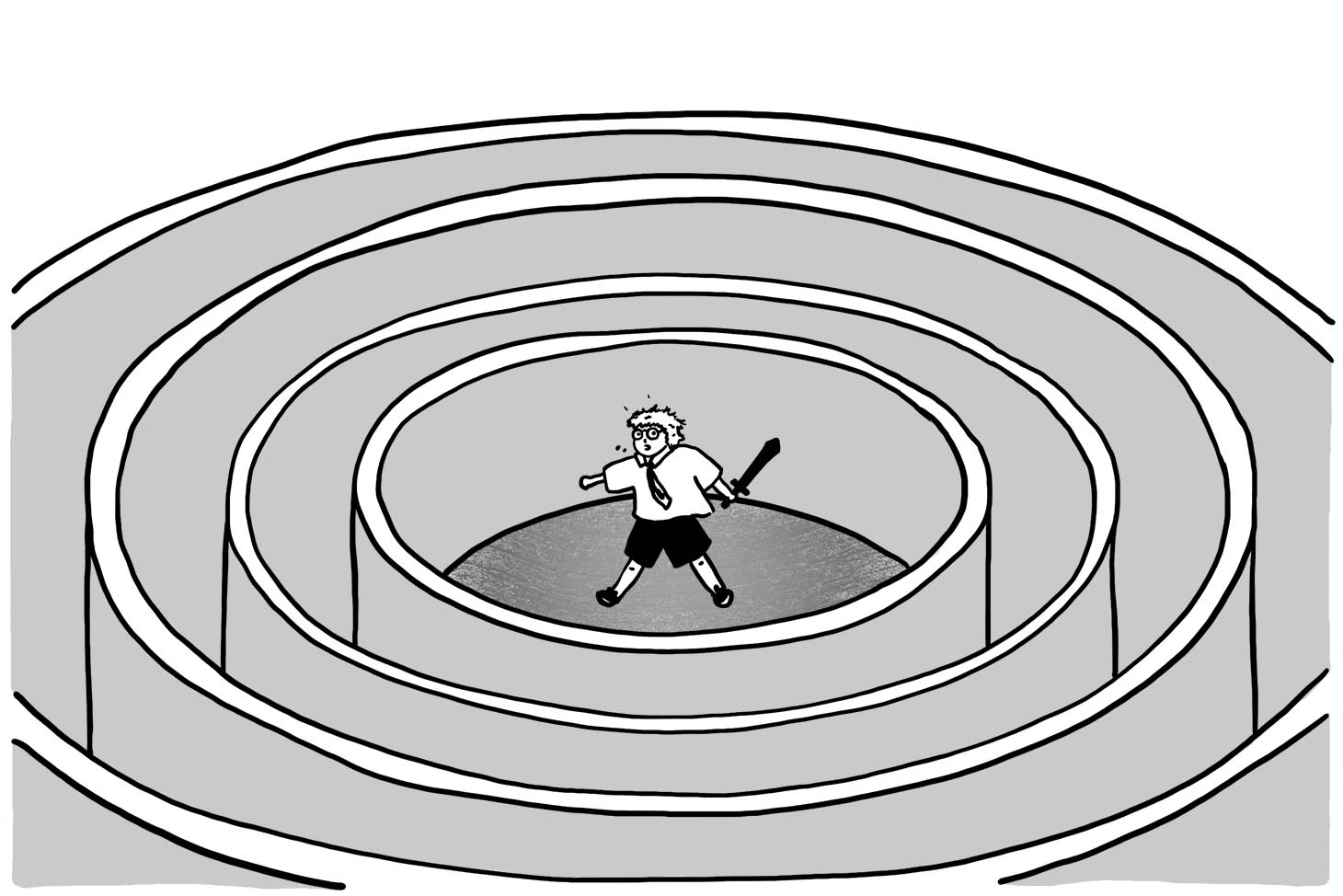
A lone person with a sword and walls encircling them

When we mess up, what do we do next? Do we own up to it, apologize to others affected by it, and look for areas of learning and action so we can move forward and change how we do things next time?

Yes, ideally.

In reality? It’s not so simple.

When facing conflict, our character is really tested and it’s easy to fall short of our idealized selves. Our inner hedgehog / porcupine / spiky spirit animal starts to rear its defensive head, and it’s not always cute. The problem with the internal narrative of being a good person is that it makes it hard to face the reality that we aren’t always that ideal. Doubling down in defense of this identity is a natural, albeit problematic, response.


In conflict resolution, the process gets stuck when someone is unable or unwilling to own up to a mistake. This idea we’ve been exploring of idealizing who we are as a person is a common hurdle. When we are so attached to the idea that we are helpful, how do we reconcile that with the moments when we harm someone? When we identify as being a giving person, how do we deal with being accused of being selfish?

Having a strong self-identity creates inner stability so that we can get out of bed in the morning. We often aren’t aware of this because it is a logic that runs in the background of the mind. However, if we stay oblivious of it, we will run into some pretty confusing and painful situations.

When our sense of who we are is challenged, it is destabilizing and leaves us with two options. We can expand our sense of self – as someone who intends to be helpful but is also imperfect and messes up occasionally and therefore human. Or, we can double down and staunchly defend our self-image, lash out harder, build thicker walls between ourselves and others, and end up only having our sense of righteousness for company (which is also human, but less fun).

Sometimes our defensiveness is really a defense of our idea of who we think we are. And when we are trying so hard to do well, it’s understandably frustrating when it doesn’t go the way we want it to. In the long run, cultivating mental agility around who we think we are means we can nurture and deepen our relationships, and even have a chance at achieving inner peace.


Getting defensive happens – it’s a natural reflex to want to protect ourselves, just like it’s natural to want to think of ourselves as helpful and good people (it certainly helps with getting out of bed in the morning!).

At Mediation Services, part of our work is guiding you in how to work with defensiveness so that it can ultimately be constructive. It’s a great place to learn communication tools and strategies that help when things get spiky, so that we can stay steady and aligned with our values.

We have some in-person courses here in Winnipeg coming up (view details and register here). Or, if you’d prefer the convenience of online, you can start today with our core webinar Dealing with Defensiveness.

Announcement: The 2025-2026 in-person training lineup is live!

Calendar with circled date labelled WORKSHOP

Have you ever found yourself wishing you were better equipped to handle conflict? You’re not alone, and it is with this in mind that we have put together our 2025-2026 training calendar (now available online).

If conflict is inevitable (it is), then training is the preparation to dance with it a little more elegantly. What might life look like if some mediation groundwork were a more integrated part of being in the workplace, community, and family? It’s not hard to imagine a situation where things went sideways – but it doesn’t always have to go that way. With the right tools and knowledge, a different direction is possible, and the team at Mediation Services has experienced this magic time and again.


Planning and certificates

For decades, Mediation Services has been developing a myriad of different training programs in efforts to serve the Winnipeg community. Our in-person offerings are an integral part these opportunities.

There are a range of options to suit different levels of commitment and interest. Each course is designed to be suitable for people doing them individually, but there also is the opportunity to earn a certificate by completing multiple courses as organized into different program curriculums:

Full certificates will empower you with a wide suite of skills and knowledge, but they are not always necessary. Start simply with just one course – say, Assertive Communication or Building Personal Resilience – and focus on building skills most relevant to you. Then, if you want to continue working towards a full certification for something like a career shift, you can take the next steps from there.


This year’s lineup

Here is this year’s training lineup at a glance, but please click through for each course’s full and up-to-date details:

*This initial lineup is subject to change, so please visit the workshop pages directly for up-to-date details.


Real Learning, Real Results

Tens of thousands of people have trained with Mediation Services over the years. Many return again and again – not just because the material is strong, but because it actually works in real life. From office politics to family tension to big life transitions…these courses help you to show up, better.

Ready to start? Explore the full 2025–2026 schedule today:
👉 https://shop.mediationserviceswpg.ca/

Have a question or need help choosing a course? Reach out to get in touch and let’s chat. We’re happy to help you find your fit.

Conflict: How to disagree without poisoning the relationship.

Continue video game screen with yes/no options

Disagreements are a part of life. Whether it’s a heated debate at work, a difference of opinion with a friend, or a family squabble, it’s fair to say that we don’t always see eye to eye. And let’s be honest: most of us dread them. We worry about saying the wrong thing, hurting someone’s feelings, or damaging a relationship we care about.

New York Times columnist David Brooks puts it simply: “We need to learn the social skill of how to disagree with another human being without poisoning the relationship.” It’s a challenge, but one that we can all rise up to.

The trepidation around conflict is not unfounded – who hasn’t had a seemingly small issue spiral into a full-blown argument that left everyone worse for wear? While there is wisdom in choosing when to address conflict, it’s important to note that procrastinating difficult conversations has a risk too: frustration, resentment, and little things adding up to massive ones.


One aspect to handling disagreement well (in addition to pretty much every tool presented in our blog and courses), is social skills. The effort to see and understand what another person is going through is foundational, which often begins with pausing our defensive response in a heated moment and considering the question: “What might the other person be feeling right now?”

This forces a pause. And just like that, your next action shifts with this consideration.

While the details vary from situation to situation, at its core a healthy relationship includes looking beyond yourself and making space for someone else’s experience and perspective.

Two characters speaking to each other with a speech bubble broken into puzzle pieces between them

The key to handling disagreement well is to start by truly seeing and hearing the other person. Before jumping in with your own point of view, take a moment to consider where they’re coming from. Ask yourself, “What might this person be feeling right now?” Shifting your mindset from “How do I win this argument?” to “How can I understand this person?” can change the entire tone of the conversation.


Here are some concrete social skills for healthy disagreement:

  • Active Listening: Instead of simply waiting for your turn to talk, ask questions to unpack the other person’s point of view (check out our more detailed guide on this and the “looping” technique here).
  • Identify shared values: Vocalize your shared values or goals, even in disagreement. These statements can look like “We both want what’s best for our family” or “We’re on the same team.”
  • Set Ground Rules: Agree on boundaries (no yelling, no interrupting, no dredging up the past, etc) before tough conversations.
  • Stay Curious: Instead of arguing and getting stuck in division, try to bring curiosity into the conversation and keep the dialogue flowing towards mutual understanding.

Of course, real life is messy and in the heat of a conflict, strong emotions can render any of these techniques out of reach. If you feel yourself getting overwhelmed, it’s okay to take a break – utilizing the time-out approach and coming back to the conversation with calmer minds can make a world of difference.


Disagreeing well isn’t just a nice idea – it’s a skill you can practice. Next time you find yourself in a tough conversation, try one (or some!) of these techniques. Over time, you’ll find that you can stand your ground better without burning bridges. Relationships grow stronger when we learn to handle conflict with care.

Want to learn more? Our FREE Conflict 101 webinar is a great place to start building up your personal skillset.

Cultivate healthier and stronger relationships by learning how to disagree, better.

Relatability: Why “me too” isn’t always helpful.

Two hands hold each other

Have you ever had a friend confide in you about the challenges they’re facing with their teenager? It’s a story as old as time – relatable to even those who haven’t had kids, because chances are that once upon a time we’ve played the role of that troublesome teen as well. And so, upon hearing your friend’s woes, maybe you jump in with, “I know exactly what you mean…” going on to share your own story. It feels like the right thing to say – after all, you’re trying to relate and show you understand – but sometimes this “me too” response does more harm than good.

Let’s talk about why.

We all want to connect, especially when someone is struggling. It’s natural to reach for a personal story as a way to bridge the gap. While this comes from a good place, it can unintentionally derail the conversation.

When you jump in with your own experience, the spotlight shifts from them to you. Instead of feeling heard, your friend might feel like their struggles are being overshadowed or dismissed – especially when they’re mired within them.

Often, people just need to be heard. And sometimes, the best thing you can do is simply listen. Try nodding, maintaining eye contact, and saying things like, “That sounds really tough,” or, “Tell me more.”

A moment of being truly heard can mean the world.

Of course, sharing your own story can help – if the timing is right. Wait until your friend feels heard and supported. Then, offer it with a question like, “Would it help to hear what worked for me?” If they’re open to it, keep your story short and focused on the part which might be helpful – not just what happened to you.

Two pigeons discuss synonyms for “That sucks”

Here are some quick strategies you can use next time a friend / relative / colleague opens up:

  1. Listen first, talk second. Give them space to express themselves fully. Let them finish before you respond.
  2. Validate their feelings. Validation is about acknowledging someone’s emotions without judgment or trying to fix the problem right away. Use phrases like, “That sounds really tough.”
  3. Don’t one-up or shift the focus. Keep the spotlight on them.
  4. Offer support. Before jumping in with solutions, ask what kind of support they want. Pose questions like, “Do you want advice, or just to vent?” or, “Is there any way I can help?”

Empathy isn’t always about sharing your own experience – it’s about being present for someone else. Try listening more and talking less, and you might be surprised at the outcomes.

If you have questions,
please don’t hesitate to call.

1-204-925-3410

Subscribe To Our Newsletter

For The Latest News & Updates