Conflict Transformation: Peace begins where we can still reach each other.
July 10, 2026
July 10, 2026
There’s a particular kind of helplessness that sets in when the news is bad enough for long enough. A war that won’t end. A community fracturing along lines that feel older than anyone involved. A workplace or organization where the damage has gone deep and the people with the power to fix it don’t seem to be trying.
We see it. We feel the weight of it. And gradually, without quite deciding to, we go quiet. We wait for someone else to do something – a leader, an institution, a process…anything. And over time, if there is no resolution, the waiting starts to feel like the only option available.
John Paul Lederach has a name for this: paralysis. And after nearly five decades accompanying communities through some of the world’s most entrenched conflicts, he’s come to believe that paralysis is one of the most underestimated obstacles to peace.
It’s not because people don’t care – usually they care enormously. But because the scale of what’s broken can make the things within our reach feel too small to matter.
They aren’t.
In his research into how societies recover from protracted, large-scale conflict, Lederach and his colleagues noted a persistent problem at both ends of the spectrum.
At the national or global level, formal peace processes – accords, reconciliation commissions, official negotiations – consistently felt abstract and remote to the people most affected by the conflict. Leaders would announce progress, frameworks would be established, and ordinary people living amid the actual damage would shrug. Their felt sense was that peace had nothing to do with them individually; that they had no voice in it, no access to it, and often no reason to trust it.
At the other end, deeply personal healing – working through individual trauma, processing grief, rebuilding a sense of safety – is necessarily individiualized for each of us. Everyone moves at their own pace and in their own way. You can’t choreograph it, and you can’t wait for everyone to be ready at the same time before anything begins.
So you have enormous distance at one end, and enormous variation at the other. And in between, a gap where much of the real work actually needs to happen.
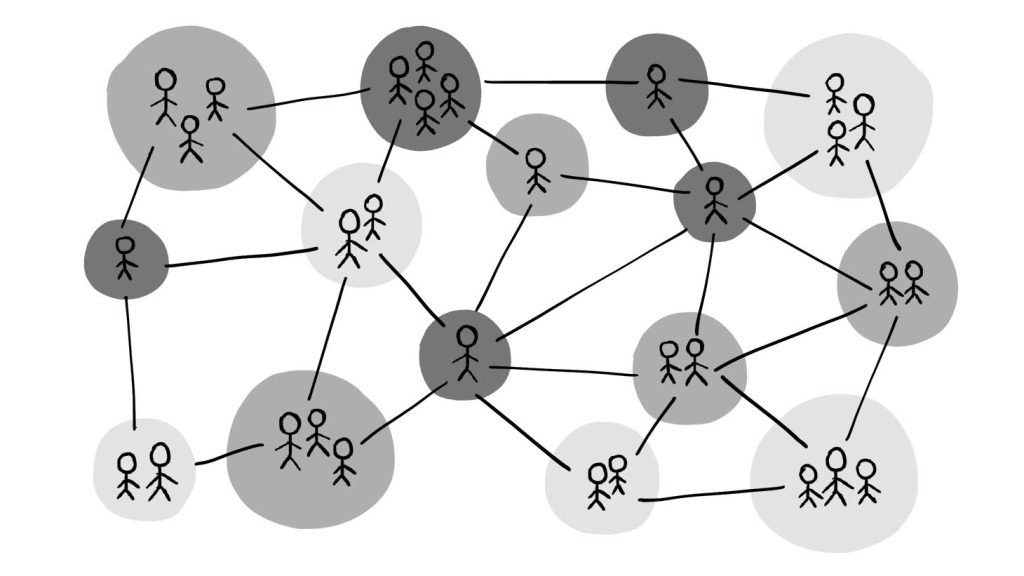
What Lederach and his colleagues proposed to fill that gap is something they call social healing – and the terrain where it happens is the community. Not the nation and not the individual, the community is a space within which practical conversation is possible, where people can speak and be heard, where relationships exist that can be worked with. This working field is close enough to matter and wide enough to ripple outward.
The preferential option for the community is a deliberate choice to locate the work of peacemaking in the middle distance, where people have actual access to one another. We don’t wait for conditions at the top to change and we don’t leave each other to individually process harm alone. Instead we gather in the spaces we already inhabit and begin there.
It’s a modest-sounding idea. In practice, it’s quietly radical – because it means that the work of conflict transformation doesn’t require permission from anyone above you. It doesn’t wait for a ceasefire or a policy change or a new administration. It starts with the people in the room.
In conflict transformation practice, this principle takes very concrete forms.
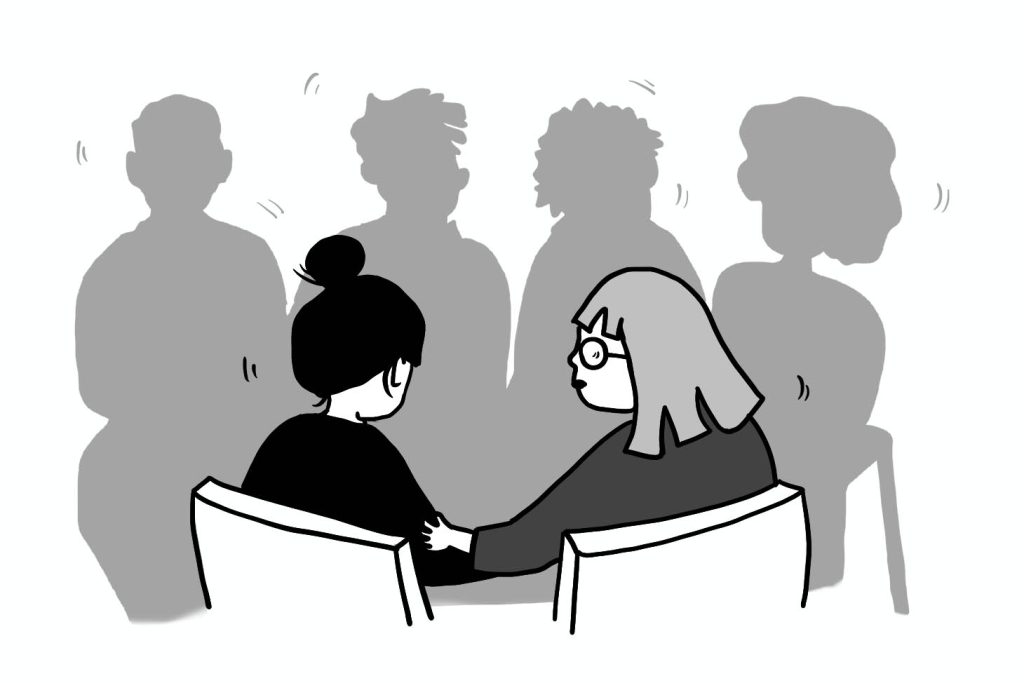
It might mean creating a space where two colleagues who’ve been avoiding each other finally sit in the same room with a third person present. It might mean a facilitated conversation in a neighbourhood where a particular incident has seeded divisions. It might mean a restorative circle in a workplace where harm has been done and the formal process has run its course, but something still feels unfinished.
None of these are small things for the people involved, but also none of them require solving a larger-than-life systemic problem first. They start where the people involved have access – to each other, to the conversation, to the possibility of something shifting.
This principle is at the heart of the role that Mediation Services endeavours to serve in the Winnipeg community.
It’s important to not romanticize this. Local conversations are not a substitute for structural change and community healing does not make injustice acceptable. Work on the larger systems at play still matters, but the immediate conversations play their part in driving action. They accumulate – building a different kind of relational culture, one encounter at a time. And that culture, over time, is what makes larger change possible and sustainable.
The power of small wins is a very real part of achieving big changes here, just as it is with pointing ourselves towards ideals.
There’s something worth naming directly here, because it’s easy to underestimate in an era saturated with communication: an actual conversation – in person, in real time, with the real people involved – does something that no statement, post, or broadcast can replicate.
The simple act of having a conversation makes the other person specific. It makes them present, it interrupts the process by which conflict turns people into symbols of whatever we’re afraid of or opposed to, and it restores them to being a particular human being – in this room, saying these words, with this history.
This restoration – a return to the specific – is where rehumanization actually happens. In the room, in the conversation, between people who have chosen to be there together and agreed to try.
For Mediation Services, this is the whole argument for why our work in conflict transformation and restorative justice matters – and why it doesn’t have to wait.
The conflicts worth addressing are not only the ones that make the news. They’re in the organizations you work with, the families you walk alongside, the community spaces where people have stopped talking or started talking past each other. They’re proximate, and they’re reachable.
Our invitation to you is to resist the pull of paralysis – the sense that because something seems broken at a scale beyond our reach, the breakage directly in front of us isn’t worth addressing. It is worth addressing. It is, in fact, the only place any of us can begin.
Peace doesn’t start at the top and trickle down, it starts in the conversations that are still possible. It starts where people can still reach each other – and that’s closer than we think.
We’re in the midst of writing several blog articles on peacemaking. The first was on Dehumanization: How ‘we’ and ‘they’ slowly break community – and we highly recommend giving it a read if you enjoyed this current topic.
More to come – stay tuned.