Presence: How to enjoy your coffee (and life).
January 30, 2026
January 30, 2026

Have you ever found yourself looking forward to your next cup of coffee, only to find that you don’t even notice it when you’re drinking it? Instead, the mind is time-traveling forward – thinking about what you’re going to do next.
If you’re human (and we’re guessing you are), a future-oriented viewpoint is often where we spend our time. This is useful in getting us to make or buy the coffee, but if we get stuck in this perspective it robs us of the moment where we actually get to enjoy it.
To the person in the back chirping “But I don’t drink coffee!”, let’s include you in this exercise too. Replace it with vacation or something else that excites you (chocolate – everyone likes chocolate!). This concept extends into relationships too (sharing dinner with the family, meeting up with a friend, etc).
Regardless of the example, being stuck in forward-thinking mode robs us of the satisfaction literally at our fingertips.
It doesn’t have to be this way. We can pause and really notice the coffee, rather than being elsewhere in our minds. We can have a discussion with someone and actively listen to what they’re saying, rather than fixating on what we’ll say next.
There is a common mindset of “anticipation is better than actuality”, but if we dare to challenge it there is a ripeness to be found in the actuality too. Our default may not be the present moment (we’ll get to that in a moment), but with practice we can learn to touch into experience and discover what might be otherwise unnoticed.
There are two different ways of taking in the world: thinking mode and sensing mode. All day, we are toggling between these two perspectives. Thinking serves us well with regards to past/future considerations, planning, and reflection. Being present and sensing our experiences (rather than just thinking about them), brings us back to what’s actually in front of us.
The perspective we take matters. Thinking is useful for planning and reflection, whereas presence enriches the quality of daily life. The toggling between thinking and sensing often happens without our participation, and both the pulls of the modern world and our innate defaults skew us towards thinking thinking thinking.
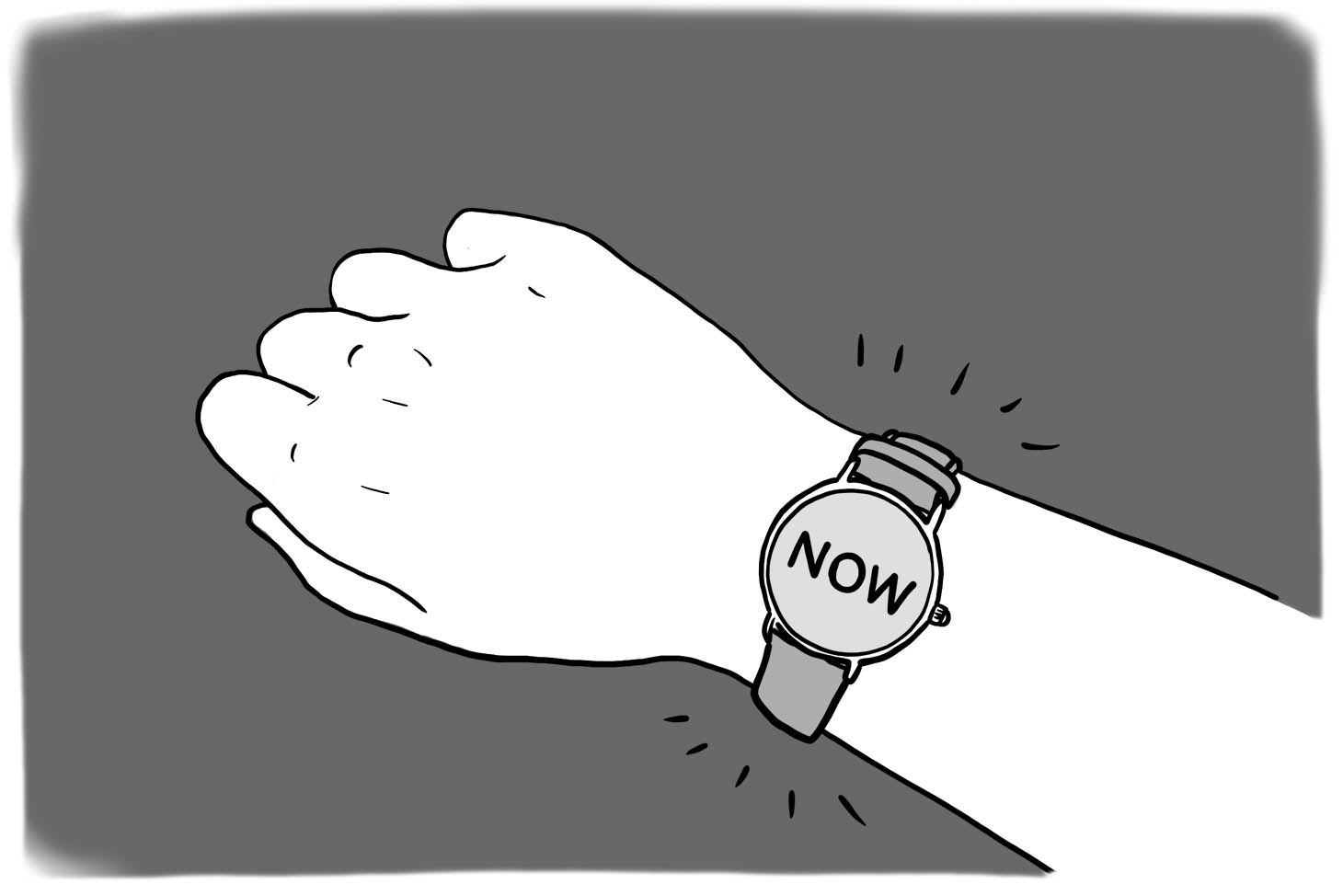
Attention is a valuable resource. Where and how we place it can profoundly shift our perspective and relative experience. It is a powerful thing, but our biology and modern context present a few obstacles around it:
When we combine these predispositions with the reality of our current attention economy, it makes sense that we are pulled into thinking mode so much.
However, despite all of this, there is still the present.
The question becomes, how can we re-orient ourselves to the present? Because it is here that we can often find deeper satisfaction.
The brain is a muscle and, like any muscle, it can be trained over time. One system of doing so is to routinely bring one’s attention back to the senses – escaping the circular thoughts of the past and anticipation of potential futures.
Unfortunately, there is no quick way to develop this skill; it just takes practice. Such a program is beyond the scope of this blog post, so instead we highly recommend the resources that Oxford Mindfulness puts out. They’re a not-for-profit organization helping people achieve greater well-being and improved mental health through research-based mindfulness and meditation. In partnership with the University of Oxford, they develop easy-to-understand programs which combine mindfulness and psychological science.
A good starting point is their free “Introducing Mindfulness” program that is included in their OxfordMindfulness app (available for iOS and Android phones). This thorough introduction gives both tools and a container to practice them, providing a great opportunity to learn the skill we’ve talked about of intentionally switching between thinking and sensing modes.
Although we focused our example on coffee for simplicity in this article, the concept of presence extends to how we show up in relationships, where it is a skill for both smooth times and the challenging ones. It is always valuable to recognize what is already at our fingertips.
Our satisfaction lives in the gap between expectation and reality. And as simple as it may sound, the act of tuning into the senses and mindfully bringing one’s attention back to the present moment is a powerful tool to embracing the fullness of living.