Taming Anxiety: Why action matters.
January 15, 2026
January 15, 2026
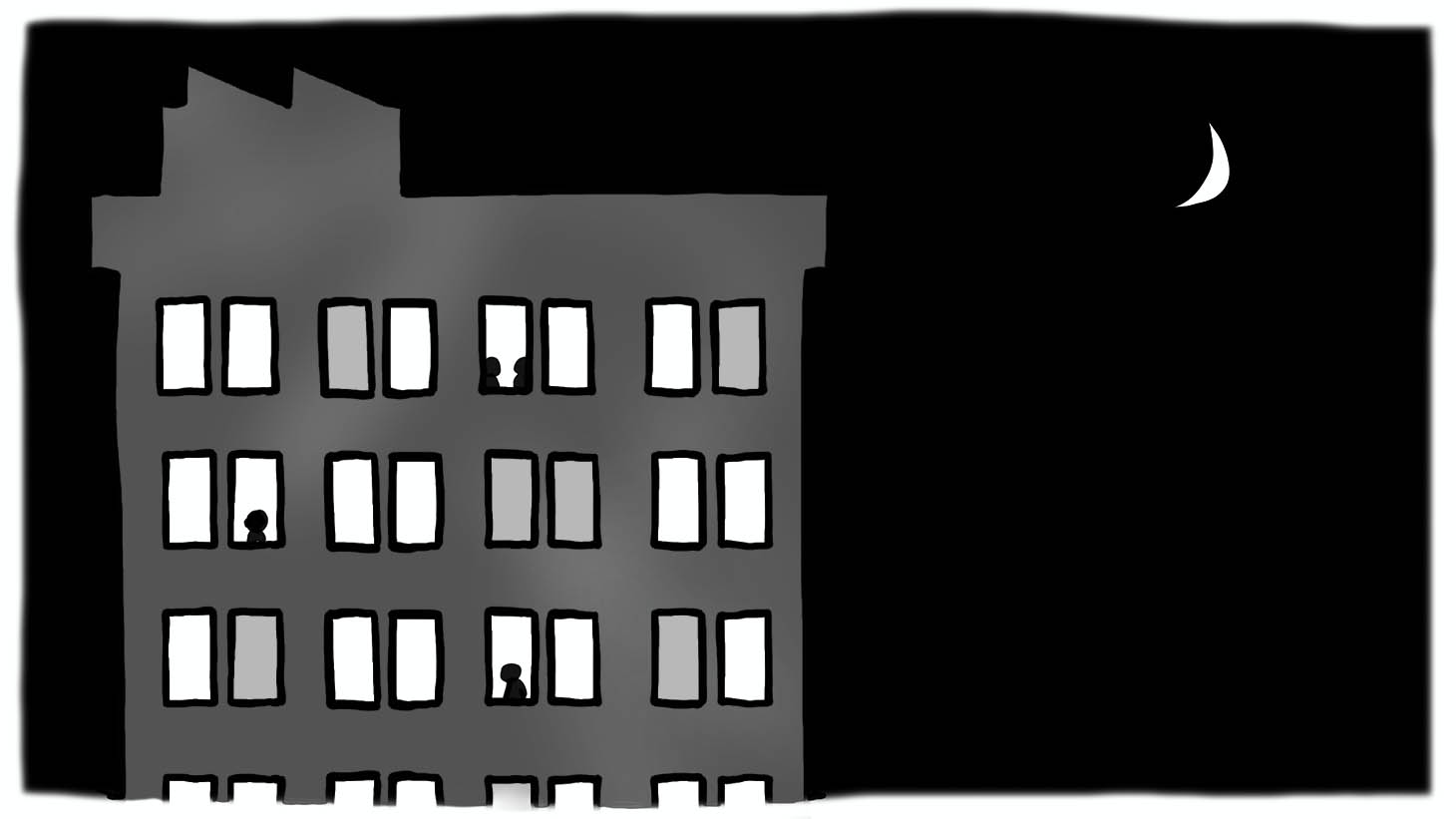
The year is 2026. Snow is falling on one of the longest nights of winter. There is no sun, but a lone light appears in the dark wall of windows. Hark: a computer! A shadowy figure cracks their knuckles and gets to work.
Reading this in the third person, it sounds like the opening to a movie. But imagine yourself as that person, looking at the glowing tasks laid out in front of you and with only a shadow of a plan – do you feel the trepidation in your body?
The start of a new year is naturally future-oriented – a useful perspective, but also one that is intertwined with anxiety about the unknown. As much as we want to crack our knuckles and point ourselves in the right diretion, much of life is outside of our control and the ifs and/or hows remain unclear.
In both New Year’s resolutions and conflict resolution, we face a similar uncertainty. We enter into a situation and want an outcome, but at the same time we can’t know what the outcome will be. This naturally can create anxiety and fear in the process, or even prevent us from entering into the process in the first place.
Anxiety at its heart is rooted in the imagination – albeit, with a negative spin. There’s a biological reason for us to tend towards this negativity bias (TLDR: safety), but it’s important to note that with a bit of intention, the imagination can also be used to imagine a positive outcome: how might this go right? For example, instead of “What if they yell at me?” try “What if they’ve been wanting to have this conversation too?”
That anxious feeling might not go away, but that doesn’t mean we can’t work with it.

Anxiety is tamed when we take action, but first we need to recognize when it’s stirred up. Anxious feelings often show up in the body before we are aware of it, so keep an eye on these physical symptoms as clues:
It’s interesting how excitement and anxiety can feel so similar in the body.
The way that anxious feelings manifest physically is a bit different for us all, but typically each of us has a certain pattern that is familiar. Take some time to get to know yours – the earlier we recognize it arising, the better you can work with it (by either tempering it with some positive imagination of outcomes or taking an action).
Once you’ve recognized these signals in your body, you have a choice: stay stuck in the spinning, or take one small step forward. An action doesn’t need to be large to be effective in managing anxiety. In fact, small actions are often more powerful than we realize.
When we’re caught in anxiety, we’re stuck in our heads – spinning through possibilities, imagining obstacles, rehearsing worst-case scenarios…thinking, thinking, thinking. Taking even a small action interrupts this mental loop and brings us back into the present moment. It shifts us from passive worrying to active doing.
Think of it this way: if anxiety is imagination running wild, action is the gentle hand that guides it back to reality. Sending that first email to start a difficult conversation. Writing down one concern you want to address. Enrolling in a free Conflict 101 webinar. These small steps don’t eliminate uncertainty – they acknowledge it and move forward anyway.
Each small action also provides evidence that you can do something, even when the outcome is unclear. It’s a form of self-trust being built, one step at a time. And often, once we take that first small step, the next one becomes clearer. The path forward doesn’t need to be fully visible; we only need to see the next step.
The anxious feeling might still be there – that tight chest, those butterflies – but now you’re moving with it rather than being paralyzed by it. And movement, however small, is what transforms anxiety from a wall into a companion on the journey forward.
Maybe, just maybe, when we’re moving rather than frozen, that anxious feeling reveals itself as what it always could have been: excitement for what’s possible.