The Long Shadow: How conflict gets passed along.
September 15, 2026
September 15, 2026
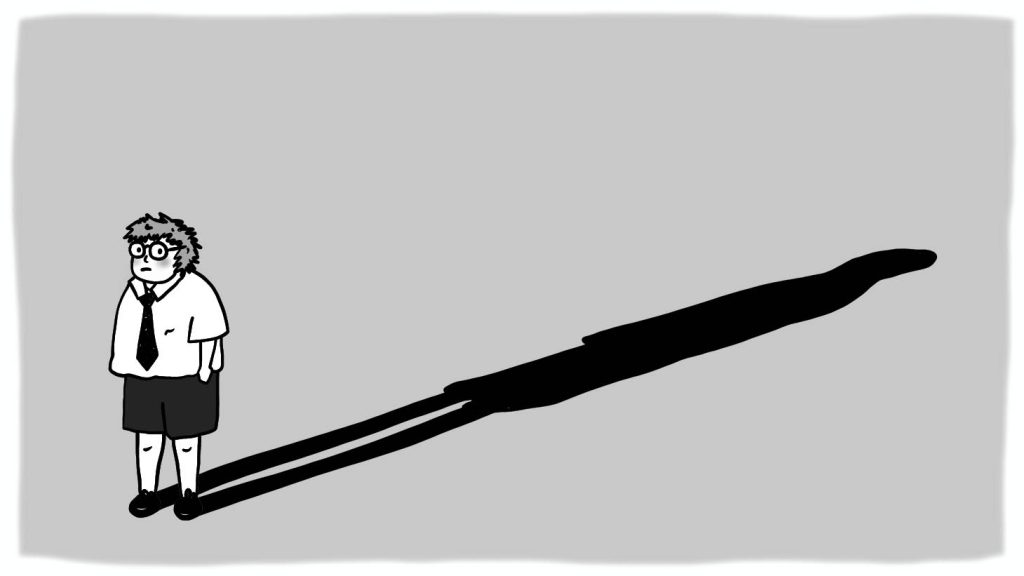
When divisions get deep, it becomes difficult for those involved to reimagine being in relationship with people who have caused damage.
Facing this time and again, John Paul Lederach (a changemaker in the fields of peacebuilding and conflict transformation) arrived at a deep driving question: How do we make our way back to a sense of our shared humanity, when it has been so harmed?
What makes this question so complex is that in many of the situations Lederach has worked in, the harm wasn’t recent. It wasn’t a single incident that could be traced to a specific moment and addressed there. It was cyclical. It had a quality of repetition that stretched beyond the person vocalizing the divide – not just the immediacy of what was unfolding in the moment, but the long shadow of everything that had unfolded before, absorbed into memory and identity, and spread like an inheritance nobody chose.
These sorts of conflicts are present across all interpersonal scales – not just the ones that make global headlines. Here at Mediation Services, we witness many cases where cyclical conflict plays a part in families, workplaces, and local communities.
Some wounds heal cleanly. There’s a harm, a reckoning, a repair – and life moves forward. But anyone who has worked closely with conflict knows that this is not always how it goes. Some conflicts don’t resolve; they settle. They go underground. And then, in time, they surface again – in a new form, carrying the weight of everything that came before.
We tend to think of inheritance in terms of what’s given to us deliberately – values taught at a kitchen table, stories told on purpose, wisdom offered with care. And much of what passes between generations is exactly that. Our elders shape us. They give us language for the world, frameworks for understanding who we are and who we belong to, a sense of what matters and what threatens.
But inheritance is not always conscious. And it is not always kind.
Children absorb far more than they are told. They read the tension in a room before they have words for it. They learn which names make the adults go quiet, which histories are treated as settled facts rather than open questions, which groups of people are spoken about with suspicion or contempt – and which with warmth. Long before a child can articulate a worldview, they begin to inhabit one. And woven into that worldview, often invisibly, are the unresolved conflicts of the people surrounding them.
This is how cycles begin. Not with a decision to perpetuate a grievance, but with the simple, human process of learning from the people we trust. We inherit their fears alongside their wisdom. We absorb their wounds alongside their warmth. And if those wounds were never truly addressed – if the harm was buried rather than healed, if the other side was never restored to full humanity in the family’s imagination – then the conflict travels forward, intact, into a new generation that didn’t choose it but now carries it.
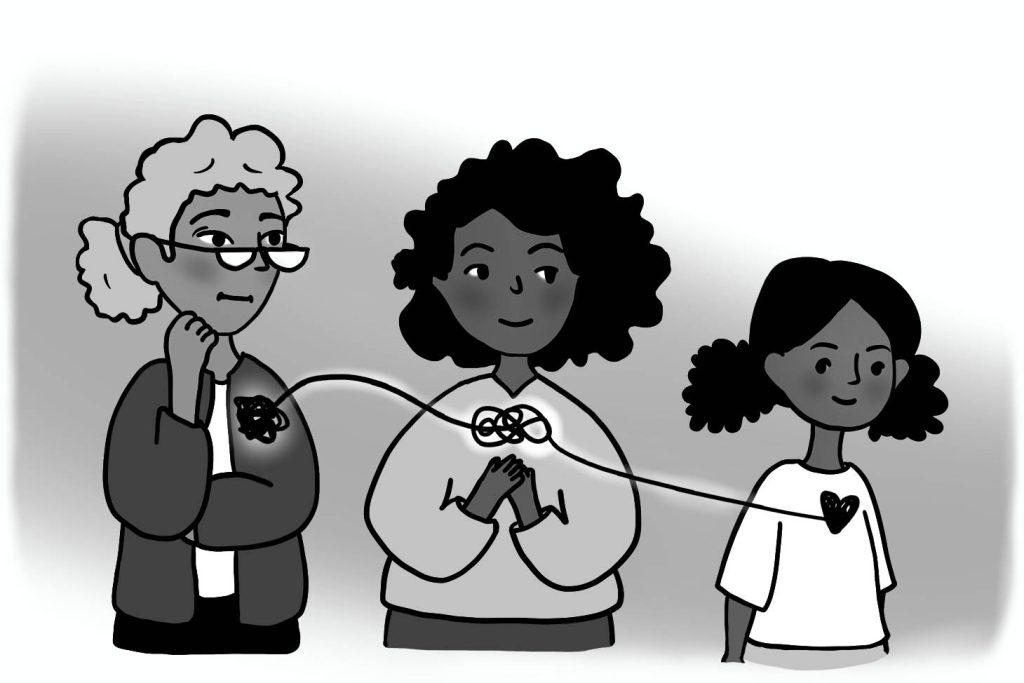
It’s tempting to locate this pattern exclusively in the conflicts that make history books – the intergenerational ethnic divisions, the cycles of political violence, the national traumas that reshape societies. Those are real, and Lederach’s work has taken him into many of them. But he is careful to note that the mechanism is not unique to those scales. The same dynamic, the same transference of unresolved harm across generations, plays out in families, in workplaces, in faith communities, in neighbourhoods.
A family that never found a way through a particular rupture – a betrayal, an estrangement, a deep unfairness that was papered over rather than repaired – can pass that rupture forward for decades. Children grow up knowing there are people they don’t speak to, without always knowing why. They learn the contours of the conflict before they learn its content. And in time, they may find themselves defending positions they inherited rather than chose, in a dispute that predates them.
Workplaces carry similar patterns. Organizational cultures hold memory. A team shaped by a period of poor leadership, broken trust, or unaddressed harm develops habits of guardedness and suspicion that can persist long after the original circumstances have changed. New people arrive and are quietly socialized into old conflicts they had no part in creating. The cycle continues not because anyone decided to continue it, but because no one found a way to stop it.
What makes cyclical conflict so resistant to resolution is the way it forecloses imagination. When divisions go deep – when harm has accumulated across years or decades or lifetimes – it becomes genuinely difficult for those involved to picture being in relationship with the people on the other side. Not just uncomfortable, not just unfamiliar. Unimaginable.
This is part of what makes the “How do we make our way back to shared humanity?” question so demanding. It’s not just asking people to forgive, it’s asking them to revise a story they’ve been living inside – sometimes for years, sometimes for longer. It’s asking them to see, in the people they’ve been taught to see as the other, something of themselves.
That is a profound ask. And it cannot be rushed, legislated, or imposed from the outside.
In a previous article, we’ve covered in detail four qualities of imagination that help us find ways through protracted conflict and we recommend reading it in full. It’s an actionable starting point for breaking the cycle of conflict, one that lets us introduce a future into a situation that has often become trapped in the past.
Cycles are broken not by forgetting what came before, but by refusing to let the past be the only thing that determines what comes next. That distinction matters. Healing doesn’t require pretending the harm didn’t happen. It doesn’t require skipping over grief or anger or the legitimate need for accountability. It requires something harder and more specific: the gradual, often painful work of keeping the humanity of the other person visible, even when everything in the inherited story says they don’t deserve it.
In practice, this often starts small with a conversation. A willingness to ask a question instead of making an accusation. A moment in which someone from one side of a long division says, takes a stance of curiosity and says simply: tell me what it was like for you. And listens.
These moments don’t end cycles on their own. But they interrupt them. They introduce something new into a pattern that has been repeating. And in Lederach’s experience, they are often the beginning – the first small step by which communities, families, and organizations start to find their way back to something that resembles shared humanity.
The cycle is not inevitable, but breaking it requires someone to choose to do something different with what they’ve been handed.