Disrespect: To engage or not to engage?
March 31, 2026
March 31, 2026

Disrespect happens. No question about it. But when it does: to engage or not to engage? That becomes the real question.
Let’s quickly review what disrespect is:
Disrespect is about behaviour – disregard for the feelings, wishes, rights, and traditions of others.
Note that disrespect often happens without us intending or realizing it because respect is in the eye of the beholder.
With this in mind, let’s circle back to the original question: when disrespect happens, should we engage with the person at the source of it? Or, putting it more personally, what would you want a colleague to do if you had offended them?
When we pose this question in our Building a Respectful Workplace workshop (available online or on-site), we consistently find that people want others to come talk to them. Their reasoning: “I didn’t know I offended them, so how am I supposed to deal with it unless someone comes to tell me?!”
Every time we experience a moment of disrespect, there are two common patterns that emerge:
Though there may be some wisdom in ignoring a first moment of disrespect or incivility, in most cases the only healthy options are to let it go (forgiving the moment – forever) or to talk about it. Letting a particular situation go only works if you do not hold the situation against the person and start responding to them differently.
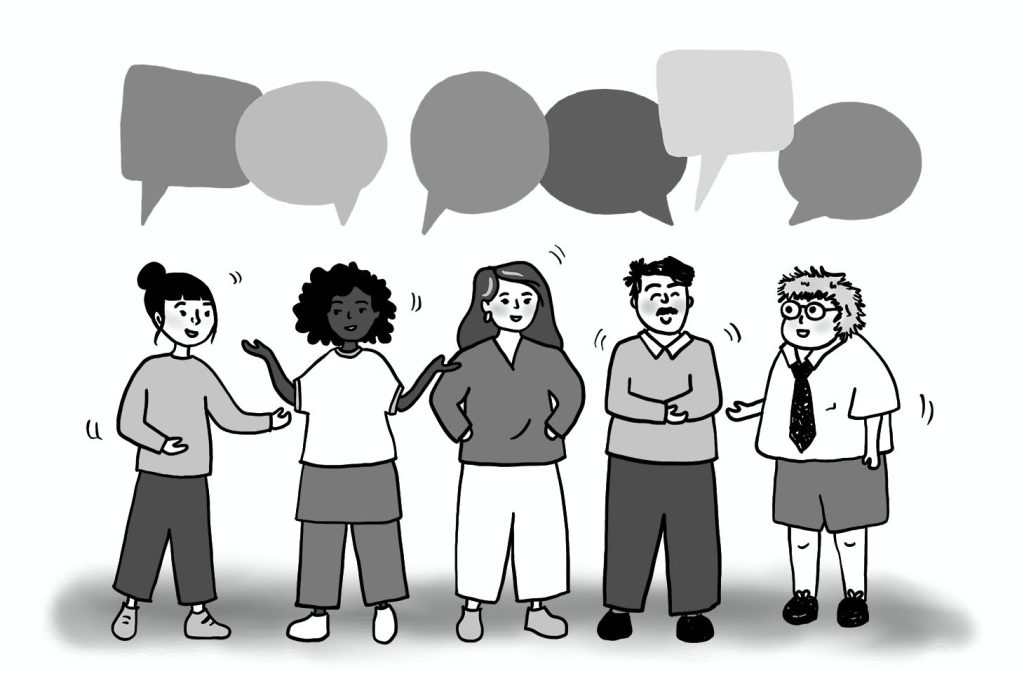
If we would want other people to tell us when we’ve offended them, it’s probably the right thing for us to do the same for people who’ve offended us. Still, actually doing so feels risky. In speaking up, there is a real possibility that they won’t respond well – potentially turning it around, accusing you of something, and opening up an unexpected can of worms.
But there’s also a risk that comes with deciding to do nothing. If we don’t speak up and let the other person know what’s going on internally, the behaviour isn’t likely to change (and little acts of disrespect add up). We need to create an opportunity to actually fix the issue at hand when the other person isn’t aware of it.
We encourage engagement, instead of procrastination and avoidance.
Engagement needs to be done skillfully for it to be effective (and to not make things worse!). In a sense, that’s what our entire blog is about – sharing tools and developing skills to better handle the inevitable disrespect and conflict that arises at work, at home, and in our communities. So as for the “how to’s”, please browse it to find ideas that work for you.
For the purposes of this article, we’ll instead point out a few times where not engaging is the wise choice:
Intrigued and want to learn more? We’ve got structured online webinars on Dealing with Defensiveness and Building a Respectful Workplace that you can start today. Or, if you’re more of an in-person learner, check out the upcoming trainings offered here in Winnipeg.
As we’ve already mentioned, there is plenty of free content for you to dig further into on our blog or through our Conflict 101 webinar.
Whichever way, we hope you’ll join us in continuing to learn more about being in relationship with family, community, and work.